
Free Safe Operating Procedure (Freight Damage Reporting) Template
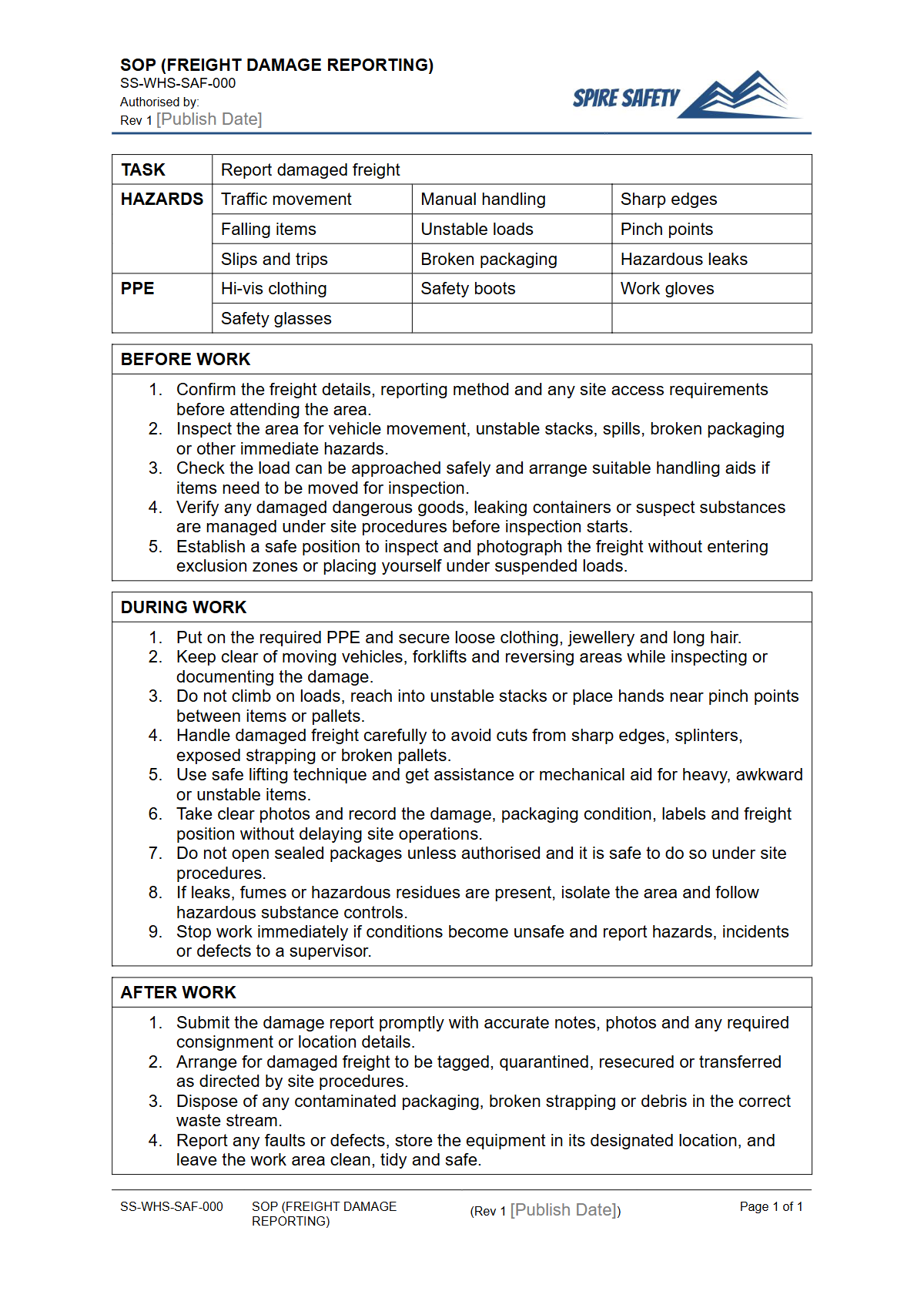
Download our free Safe Operating Procedure (Freight Damage Reporting) Template. This DOCX & PDF helps you create a clear process for reporting damaged goods.
Free Safe Operating Procedure (Freight Damage Reporting) Template
DOCX • 126 KB + PDF
Updated Oct 2026
No signup required
Purpose of the Free Safe Operating Procedure (Freight Damage Reporting) Template
Implementing a clear process for handling and documenting damaged goods is crucial for any business in logistics, warehousing, or transport. Our Free Safe Operating Procedure (Freight Damage Reporting) Template provides a structured framework to ensure incidents are recorded consistently and safely.
This process is not just about financial recovery; it's a key part of your workplace health and safety system, helping to identify hazards associated with damaged freight, such as manual handling risks, spills, or unstable loads.
The primary purpose of this Safe Operating Procedure is to establish a standardised, safe, and efficient method for employees to report any damage found on incoming or stored freight. A formal procedure ensures that all necessary information is captured for insurance claims, supplier feedback, and quality control.
From a WHS perspective, it guides workers on how to safely handle compromised goods, preventing injuries from manual tasks, exposure to hazardous substances, or incidents caused by unstable pallets. Consistent reporting helps management identify trends, such as recurring damage from a specific carrier or with a particular product, allowing for targeted corrective actions.
Regular reviews of these procedures are a core component of safety management, often verified through a formal WHS compliance audit to ensure they remain effective.
Video walkthrough
How to use the Free Safe Operating Procedure (Freight Damage Reporting) Template
This document is a template and must be customised to suit the specific needs of your workplace. To use the Free Safe Operating Procedure (Freight Damage Reporting) Template, download the DOCX file and fill in the designated sections.
This includes adding your company name, logo, the date of implementation, and a review date. You will need to adapt the procedural steps to reflect your specific operational environment.
For instance, detail your exact reporting channels (e.g., who to notify), the location of reporting forms or digital systems, and the designated area for quarantining damaged goods.
Important: We have provided a solid foundation based on Australian WHS principles, but you must consult with your team, including warehouse staff and supervisors, to ensure the procedure is practical and addresses the unique risks at your site. A well-integrated SOP is a vital part of effective WHS management systems.
When to use it
This Safe Operating Procedure should be activated immediately upon the discovery of damaged freight. This can occur at several points in your supply chain, including:
- During the unloading of a vehicle from a supplier or third-party carrier.
- While moving goods from the receiving dock into storage.
- When picking stock from shelves and noticing previously unseen damage.
- Following an internal incident, such as a forklift collision, that results in damaged goods.
It is vital to have clear criteria for what constitutes 'reportable damage'. This could range from minor cosmetic issues (e.g., crushed box corner) to major structural failures (e.g., leaking drum, collapsed pallet).
In cases of significant damage, particularly involving hazardous materials, this SOP should trigger your emergency response plans. Having a clear SOP for defibrillator operation and first aid is a critical part of being prepared for any workplace medical emergency.
Who should use it
This SOP is intended for all personnel involved in the handling, movement, and storage of goods. Specific roles with responsibilities under this procedure typically include:
- Warehouse and Receiving Staff: The primary users, responsible for initial inspection and reporting.
- Forklift Operators: Responsible for identifying damage during loading, unloading, and put-away tasks.
- Supervisors and Team Leaders: Responsible for verifying damage reports, ensuring goods are safely quarantined, and initiating further action.
- WHS/Safety Officers: Responsible for reviewing reports to identify safety trends, investigating incidents, and ensuring the procedure is followed correctly.
- Inventory or Stock Controllers: Responsible for adjusting stock levels and liaising with suppliers regarding the damaged items.
Training all relevant personnel on this procedure is essential for its success. You can find more templates and guides for different roles in our comprehensive free WHS resources library. Ultimately, fostering a proactive safety culture where every employee feels empowered to report issues is key.
If you need assistance embedding such processes into your organisation, engaging external expertise through WHS consulting can provide valuable guidance and support.
Common mistakes
Common mistakes to avoid
- Failing to take clear, well-lit photographs of the damage before moving the goods.
- Not quarantining the damaged items, allowing them to be moved, used, or mixed with good stock.
- Delaying the report, which can compromise insurance claims and make it harder to identify the cause.
- Incomplete reports that lack crucial details like the driver's signature or consignment note number.
Legal references
Legal considerations
The following legal requirements may be relevant to this type of work.
- Work Health and Safety Act (Harmonised) — Provides the primary duties for protecting workers and other people from work health and safety risks.
- Work Health and Safety Regulations (Harmonised) — Sets out requirements supporting the management of workplace hazards and risks.
The following codes may be relevant to this type of work.
- Managing WHS Risks Code of Practice — Provides practical guidance on identifying hazards, assessing risks and applying effective controls.
- Work Health and Safety Consultation, Cooperation and Coordination Code of Practice — Provides practical guidance on consulting workers and coordinating with other duty holders.
- Managing the Work Environment and Facilities Code of Practice — Provides practical guidance on safe work environments, workplace facilities and related controls.
Did you know
The Cost of Damage
It's estimated that between 0.5% and 2% of all freight shipments incur some form of damage. While some costs are recoverable, the administrative time, operational delays, and potential for safety incidents represent significant hidden expenses.
Slips, Trips, and Falls
Poorly managed damaged goods, such as leaking containers or debris from broken pallets, are a leading contributor to slips, trips, and falls in warehouse environments. A clear reporting and quarantine procedure directly helps mitigate this common hazard.
FAQ
Frequently asked questions
01What details should be included in a freight damage report?
02Why is a formal SOP for freight damage necessary for WHS?
03How often should we review our freight damage reporting procedure?
04Can this freight damage reporting template be used for internal damage as well?
Share this resource
Free Safe Operating Procedure (Freight Damage Reporting) Template
Browse Categories
How To Use It
- 1Download and open in Word or PDF.
- 2Replace the placeholders with your business details.
- 3Get it reviewed by a WHS specialist before rollout.
Need it customised?
Our WHS consultants can adapt this template to your site, run a gap analysis, or audit what you already have in place.
Book a Free Consultation WHS consulting servicesor call 1300 156 382
Related templates
- Free Safe Operating Procedure (Freight Label Check) Template
- Free Safe Operating Procedure (Freight Repackaging) Template
- Free Safe Operating Procedure (Freight Screening) Template
- Free Safe Operating Procedure (Freight Segregation) Template
- Free Safe Operating Procedure (Freight Transfer) Template
- Free Safe Operating Procedure (Fruit Bin Handling) Template