
Free Safe Operating Procedure (Garment Steamer) Template
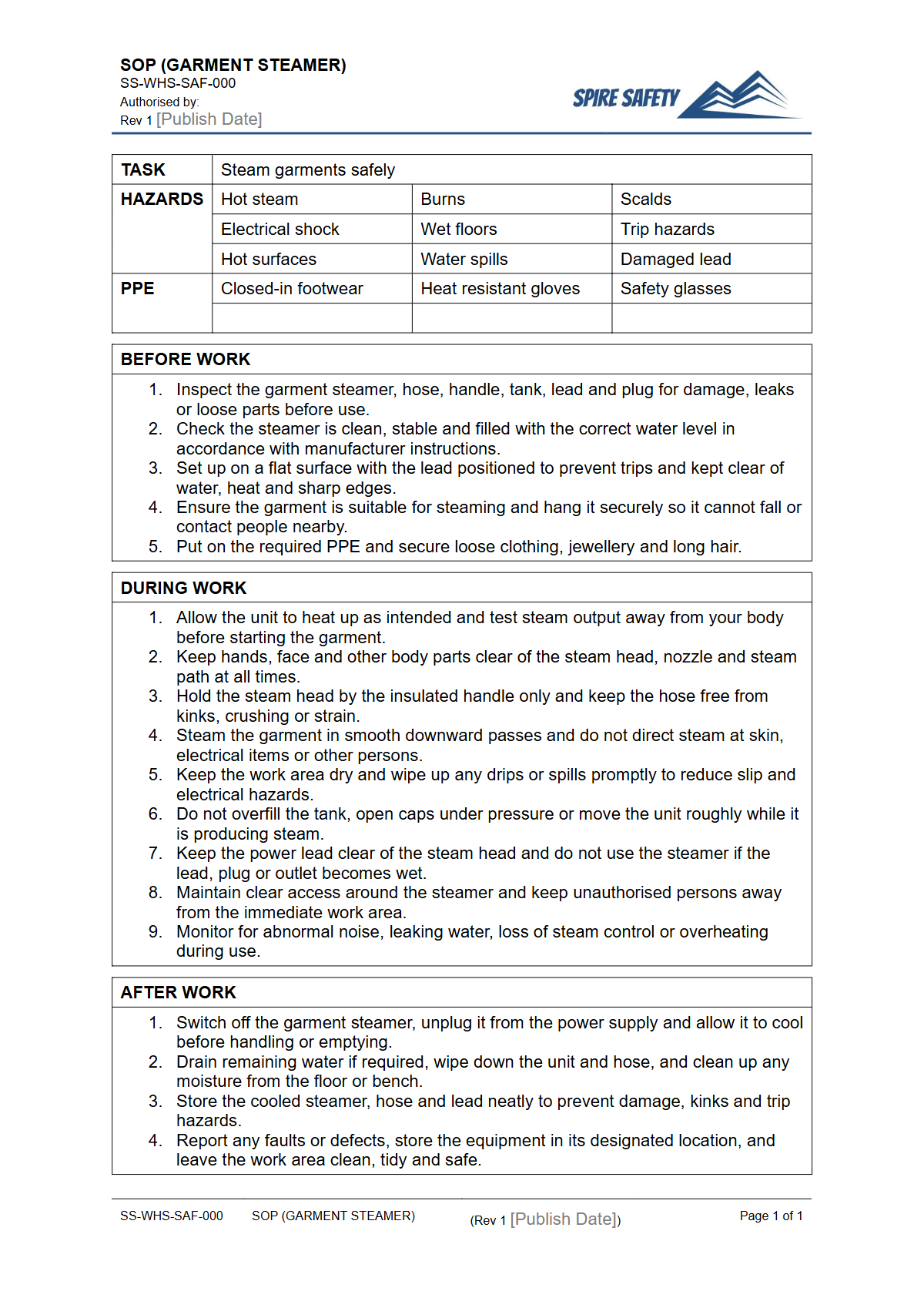
Download our free Safe Operating Procedure (Garment Steamer) template. This Word & PDF resource helps outline WHS controls for using garment steamers.
Free Safe Operating Procedure (Garment Steamer) Template
DOCX • 126 KB + PDF
Updated Oct 2026
No signup required
Purpose of the Free Safe Operating Procedure (Garment Steamer) Template
Operating any piece of workplace equipment, even one as common as a garment steamer, requires clear, documented safety guidelines. This Free Safe Operating Procedure (Garment Steamer) Template provides a structured starting point for organisations to establish and formalise safe work practices.
A garment steamer introduces specific risks, including burns from hot steam and water, electrical shock, and slip hazards from spills. Using a documented SOP helps control these risks, ensuring workers understand the expected sequence of tasks and safety precautions.
A well-drafted Safe Operating Procedure is a critical tool for any business that must meet its duties under Australian WHS legislation. It demonstrates a commitment to providing a safe system of work and forms a key component of a comprehensive WHS management system. This template helps you detail pre-start checks, operational steps, cleaning, and maintenance, creating a clear record of your safety protocols.
Video walkthrough
How to use the Free Safe Operating Procedure (Garment Steamer) Template
This template is designed for straightforward customisation. After downloading the DOCX file, you can edit it to reflect the specific model of garment steamer used in your workplace and incorporate your existing safety policies.
The document includes sections for you to detail personal protective equipment (PPE), specific hazard controls, and emergency procedures relevant to your operational context.
It is crucial to understand that this is a template, not a finished document. You must adapt it to your unique environment.
We strongly recommend you consult with the workers who will be using the equipment, as well as their supervisors, during the customisation process. Their direct experience is invaluable for creating a practical and effective SOP.
If you are unsure about any requirements, engaging external WHS consulting professionals can provide clarity and assurance.
When to use a Safe Operating Procedure
A Safe Operating Procedure for a garment steamer should be integrated into several key workplace processes. It is an essential document for new worker induction and training, ensuring they learn the correct, safe method from the outset.
The SOP should also be readily available in the work area as a constant reference for all operators.
It serves as a checklist for pre-operational inspections, guiding workers to check for frayed cords, leaks, or damage before each use. The procedure is also critical during and after operation, outlining steps for refilling water reservoirs safely and proper shutdown and storage.
Documenting procedures for common equipment, just as you would for other tasks with a free step ladder SOP, builds a consistent safety culture.
Who should use this Safe Operating Procedure
This SOP is intended for use by multiple groups within an organisation. Persons Conducting a Business or Undertaking (PCBUs) and managers can use it to fulfil their primary duty of care by establishing a formal safe work method.
Supervisors can use the finalised document to train staff, conduct competency assessments, and monitor adherence to safety protocols.
Workers who operate the garment steamer are the primary end-users. The SOP gives them clear, step-by-step instructions to perform their tasks safely and consistently.
The process of developing the SOP, similar to creating a Safe Operating Procedure for an air compressor, should involve consultation with these workers to ensure the procedures are practical and reflect real-world conditions. This collaborative approach fosters ownership and improves safety outcomes.
This template is one of many tools available to help you build a safer workplace. For more templates, checklists, and guides, you can browse our complete free WHS resources library.
Common mistakes
Common mistakes to avoid
- Using the downloaded template without customising it for the specific workplace and equipment model.
- Failing to adequately train workers on the finalised Safe Operating Procedure.
- Neglecting to review and update the SOP after an incident, near miss, or change in equipment.
- Storing the steamer with water still in the tank, which can lead to bacterial growth or accidental spills.
Legal references
Legal considerations
The following legal requirements may be relevant to this type of work.
- Work Health and Safety Act (Harmonised) — Provides the primary duties for protecting workers and other people from work health and safety risks.
- Work Health and Safety Regulations (Harmonised) — Sets out requirements supporting the management of workplace hazards and risks.
The following codes may be relevant to this type of work.
- Managing WHS Risks Code of Practice — Provides practical guidance on identifying hazards, assessing risks and applying effective controls.
- Work Health and Safety Consultation, Cooperation and Coordination Code of Practice — Provides practical guidance on consulting workers and coordinating with other duty holders.
- Managing the Work Environment and Facilities Code of Practice — Provides practical guidance on safe work environments, workplace facilities and related controls.
Did you know
Steam Temperature
The steam emitted from a commercial garment steamer can easily exceed 100°C. This is hot enough to cause a serious third-degree burn almost instantly upon contact with skin.
FAQ
Frequently asked questions
01What are the main WHS hazards of using a garment steamer?
02Does this Garment Steamer Safe Operating Procedure template meet WHS Act requirements?
03Who is responsible for creating an SOP in the workplace?
04How often should a Safe Operating Procedure be reviewed?
Share this resource
Free Safe Operating Procedure (Garment Steamer) Template
Browse Categories
How To Use It
- 1Download and open in Word or PDF.
- 2Replace the placeholders with your business details.
- 3Get it reviewed by a WHS specialist before rollout.
Need it customised?
Our WHS consultants can adapt this template to your site, run a gap analysis, or audit what you already have in place.
Book a Free Consultation WHS consulting servicesor call 1300 156 382
Related templates
- Free Safe Operating Procedure (Gas Bottle Storage) Template
- Free Safe Operating Procedure (Gas Bottle Trolley) Template
- Free Safe Operating Procedure (Gas Cooktop) Template
- Free Safe Operating Procedure (Gas Cutting Torch) Template
- Free Safe Operating Procedure (Gas Cylinder Change) Template
- Free Safe Operating Procedure (Gas Cylinder Handling) Template