
Free Safe Operating Procedure (Glasswasher Cleaning) Template
Formalise safety protocols for cleaning commercial glasswashers. Our template helps manage hazards like chemicals, hot water, and electricity.
Free Safe Operating Procedure (Glasswasher Cleaning) Template
DOCX • 126 KB + PDF
Updated Oct 2026
No signup required
Purpose of the Free Safe Operating Procedure (Glasswasher Cleaning) Template
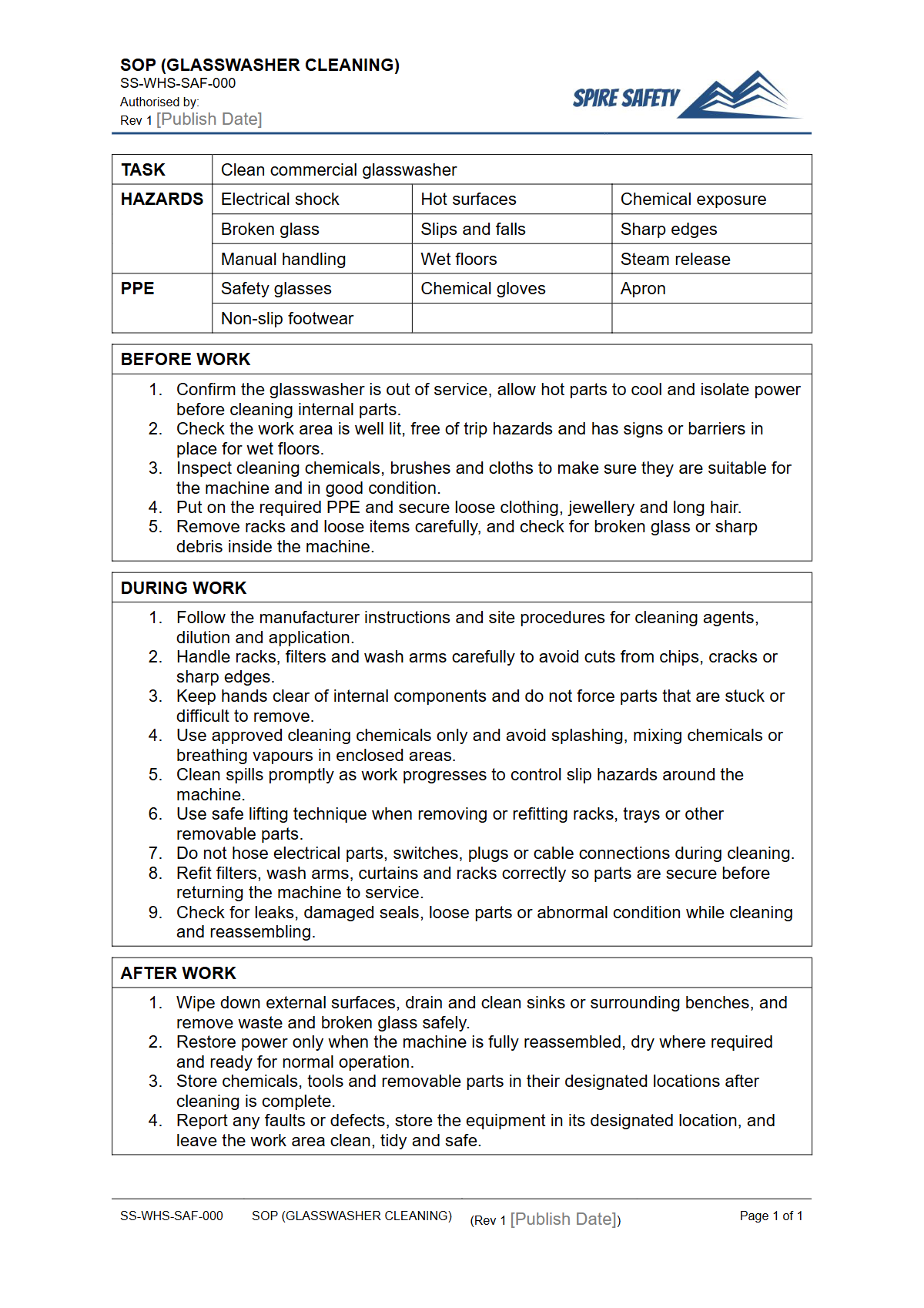
Cleaning commercial glasswashers is a routine task in many Australian pubs, clubs, and restaurants, but it carries significant risks if not performed correctly. This free Safe Operating Procedure (Glasswasher Cleaning) Template provides a structured starting point for your business to document a clear, step-by-step process for this activity.
Formalising your procedure helps to manage hazards such as chemical exposure, electrical shock, hot water burns, and manual handling injuries.
A documented SOP is a fundamental component of proactive safety management. It serves as a vital training tool for new and existing employees, ensures consistency in how tasks are performed, and demonstrates your organisation's commitment to providing a safe system of work.
Using this template helps you to methodically identify risks and detail the specific control measures required to keep your workers safe.
Video walkthrough
How to use the Free Safe Operating Procedure (Glasswasher Cleaning) Template
Our free template outlines the key stages of cleaning a glasswasher, from preparation and isolation to the cleaning process and post-cleaning checks. To use it effectively, you must adapt it to the specific context of your workplace.
This involves reviewing the manufacturer's operating manual for your particular glasswasher model and consulting the Safety Data Sheets (SDS) for all cleaning chemicals used.
This document is a template and must be customised to the specific equipment, chemicals, and environment of your workplace. We recommend a competent person reviews and approves the final document before implementation.
Integrating this SOP into your broader WHS management systems ensures it aligns with your overall safety policies and objectives.
Fill in the details specific to your site, including the makes and models of equipment, the exact names and dilutions of chemicals, the required Personal Protective Equipment (PPE), and emergency procedures. If you are unsure how to conduct the necessary risk assessments or tailor the document effectively, engaging professional WHS consulting services can provide clarity and ensure your procedures are robust.
When to use it
A Safe Operating Procedure for glasswasher cleaning should be used as a primary training document for any worker tasked with this job. It ensures they understand the approved, safe method before they begin.
It should also be readily available in the work area as a reference guide for staff to consult whenever needed, promoting consistent and safe work practices.
Furthermore, this SOP is an essential tool for supervisors to monitor performance and for conducting incident investigations if a near miss or injury occurs. Procedures should be reviewed periodically as part of your safety management cycle, after any incident, or when new equipment or chemicals are introduced.
These reviews can be integrated into your schedule of regular WHS compliance auditing to ensure ongoing effectiveness.
Who should use it
This Safe Operating Procedure is intended for all personnel involved in cleaning or supervising the cleaning of commercial glasswashers. This includes bar staff, kitchen hands, and cleaning crews.
It is also a critical resource for venue managers, supervisors, and WHS officers responsible for implementing and overseeing workplace safety protocols.
Everyone who performs the task must be trained on the contents of the final, customised SOP. Ensure all associated tasks, such as retrieving cleaning supplies stored at height, are also covered by appropriate procedures, like a Safe Operating Procedure for step ladders. This creates a comprehensive approach to managing all risks associated with the overall job.
By establishing and enforcing a clear SOP, you empower your team to work safely and reduce the likelihood of costly and distressing workplace incidents. You can find more templates and checklists like this one in our comprehensive free WHS resources library to help build out your safety systems.
Common mistakes
Common mistakes to avoid
- Forgetting to unplug or electrically isolate the machine before starting.
- Using incorrect chemicals or mixing chemicals, which can create toxic fumes.
- Failing to adequately train staff on the specific procedures and hazards.
- Not wearing the specified Personal Protective Equipment (PPE), especially gloves and eye protection.
Legal references
Legal considerations
The following legal requirements may be relevant to this type of work.
- Work Health and Safety Act (Harmonised) — Provides the primary duties for protecting workers and other people from work health and safety risks.
- Work Health and Safety Regulations (Harmonised) — Sets out requirements supporting the management of workplace hazards and risks.
The following codes may be relevant to this type of work.
- Managing WHS Risks Code of Practice — Provides practical guidance on identifying hazards, assessing risks and applying effective controls.
- Work Health and Safety Consultation, Cooperation and Coordination Code of Practice — Provides practical guidance on consulting workers and coordinating with other duty holders.
- Managing the Work Environment and Facilities Code of Practice — Provides practical guidance on safe work environments, workplace facilities and related controls.
Did you know
Chemical Hazards
Many common commercial cleaning chemicals can cause serious skin and eye damage. Safety Data Sheets (SDS) are mandatory documents that provide critical information on handling, storage, and first aid for these substances.
Water and Electricity
Electricity and water are a lethal combination. The process of isolating equipment by unplugging it from the power source before cleaning is the single most important step in preventing a severe or fatal electric shock.
FAQ
Frequently asked questions
01What are the main hazards when cleaning a glasswasher?
02Do I need a separate SOP for each different type of glasswasher?
03How often should a glasswasher cleaning SOP be reviewed?
04What PPE is needed for cleaning a glasswasher?
Share this resource
Free Safe Operating Procedure (Glasswasher Cleaning) Template
Browse Categories
How To Use It
- 1Download and open in Word or PDF.
- 2Replace the placeholders with your business details.
- 3Get it reviewed by a WHS specialist before rollout.
Need it customised?
Our WHS consultants can adapt this template to your site, run a gap analysis, or audit what you already have in place.
Book a Free Consultation WHS consulting servicesor call 1300 156 382
Related templates
- Free Safe Operating Procedure (GNSS Rover) Template
- Free Safe Operating Procedure (Goal Post Inspection) Template
- Free Safe Operating Procedure (Golf Bunker Raking) Template
- Free Safe Operating Procedure (Golf Green Repair) Template
- Free Safe Operating Procedure (Golf Tee Maintenance) Template
- Free Safe Operating Procedure (Goods Lift) Template