
Free Safe Operating Procedure (Hairdressing Room Clean) Template
Download our free Safe Operating Procedure (Hairdressing Room Clean) template.
Free Safe Operating Procedure (Hairdressing Room Clean) Template
DOCX • 126 KB + PDF
Updated Oct 2026
No signup required
Purpose of the Free Safe Operating Procedure (Hairdressing Room Clean) Template
Maintaining a clean and hygienic hairdressing salon is crucial not only for client satisfaction but also for workplace health and safety. Our Free Safe Operating Procedure (Hairdressing Room Clean) Template provides a structured starting point for documenting the required steps to safely and effectively clean salon work areas.
This document helps manage risks associated with chemical handling, slips, trips, falls, and cross-contamination. By formalising cleaning processes, you establish a clear, consistent standard for all staff, helping to meet your duty of care obligations under Australian WHS legislation.
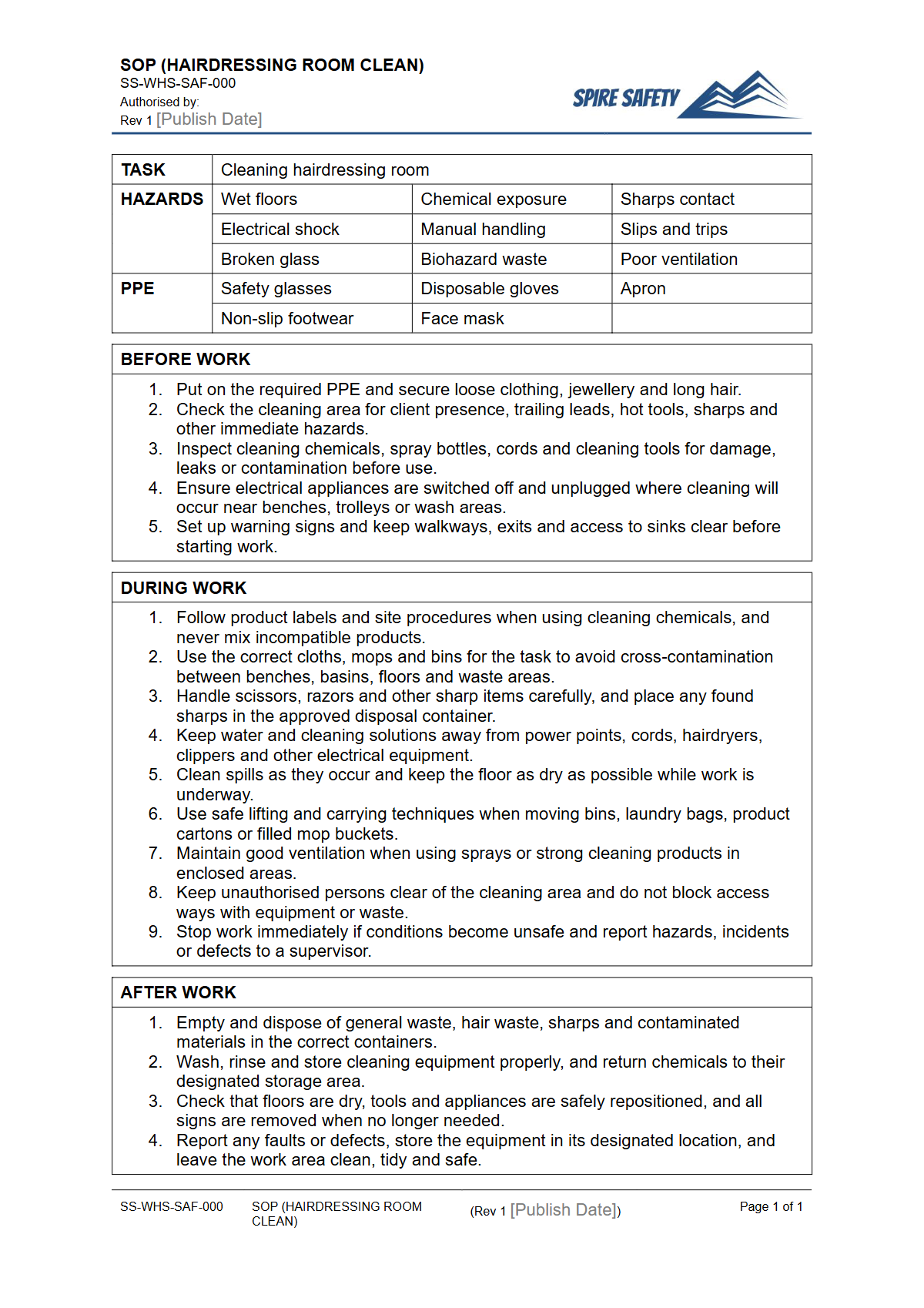
A well-defined SOP for cleaning tasks is a fundamental component of your safety management system. It outlines pre-operational checks, the step-by-step cleaning process for floors, surfaces, and equipment, and post-cleaning checks.
It also specifies the required Personal Protective Equipment (PPE), identifies potential hazards, and details emergency procedures for incidents like chemical spills or skin contact. Implementing this procedure helps ensure that hygiene standards are met and the risk of injury or illness to workers and clients is minimised.
This is especially important in environments where tasks like safe step ladder use may be required for accessing high areas.
Video walkthrough
How to use the Free Safe Operating Procedure (Hairdressing Room Clean) Template
This Safe Operating Procedure template is provided as a customisable DOCX file, with a PDF version also available for easy printing and sharing. It is designed to be a comprehensive foundation, but it must be adapted to the unique context of your salon.
To use it effectively, download the file and work through each section, modifying the content to reflect your specific equipment, cleaning chemicals, floor surfaces, and internal processes. Your review should ensure that all listed controls are relevant and practical for your workplace.
Important: This is a template only. We have created it as a starting point, but you are responsible for ensuring it is tailored to your specific site, equipment, and legal obligations.
Review every section and consult with your team to ensure the final document is accurate and effective. If your operations involve complex hazards, you may benefit from developing comprehensive WHS management systems to ensure all risks are managed systematically.
When to use it
A SOP for hairdressing room cleaning should be used consistently as part of your salon's operational routine. It is applicable for several scenarios, including daily opening or closing procedures to ensure the space is ready and safe for the next day's business.
It should also be referenced for intermittent cleaning throughout the day, such as cleaning up hair clippings, product spills, or water on the floor. Furthermore, it serves as a critical training document for new employees, apprentices, or any staff member responsible for cleaning duties, ensuring they understand the established safety protocols from day one.
Who should use it
This Safe Operating Procedure is intended for all personnel working within the hairdressing salon. This includes qualified senior hairdressers, junior stylists, apprentices, and dedicated cleaning staff.
Salon managers and owners should also be familiar with the procedure to ensure it is being implemented correctly and to oversee training and compliance. By involving everyone in the process, from development to daily use, you foster a stronger safety culture where every team member takes ownership of maintaining a clean and safe environment.
Regular reviews and refresher training sessions reinforce the importance of the SOP for all staff.
A key aspect of implementing any safety procedure is ensuring your team is prepared for emergencies. While this SOP covers cleaning-related incidents, broader emergency preparedness, including response protocols for medical events like cardiac arrest, is also vital.
Familiarity with procedures for defibrillator operation can be a life-saving addition to your team's skillset. For businesses unsure if their current safety documentation is aligned with the model WHS framework, engaging an external party for WHS compliance auditing can provide clarity and peace of mind.
After customising this document, it should be made easily accessible to all relevant workers, either as a printed copy in a designated area or through a digital document management system. Exploring our free WHS resources library can provide you with other templates that may be useful for building out your salon's safety framework.
Common mistakes
Common mistakes to avoid
- Failing to display 'wet floor' signs after mopping, creating a slip hazard for staff and clients.
- Using incorrect dilution ratios for concentrated cleaning chemicals, which can make them ineffective or dangerously strong.
- Neglecting to wear appropriate PPE, such as chemical-resistant gloves and safety glasses, when handling disinfectants.
- Storing incompatible chemicals like bleach and ammonia-based cleaners together, which can release toxic gas if mixed.
Legal references
Legal considerations
The following legal requirements may be relevant to this type of work.
- Work Health and Safety Act (Harmonised) — Provides the primary duties for protecting workers and other people from work health and safety risks.
- Work Health and Safety Regulations (Harmonised) — Sets out requirements supporting the management of workplace hazards and risks.
The following codes may be relevant to this type of work.
- Managing WHS Risks Code of Practice — Provides practical guidance on identifying hazards, assessing risks and applying effective controls.
- Work Health and Safety Consultation, Cooperation and Coordination Code of Practice — Provides practical guidance on consulting workers and coordinating with other duty holders.
- Managing the Work Environment and Facilities Code of Practice — Provides practical guidance on safe work environments, workplace facilities and related controls.
Did you know
Disinfectant Dwell Time
For a disinfectant to be effective, it must remain on a surface for a specific amount of time, known as 'dwell time' or 'contact time'. This can range from 30 seconds to 10 minutes and should be specified in your SOP based on the product manufacturer's instructions.
Slips, Trips, and Falls
Slips, trips, and falls are a leading cause of workplace injury in Australia, particularly in service industries. Wet floors from washing hair, mopping, or spills are a significant hazard in salons, making documented cleaning procedures essential.
FAQ
Frequently asked questions
01What is the difference between a SOP and a Safe Work Method Statement (SWMS)?
02Do I legally need a written SOP for cleaning in a small salon?
03What common chemicals should be included in a hairdressing room cleaning SOP?
04How often should I review my Hairdressing Room Clean SOP?
Share this resource
Free Safe Operating Procedure (Hairdressing Room Clean) Template
Browse Categories
How To Use It
- 1Download and open in Word or PDF.
- 2Replace the placeholders with your business details.
- 3Get it reviewed by a WHS specialist before rollout.
Need it customised?
Our WHS consultants can adapt this template to your site, run a gap analysis, or audit what you already have in place.
Book a Free Consultation WHS consulting servicesor call 1300 156 382
Related templates
- Free Safe Operating Procedure (Hand Basin Descaling) Template
- Free Safe Operating Procedure (Hand Harvesting) Template
- Free Safe Operating Procedure (Hand Hedge Trimming) Template
- Free Safe Operating Procedure (Hand Hygiene Station) Template
- Free Safe Operating Procedure (Hand Loading Freight) Template
- Free Safe Operating Procedure (Hand Seed Sowing) Template