
Free Safe Operating Procedure (Hand Hedge Trimming) Template
Download our Free Safe Operating Procedure (Hand Hedge Trimming) Template.
Free Safe Operating Procedure (Hand Hedge Trimming) Template
DOCX • 126 KB + PDF
Updated Oct 2026
No signup required
Purpose of the Free Safe Operating Procedure (Hand Hedge Trimming) Template
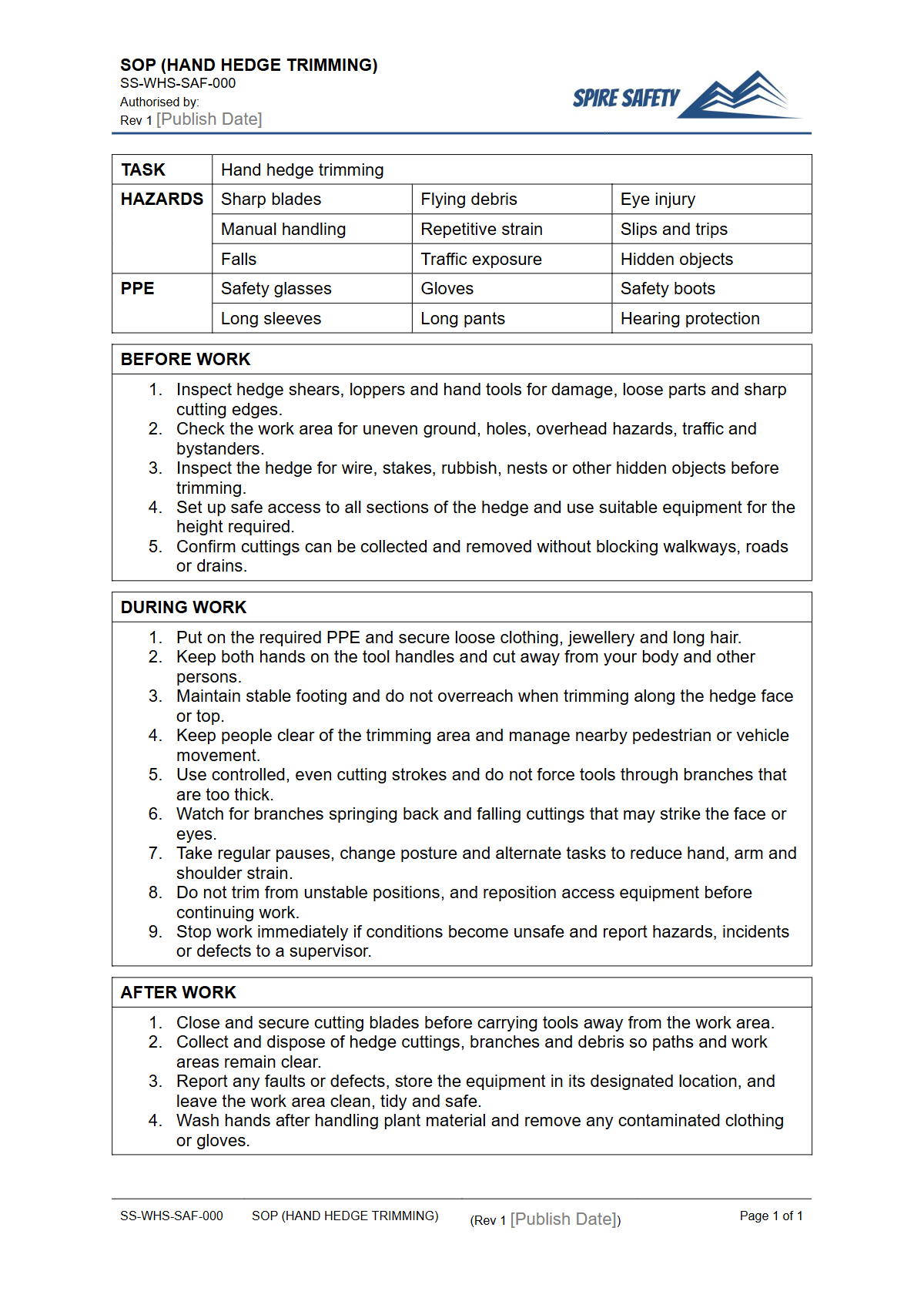
A comprehensive Safe Operating Procedure (SOP) is crucial for managing the risks associated with manual landscaping tasks. Our Free Safe Operating Procedure (Hand Hedge Trimming) Template provides a solid foundation for documenting the step-by-step process for safely using hand-held hedge trimmers, whether they are powered or manual.
This template is designed to help your business standardise its approach to hedge trimming, ensuring all workers follow a consistent, safe method every time.
Using this template helps you clearly define safe work methods, identify potential hazards like cuts, musculoskeletal injuries from repetitive tasks, and risks from the immediate environment. A well-defined SOP is a key component of an effective WHS management system, ensuring consistency in training and task execution while demonstrating your organisation's commitment to safety.
Video walkthrough
How to use the Free Safe Operating Procedure (Hand Hedge Trimming) Template
This document is a starting point and is not a completed procedure. It is essential that you customise this template to suit the specific circumstances of your workplace.
Before use, a competent person must review and amend the content to reflect your unique equipment (make and model of trimmers), site conditions, local hazards (like slopes, overhead powerlines, or public access), and worker competency levels.
Note: We strongly recommend that you consult with your workers—the people who will be performing the task—during the customisation process. Their direct input is invaluable for creating a practical, effective, and understood procedure.
Once finalised, the SOP should be used as a training document and be readily accessible to all relevant personnel. You can find more tools like this in our complete free WHS resources library.
Key Hazard Control Measures
The SOP guides you through documenting key control measures to mitigate risks associated with hedge trimming. This includes sections for detailing pre-start checks, ensuring the tool is in good working order, and specifying the correct Personal Protective Equipment (PPE) such as safety glasses, hearing protection (for powered models), and cut-resistant gloves.
The procedure also prompts consideration of ergonomic factors to prevent strains and sprains from awkward postures or repetitive movements.
Many landscaping tasks involve working at heights, which introduces significant fall risks. If workers use ladders or platforms to trim tall hedges, this must be addressed.
A separate procedure for the access equipment is often required, such as our free Step Ladder SOP template, to ensure it is used correctly and safely.
Integrating the SOP with Training and Competency
A Safe Operating Procedure is more than a compliance document; it is a vital training tool. Use this finalised SOP during worker inductions, pre-start meetings, and periodic refresher training sessions to reinforce safe work behaviours.
It establishes a clear benchmark for performance and allows supervisors to assess worker competency against a standardised, documented process.
Creating a library of SOPs for common high-risk tasks helps build a robust safety culture. For example, standardising procedures for other common powered tools, similar to our free Circular Saw SOP template, ensures a consistent approach to safety across all workshop and site activities.
Emergency Preparedness
The template includes dedicated sections for outlining emergency procedures. This is a critical part of any SOP, ensuring workers know exactly how to respond to injuries, equipment failure, or other unexpected events like contact with hidden wires or insect nests.
Clearly defining the steps to take, including the location of first aid kits, emergency stop procedures, and contact information for first aiders or emergency services, can significantly improve incident outcomes.
In the event of a serious incident, prompt and effective first aid is critical. Having clear procedures for all emergency equipment is just as important, which is why a Safe Operating Procedure for defibrillator operation is another valuable resource for any workplace.
Review and Continuous Improvement
Workplace health and safety requires a process of continuous improvement. Your hand hedge trimming SOP should be reviewed regularly—at least annually, or more frequently if there is an incident, a near miss, or a change in equipment, personnel, or work processes.
Regular reviews ensure the document remains relevant, practical, and effective in managing risk. If your organisation is looking to formalise its safety management processes to an international standard, our ISO 45001 consulting services can provide expert guidance and support.
Common mistakes
Common mistakes to avoid
- Failing to conduct a pre-start inspection of the equipment and work area.
- Neglecting to wear appropriate PPE, especially cut-resistant gloves and safety glasses.
- Overreaching or working from an unstable position, increasing the risk of falls and musculoskeletal injury.
- Leaving sharp blades uncovered during transport or when the tool is not in active use.
Legal references
Legal considerations
The following legal requirements may be relevant to this type of work.
- Work Health and Safety Act (Harmonised) — Provides the primary duties for protecting workers and other people from work health and safety risks.
- Work Health and Safety Regulations (Harmonised) — Sets out requirements supporting the management of workplace hazards and risks.
The following codes may be relevant to this type of work.
- Managing WHS Risks Code of Practice — Provides practical guidance on identifying hazards, assessing risks and applying effective controls.
- Work Health and Safety Consultation, Cooperation and Coordination Code of Practice — Provides practical guidance on consulting workers and coordinating with other duty holders.
- Managing the Work Environment and Facilities Code of Practice — Provides practical guidance on safe work environments, workplace facilities and related controls.
Did you know
Vibration Risk
Prolonged use of powered hedge trimmers can contribute to Hand-Arm Vibration Syndrome (HAVS), a painful and disabling condition affecting nerves, blood vessels, and joints. Even with manual tools, repetitive strain is a significant ergonomic risk.
Hidden Hazards
Hedges can conceal hazards like fences, wires, irrigation pipes, or insect nests. A key part of the safe work procedure is to inspect the work area thoroughly before starting to trim.
FAQ
Frequently asked questions
01What should be included in a hand hedge trimming SOP?
02Is this hedge trimming SOP suitable for electric and petrol trimmers?
03How often should we review our Safe Operating Procedure for hedge trimming?
04Who is responsible for creating a Safe Operating Procedure?
Share this resource
Free Safe Operating Procedure (Hand Hedge Trimming) Template
Browse Categories
How To Use It
- 1Download and open in Word or PDF.
- 2Replace the placeholders with your business details.
- 3Get it reviewed by a WHS specialist before rollout.
Need it customised?
Our WHS consultants can adapt this template to your site, run a gap analysis, or audit what you already have in place.
Book a Free Consultation WHS consulting servicesor call 1300 156 382
Related templates
- Free Safe Operating Procedure (Hand Hygiene Station) Template
- Free Safe Operating Procedure (Hand Loading Freight) Template
- Free Safe Operating Procedure (Hand Seed Sowing) Template
- Free Safe Operating Procedure (Hand Unloading Freight) Template
- Free Safe Operating Procedure (Handheld Metal Detector) Template
- Free Safe Operating Procedure (Handrail Cleaning) Template