
Free Safe Operating Procedure (Hand Hygiene Station) Template
Download our free Safe Operating Procedure (Hand Hygiene Station) template. This customisable DOCX & PDF helps standardise inspection and maintenance.
Free Safe Operating Procedure (Hand Hygiene Station) Template
DOCX • 126 KB + PDF
Updated Oct 2026
No signup required
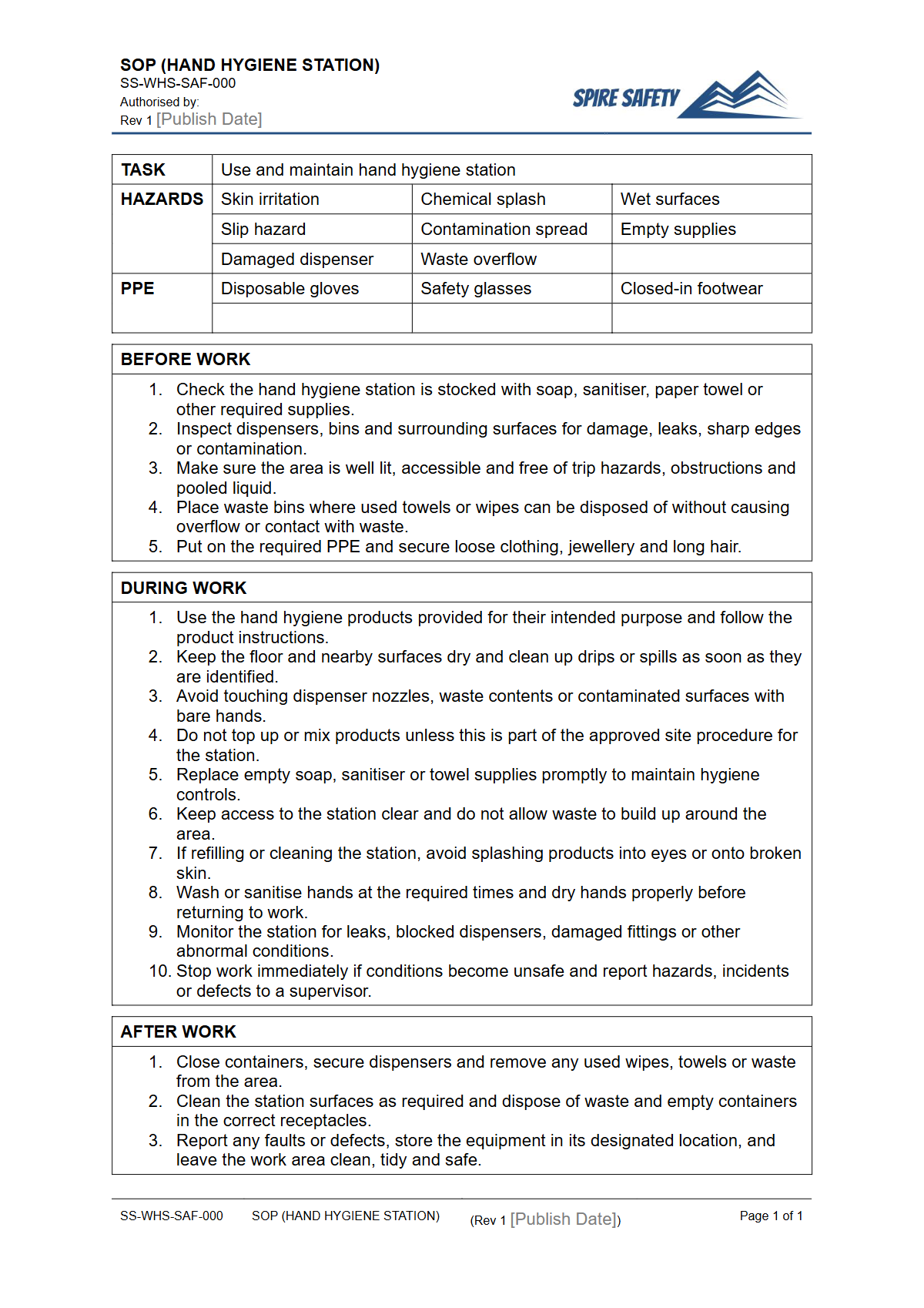
Purpose of the Free Safe Operating Procedure (Hand Hygiene Station) Template
Effective hand hygiene is a cornerstone of infection control in any Australian workplace. This free Safe Operating Procedure (Hand Hygiene Station) template provides a structured framework for documenting the safe and consistent management of your hygiene facilities.
Formalising this process helps ensure that sanitiser and hand wash stations are always stocked, functional, and correctly located, thereby minimising the risk of disease transmission among workers and visitors. Using a documented SOP demonstrates a commitment to health and safety, forming a critical part of your overall WHS management system.
This document guides your team in performing routine checks, refilling dispensers, and managing associated waste safely. It serves as a clear, accessible reference for all personnel responsible for facility maintenance, helping to standardise practices across different shifts and locations.
By implementing this SOP, you create a reliable system that supports a healthier work environment and helps meet your primary duty of care obligations under WHS legislation. It complements other essential health-related procedures, similar to the structured steps found in our Safe Operating Procedure for defibrillator operation.
Video walkthrough
How to use the Free Safe Operating Procedure (Hand Hygiene Station) Template
This resource is available as a DOCX file for easy editing in Microsoft Word and as a PDF for universal access. To use it, simply download your preferred format and begin customising the content to reflect your workplace's specific equipment and environment.
Fill in details such as the types of dispensers used (manual, automatic), the specific sanitiser or soap products, their storage locations, and the frequency of inspections.
It is crucial to adapt this template to your unique operational needs. Review each section and add, remove, or modify steps to ensure they are accurate and practical for your team.
Once customised, the SOP should be used to train relevant staff and be made readily available in areas where maintenance tasks are performed.
Please note: This document is a template and must be customised to suit the specific requirements of your workplace. We recommend a person with appropriate knowledge of your site's hazards, equipment, and processes completes this customisation.
When to use this Safe Operating Procedure
This Safe Operating Procedure should be integrated into your daily and weekly operational routines. It is designed for:
- Routine Inspections: Use it as a checklist for scheduled checks to ensure stations are clean, undamaged, and well-stocked.
- Refilling and Maintenance Tasks: Guide workers through the correct process for replenishing sanitiser or soap, replacing batteries in automatic dispensers, and cleaning the units.
- Training and Induction: The SOP is an excellent training tool for new employees, cleaners, or facility staff, ensuring they understand their responsibilities from day one.
- Audits and Reviews: The document provides a clear standard against which performance can be measured. Regular reviews of workplace practices against this SOP are a key part of an effective WHS compliance auditing program.
Who should use it
This SOP is primarily intended for personnel directly responsible for workplace health and facility maintenance. Key users include:
- WHS Officers and Managers: To establish and monitor hygiene standards as part of the broader safety management system.
- Facility Managers: To oversee the implementation of maintenance schedules and ensure resource availability.
- Cleaning and Maintenance Staff: As a direct, step-by-step guide for performing their daily tasks safely and effectively.
- Team Leaders and Supervisors: To enforce procedures and conduct informal checks within their departments.
The principles in this document are relevant to anyone overseeing the safety and usability of workplace equipment, from hygiene stations to common tools like those covered in a step ladder SOP.
Integrating Hygiene Procedures into Your Safety Culture
An SOP for hand hygiene stations is most effective when it is part of a comprehensive approach to workplace health. Support this procedure with clear instructional signage near each station, demonstrating correct hand washing or sanitising techniques.
Discuss its importance in toolbox talks and staff meetings to reinforce good hygiene behaviour. A well-maintained hygiene station is a visible sign that an organisation prioritises worker wellbeing, which can boost morale and foster a stronger safety culture.
If your organisation has complex hygiene requirements or operates in a high-risk industry, engaging professional support can help ensure your systems are robust and practical. Our experienced team offers tailored WHS consulting to help you develop and implement systems that protect your people and your business.
This template is one of many tools we offer to support Australian businesses. Be sure to explore our complete free WHS resources library for more templates, checklists, and guides to enhance your safety management systems.
Common mistakes
Common mistakes to avoid
- Placing stations in low-traffic areas where they are unlikely to be used.
- Failing to regularly inspect stations, leading to empty dispensers or dead batteries in automatic units.
- Using expired or non-compliant sanitiser that may be ineffective.
- Neglecting to provide clear signage on how and when to use the station.
Legal references
Legal considerations
The following legal requirements may be relevant to this type of work.
- Work Health and Safety Act (Harmonised) — Provides the primary duties for protecting workers and other people from work health and safety risks.
- Work Health and Safety Regulations (Harmonised) — Sets out requirements supporting the management of workplace hazards and risks.
The following codes may be relevant to this type of work.
- Managing WHS Risks Code of Practice — Provides practical guidance on identifying hazards, assessing risks and applying effective controls.
- Work Health and Safety Consultation, Cooperation and Coordination Code of Practice — Provides practical guidance on consulting workers and coordinating with other duty holders.
- Managing the Work Environment and Facilities Code of Practice — Provides practical guidance on safe work environments, workplace facilities and related controls.
Did you know
Effectiveness of Sanitiser
For alcohol-based hand sanitisers to be effective, they typically need to contain at least 60% alcohol. This concentration is necessary to effectively break down the protective outer layers of germs and viruses.
A Visible Reminder
Studies have shown that simply making hand hygiene stations highly visible and accessible significantly increases their use. Placement at entry/exit points, meal areas, and high-traffic corridors is critical for promoting good hygiene habits.
FAQ
Frequently asked questions
01What should be included in a hand hygiene station SOP?
02How often should a hand hygiene station be checked?
03Is a specific type of sanitiser required by WHS regulations?
04Why is an SOP needed for something as simple as a hand hygiene station?
Share this resource
Free Safe Operating Procedure (Hand Hygiene Station) Template
Browse Categories
How To Use It
- 1Download and open in Word or PDF.
- 2Replace the placeholders with your business details.
- 3Get it reviewed by a WHS specialist before rollout.
Need it customised?
Our WHS consultants can adapt this template to your site, run a gap analysis, or audit what you already have in place.
Book a Free Consultation WHS consulting servicesor call 1300 156 382
Related templates
- Free Safe Operating Procedure (Hand Loading Freight) Template
- Free Safe Operating Procedure (Hand Seed Sowing) Template
- Free Safe Operating Procedure (Hand Unloading Freight) Template
- Free Safe Operating Procedure (Handheld Metal Detector) Template
- Free Safe Operating Procedure (Handrail Cleaning) Template
- Free Safe Operating Procedure (Hangar Cleaning) Template