
Free Safe Operating Procedure (Hot Sugar Handling) Template
Handling hot sugar presents serious burn risks in kitchens and food manufacturing. Our template helps you document safe work methods for your team.
Free Safe Operating Procedure (Hot Sugar Handling) Template
DOCX • 126 KB + PDF
Updated Oct 2026
No signup required
Purpose of the Free Safe Operating Procedure (Hot Sugar Handling) Template
Working with hot sugar is a high-risk activity common in commercial kitchens, bakeries, and confectionery manufacturing. Molten sugar reaches extremely high temperatures and can cause severe, deep-tissue burns upon contact.
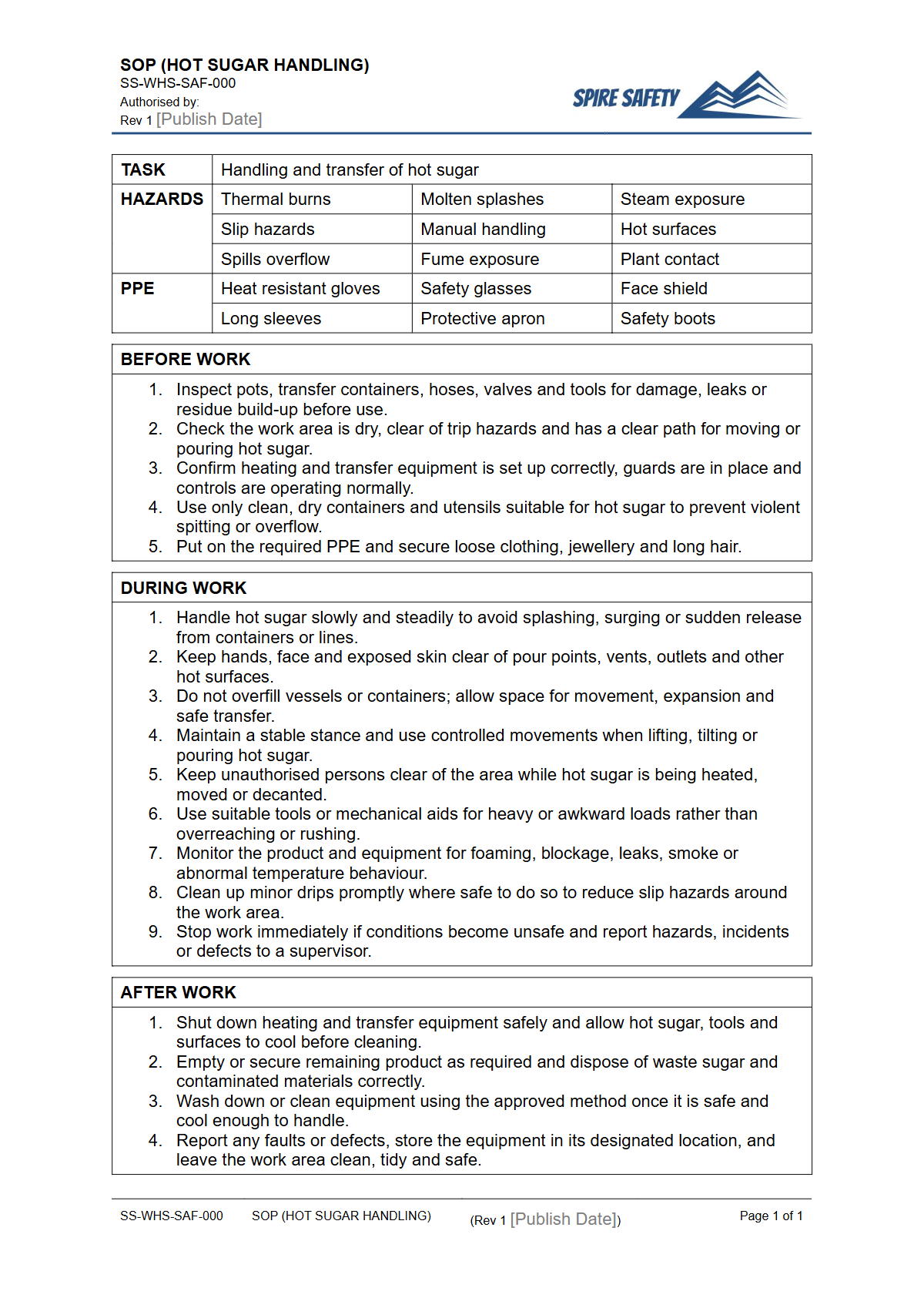
This free Safe Operating Procedure (Hot Sugar Handling) Template provides a structured framework for documenting the required steps to perform this task safely. Its primary purpose is to help you manage the significant risks of thermal burns from splashes, steam, and direct contact with hot sugar or equipment. By formalising your process, you create a vital training tool for workers and a clear standard for safe behaviour, which is a cornerstone of effective WHS management systems.
Key Hazards Covered
A comprehensive SOP for handling hot sugar must address several critical hazards beyond just the sugar itself. This includes:
- Thermal Burns: From the molten sugar mixture, hot pots and pans, steam, and cooking surfaces.
- Splashes and Spitting: Hot sugar can splash unexpectedly, especially if water is introduced, projecting burning liquid onto skin and eyes.
- Equipment Hazards: Faulty thermometers, unstable pots, or malfunctioning burners can lead to spills and accidents.
- Slips and Falls: Spills of sugar syrup can create extremely slippery surfaces, increasing the risk of falls, particularly while carrying hot materials.
Video walkthrough
How to use the Free Safe Operating Procedure (Hot Sugar Handling) Template
This downloadable Safe Operating Procedure (Hot Sugar Handling) Template is provided in both DOCX and PDF formats for your convenience. The DOCX file is fully editable, allowing you to tailor the content to the specific circumstances of your workplace.
It serves as a comprehensive starting point, aligned with Australian WHS principles, but it is not a complete, ready-to-use document.
Important: To be effective, you must customise this template. Every kitchen and production facility is different.
We have included common steps and precautions, but you need to add details specific to your equipment, ingredients, staff responsibilities, and emergency procedures. This ensures the final SOP is a practical and relevant tool for your team.
A generic procedure is not a safe procedure.
Customising Your SOP
When adapting the template, consider the following:
- Equipment Specifics: List the exact make and model of cooktops, pots, and thermometers used.
- Task Environment: Describe the designated area for hot sugar work, ensuring it is free from traffic and clutter.
- PPE Requirements: Specify the exact type of heat-resistant gloves, eye protection, and protective clothing required.
- Emergency Contacts: Include site-specific first aid contacts and emergency numbers.
- Step-by-Step Process: Adjust the procedure to match your unique recipes and workflow, from ingredient preparation to final cooling and cleaning.
If you require assistance in developing or reviewing your workplace-specific procedures, our WHS consulting team can provide expert guidance.
When to Use This SOP
This Safe Operating Procedure should be used as the primary reference document for any task involving the heating of sugar to high temperatures. It is essential for training new employees and for refreshing the knowledge of experienced staff.
The SOP should be readily accessible in the work area for quick reference. It is also a critical document to have on hand during safety reviews or a WHS compliance audit, demonstrating that you have identified a significant hazard and implemented formal controls.
Who Should Use This SOP
This document is intended for use by all persons involved in the handling of hot sugar. This includes, but is not limited to, chefs, pastry chefs, confectioners, bakers, kitchen hands, and food production line workers.
Supervisors and managers are responsible for ensuring the SOP is implemented, understood, and followed by their teams. Under WHS law, the Person Conducting a Business or Undertaking (PCBU) has the primary duty of care to ensure the health and safety of workers, which includes providing safe systems of work like this SOP.
The principles of managing thermal hazards are also relevant in other kitchen environments. For similar high-temperature liquid risks, you may find our Free Safe Operating Procedure for deep fryers a useful supplementary resource.
In larger manufacturing settings, hot sugar work might be one stage of a larger automated process. Ensuring safety at the interface between manual tasks and machinery requires careful planning. For example, if a worker is pouring hot sugar onto a product moving along an automated line, procedures must align with the operation of that equipment, such as what is outlined in our FREE Conveyer System SOP.
By implementing a clear and specific SOP, you create a safer, more organised, and more professional work environment. Feel free to browse our complete free WHS resources library for more templates to support your safety management system.
Common mistakes
Common mistakes to avoid
- Using wet utensils or adding water to hot sugar, which can cause it to spit and splash violently.
- Leaving the heating process unattended, leading to scorching, boiling over, or fire.
- Wearing inadequate PPE, such as short sleeves or no eye protection, leaving skin exposed.
- Failing to designate and clear a safe area for pouring and cooling the finished hot sugar.
Legal references
Legal considerations
The following legal requirements may be relevant to this type of work.
- Work Health and Safety Act (Harmonised) — Provides the primary duties for protecting workers and other people from work health and safety risks.
- Work Health and Safety Regulations (Harmonised) — Sets out requirements supporting the management of workplace hazards and risks.
The following codes may be relevant to this type of work.
- Managing WHS Risks Code of Practice — Provides practical guidance on identifying hazards, assessing risks and applying effective controls.
- Work Health and Safety Consultation, Cooperation and Coordination Code of Practice — Provides practical guidance on consulting workers and coordinating with other duty holders.
- Managing the Work Environment and Facilities Code of Practice — Provides practical guidance on safe work environments, workplace facilities and related controls.
Did you know
Stickier Than Water
Hot sugar sticks to skin and holds heat for much longer than hot water. This often results in deeper and more severe burns because the heat source isn't easily removed and continues to transfer energy into the skin.
FAQ
Frequently asked questions
01What PPE is required for handling hot sugar?
02What is the most common injury from handling hot sugar?
03Can this SOP be used for commercial confectionery production?
04What is the correct first aid for a hot sugar burn?
Share this resource
Free Safe Operating Procedure (Hot Sugar Handling) Template
Browse Categories
How To Use It
- 1Download and open in Word or PDF.
- 2Replace the placeholders with your business details.
- 3Get it reviewed by a WHS specialist before rollout.
Need it customised?
Our WHS consultants can adapt this template to your site, run a gap analysis, or audit what you already have in place.
Book a Free Consultation WHS consulting servicesor call 1300 156 382
Related templates
- Free Safe Operating Procedure (Hot Water Urn) Template
- Free Safe Operating Procedure (Hotel Guest Room Setup) Template
- Free Safe Operating Procedure (Hotel Laundry Collection) Template
- Free Safe Operating Procedure (Hotel Linen Cart) Template
- Free Safe Operating Procedure (Hotel Luggage Handling) Template
- Free Safe Operating Procedure (Hotel Minibar Restock) Template