
Free Safe Operating Procedure (Hotel Laundry Collection) Template
Manage manual handling and hygiene risks in hotel laundry collection with our structured template. Download your free Safe Operating Procedure to get started.
Free Safe Operating Procedure (Hotel Laundry Collection) Template
DOCX • 126 KB + PDF
Updated Oct 2026
No signup required
Purpose of the Free Safe Operating Procedure (Hotel Laundry Collection) Template
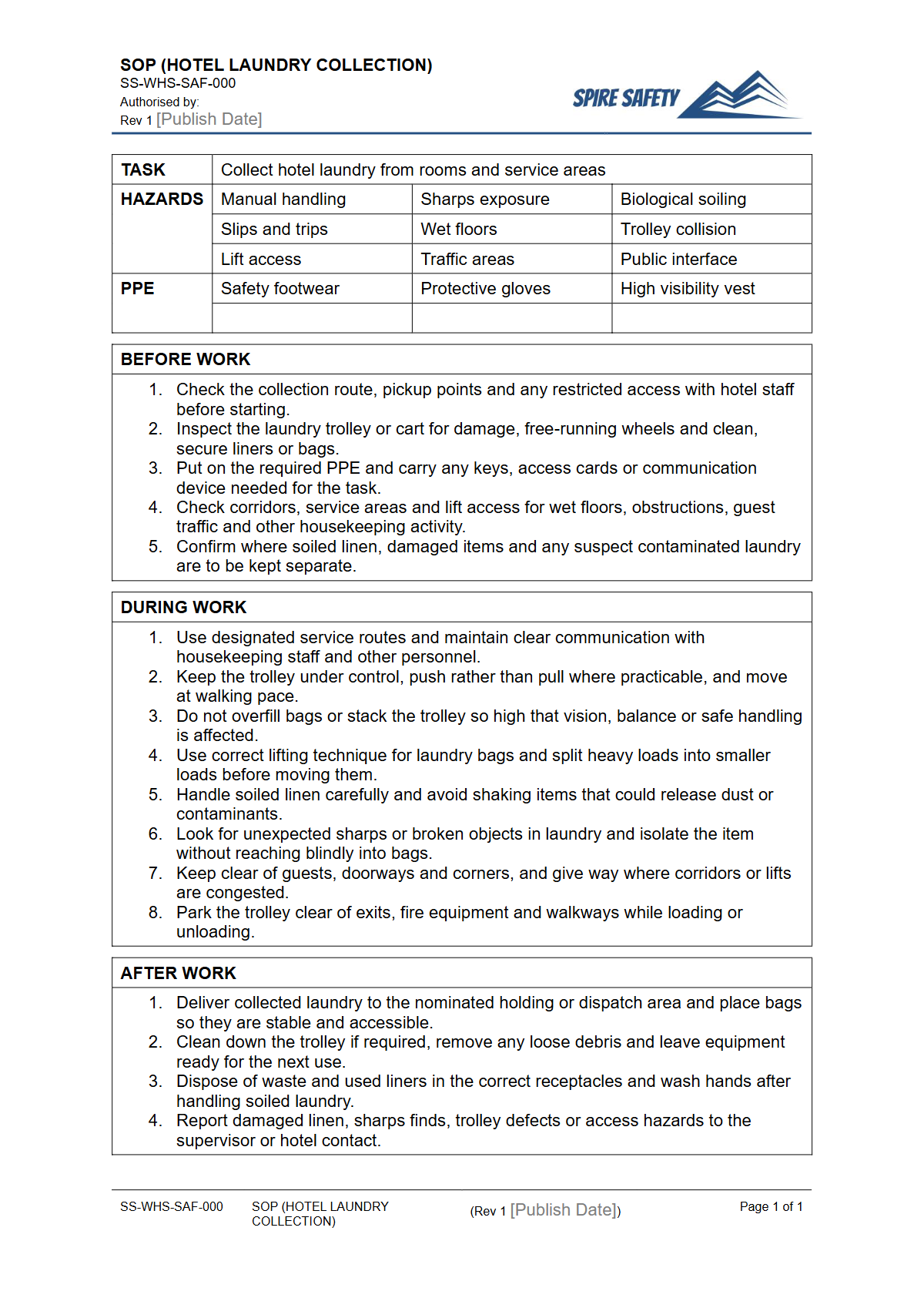
This Free Safe Operating Procedure (Hotel Laundry Collection) Template provides a structured framework for documenting the required steps to safely collect and transport soiled linen within a hotel environment. The process involves significant risks, including manual handling injuries from lifting heavy bags, slips and trips in busy corridors, and exposure to biological hazards from soiled materials.
Formalising your procedure helps control these hazards and ensures all staff, from housekeepers to porters, understand and follow a consistent, safe method of work. Using a clear SOP is a fundamental part of demonstrating your organisation's commitment to health and safety.
A well-defined SOP helps standardise training and provides a clear reference point for workers. It outlines the specific hazards associated with the task, such as ergonomic strains from pushing heavy carts or potential contact with sharps hidden in bedding. For related tasks in the hospitality sector, you might also find value in our Free Safe Operating Procedure (Deep Fryer) template.
Video walkthrough
How to use the Free Safe Operating Procedure (Hotel Laundry Collection) Template
Our template is available in DOCX format for easy editing and customisation, as well as a PDF for straightforward printing and distribution. To effectively implement this Safe Operating Procedure, you should consult directly with the workers who perform the task.
Their practical experience is invaluable for identifying specific on-the-ground risks and workable control measures.
It is crucial to recognise that this template is a starting point. We strongly recommend you customise it to reflect the specific equipment (e.g., cart types, laundry chutes), layouts, chemicals, and procedures unique to your workplace.
A generic document is not sufficient; the SOP must be tailored to your site-specific risk assessment to be effective. This process of customisation is a key part of building robust WHS management systems that genuinely protect your workers.
To implement this SOP:
- Download the DOCX file.
- Conduct a risk assessment for the task of laundry collection in your hotel, involving relevant staff.
- Modify the document to include details specific to your site, such as designated collection routes, PPE requirements, and emergency contacts.
- Ensure the procedure is reviewed and approved by a competent person, like a Housekeeping Manager or WHS Officer.
- Use the finalised SOP as a basis for staff training, ensuring every worker understands the steps before undertaking the task.
- Keep records of all training provided.
When to use it
A Safe Operating Procedure for hotel laundry collection should be a living document, integrated into your daily operations. It is most effective when used during staff induction and initial job training to establish safe work habits from day one.
It also serves as an essential tool for periodic refresher training to prevent complacency.
The SOP should be reviewed and re-communicated following any incident or near miss related to laundry handling. Furthermore, it must be updated whenever there is a change in the work environment, such as the introduction of new laundry carts, a change in hotel layout, or new types of linen that affect bag weight.
Regular reviews as part of your WHS compliance auditing schedule ensure the procedure remains relevant and effective.
Who should use it
This SOP is designed for use by a range of personnel within a hotel or accommodation setting. WHS Managers and Hotel Managers can use it to fulfil their due diligence obligations by ensuring a formal, safe system of work is in place.
Housekeeping Supervisors will find it essential for training their teams and monitoring day-to-day adherence to safety standards.
Most importantly, the SOP is for the frontline workers themselves—the housekeepers, porters, and laundry attendants who perform the task. It provides them with clear, step-by-step guidance on how to perform their duties safely, protecting them from injury and illness.
In larger laundry facilities, automated systems are common; for those, our FREE Conveyer System SOP (Safe Operating Procedure) Template may also be relevant.
Key hazards in hotel laundry collection
Identifying hazards is the first step in managing risk. The collection of hotel laundry presents several significant WHS issues that this SOP helps to address:
- Manual Handling: Lifting overfilled, heavy linen bags and pushing or pulling heavily laden carts can lead to musculoskeletal injuries, particularly to the back and shoulders.
- Slips, Trips & Falls: Carts left in corridors, wet floors in laundry areas, and cluttered service elevators create trip and slip hazards for both staff and guests.
- Biological Hazards: Soiled linen can contain bodily fluids, pathogens, and other contaminants. Direct contact without appropriate PPE (like gloves) can lead to skin conditions or illness.
- Hidden Sharps: A critical but often overlooked risk is the presence of hypodermic needles, broken glass, or other sharp objects accidentally wrapped in bedding or towels.
- Ergonomic Risks: The task often involves repetitive bending to pick up bags, twisting to load carts, and awkward postures when navigating tight spaces.
If identifying and controlling these risks feels overwhelming, specialist advice can provide clarity. Spire Safety offers expert WHS consulting to help businesses of all sizes develop practical and effective safety solutions.
Elements of an effective Safe Operating Procedure
A good SOP goes beyond just a list of steps. This template provides sections to ensure you build a comprehensive document that is truly useful.
Key elements include identifying required Personal Protective Equipment (PPE), detailing pre-operational checks for equipment like laundry carts, and outlining emergency procedures in case of an incident, such as a sharps injury or chemical spill.
It also prompts you to define the training and competency requirements for workers assigned to the task. By customising each section, you create a complete safety document, not just a procedural checklist.
This template is one of many tools available in our free WHS resources library, designed to help you build a safer workplace.
Common mistakes
Common mistakes to avoid
- Overfilling laundry bags, making them exceed safe lifting weights.
- Not inspecting laundry carts for faults like damaged wheels or sharp edges before use.
- Failing to wear appropriate PPE, especially gloves, when handling soiled linen.
- Leaving laundry carts unattended in guest corridors, creating a trip hazard.
Legal references
Legal considerations
The following legal requirements may be relevant to this type of work.
- Work Health and Safety Act (Harmonised) — Provides the primary duties for protecting workers and other people from work health and safety risks.
- Work Health and Safety Regulations (Harmonised) — Sets out requirements supporting the management of workplace hazards and risks.
The following codes may be relevant to this type of work.
- Managing WHS Risks Code of Practice — Provides practical guidance on identifying hazards, assessing risks and applying effective controls.
- Work Health and Safety Consultation, Cooperation and Coordination Code of Practice — Provides practical guidance on consulting workers and coordinating with other duty holders.
- Managing the Work Environment and Facilities Code of Practice — Provides practical guidance on safe work environments, workplace facilities and related controls.
Did you know
Manual Handling Risks
Musculoskeletal disorders from hazardous manual tasks are a leading cause of workplace injury claims in the Australian accommodation and food services industry. Proper procedures for lifting and moving laundry are critical for prevention.
Hidden Sharps
A significant but often overlooked hazard in hotel laundry is sharps, such as hypodermic needles, accidentally left in bedding by guests. This makes correct handling procedures and wearing appropriate PPE vital for worker safety.
FAQ
Frequently asked questions
01Is this Safe Operating Procedure template suitable for small motels as well as large hotels?
02What PPE is typically required for collecting hotel laundry?
03How often should we review our Hotel Laundry Collection SOP?
04Does this template cover the operation of commercial washing machines?
Share this resource
Free Safe Operating Procedure (Hotel Laundry Collection) Template
Browse Categories
How To Use It
- 1Download and open in Word or PDF.
- 2Replace the placeholders with your business details.
- 3Get it reviewed by a WHS specialist before rollout.
Need it customised?
Our WHS consultants can adapt this template to your site, run a gap analysis, or audit what you already have in place.
Book a Free Consultation WHS consulting servicesor call 1300 156 382
Related templates
- Free Safe Operating Procedure (Hotel Linen Cart) Template
- Free Safe Operating Procedure (Hotel Luggage Handling) Template
- Free Safe Operating Procedure (Hotel Minibar Restock) Template
- Free Safe Operating Procedure (Hotel Room Minibar) Template
- Free Safe Operating Procedure (Household Chemical Drop) Template
- Free Safe Operating Procedure (Housekeeping Cart Clean) Template