
Free Safe Operating Procedure (Hydraulic Hose Testing) Template
Formalise your safety protocols for high-pressure systems with our customisable template. Download your free Safe Operating Procedure to get started today.
Free Safe Operating Procedure (Hydraulic Hose Testing) Template
DOCX • 126 KB + PDF
Updated Oct 2026
No signup required
Purpose of the Free Safe Operating Procedure (Hydraulic Hose Testing) Template
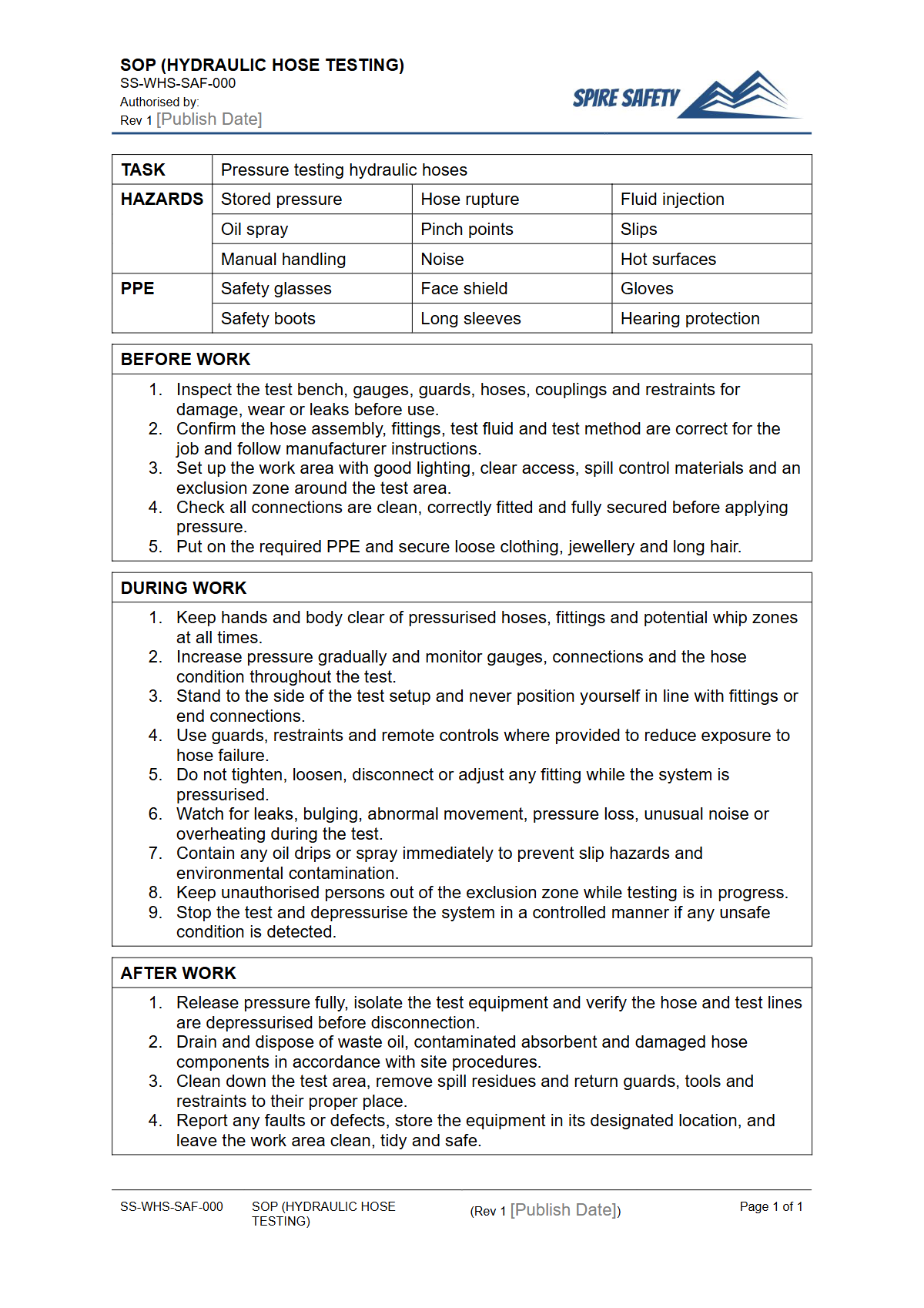
This free Safe Operating Procedure (Hydraulic Hose Testing) template provides a comprehensive framework for documenting the process of safely testing hydraulic hoses. Working with high-pressure hydraulic systems presents significant risks, including fluid injection injuries, component failure, and uncontrolled energy release.
A documented SOP is a critical control measure to ensure all testing is performed consistently and safely by competent personnel, helping to minimise these hazards in your workplace. This resource is designed as a structured starting point for developing your own site-specific procedure.
The primary purpose of this template is to help you formalise a safe system of work for inspecting and pressure testing hydraulic hoses. It outlines key steps including pre-operational checks, isolating energy sources, setting up the test environment, performing the test, and concluding procedures.
Using a standardised procedure helps organisations meet their duties under WHS legislation by managing risks associated with high-pressure fluid systems. A robust SOP is a cornerstone of effective WHS management systems, demonstrating a commitment to proactive risk management.
Video walkthrough
How to use the Free Safe Operating Procedure (Hydraulic Hose Testing) Template
To effectively implement this template, download the DOCX file and adapt it to the specific equipment, environment, and processes used in your organisation. The template includes sections for identifying hazards, listing required Personal Protective Equipment (PPE), and detailing the step-by-step procedure.
It is crucial that you customise this document; a generic SOP is not sufficient for compliance or safety. We recommend you conduct a risk assessment in consultation with your workers to identify all relevant hazards and controls, and incorporate these findings into the final document.
For machinery that relies heavily on hydraulics, you might also find our FREE Hydraulic Press SOP (Safe Operating Procedure) Template a useful reference when building out your library of procedures. The completed SOP should be reviewed, approved by a competent person, and made easily accessible to all relevant workers.
When to use it
A hydraulic hose testing SOP should be used whenever a new hose is being commissioned, after a repair or re-fitting, or as part of a scheduled preventative maintenance program. It is also essential following any incident where a hose failure is suspected or has occurred.
Regular, documented testing helps to identify potential weaknesses, degradation, or damage before they lead to catastrophic failure during operation. Implementing this procedure ensures that testing is not an ad-hoc activity but a planned, controlled process integrated into your overall plant maintenance schedule.
Periodic reviews of these procedures are often a key component of a thorough WHS compliance auditing program to verify their effectiveness and proper implementation across the business.
Who should use it
This Safe Operating Procedure is intended for use by competent personnel who are authorised and trained to work on hydraulic systems. This typically includes maintenance fitters, hydraulic technicians, and qualified mechanics.
Supervisors and managers are also key users, as they are responsible for ensuring the procedures are implemented correctly and that workers have the necessary training and resources to follow them safely. Safety officers and WHS advisors will also find the template useful for developing and reviewing workplace safety documentation.
Operators of equipment with complex hydraulic functions, such as those covered in our FREE Telehandler SOP Template, should be aware of the importance of these critical maintenance procedures. Maintaining the integrity of all hydraulic system components is fundamental to operational safety.
Beyond hoses, consider all pressurised components, such as those found in associated equipment. Our Free Air Compressor SOP (Safe Operating Procedure) Template provides guidance for another common energy source often found in workshops where hydraulic maintenance is performed.
You can browse our complete collection of procedural documents in our free WHS resources library to find more templates to support your safety systems.
Common mistakes
Common mistakes to avoid
- Using hands or fingers to check for leaks instead of a piece of cardboard or wood.
- Exceeding the manufacturer's specified maximum test pressure for the hose assembly.
- Failing to properly secure hose ends, leading to dangerous hose whipping upon failure.
- Conducting tests in an open area without adequate shielding or exclusion zones.
Legal references
Legal considerations
The following legal requirements may be relevant to this type of work.
- Work Health and Safety Act (Harmonised) — Provides the primary duties for protecting workers and other people from work health and safety risks.
- Work Health and Safety Regulations (Harmonised) — Sets out requirements supporting the management of workplace hazards and risks.
The following codes may be relevant to this type of work.
- Managing WHS Risks Code of Practice — Provides practical guidance on identifying hazards, assessing risks and applying effective controls.
- Work Health and Safety Consultation, Cooperation and Coordination Code of Practice — Provides practical guidance on consulting workers and coordinating with other duty holders.
- Managing the Work Environment and Facilities Code of Practice — Provides practical guidance on safe work environments, workplace facilities and related controls.
Did you know
Pinhole Leaks
A pinhole leak in a hydraulic hose can release fluid at speeds over 180 metres per second. This is fast enough to penetrate skin and cause severe fluid injection injuries, which are a medical emergency.
Hydraulic Pressure
A typical pressure washer operates at around 2,000 PSI. Heavy machinery hydraulic systems can operate at pressures exceeding 5,000 PSI, highlighting the immense stored energy and danger involved.
FAQ
Frequently asked questions
01What is a Safe Operating Procedure for hydraulic hose testing?
02How often should hydraulic hoses be tested?
03What are the main hazards during hydraulic hose testing?
04Who is qualified to perform hydraulic hose testing?
Share this resource
Free Safe Operating Procedure (Hydraulic Hose Testing) Template
Browse Categories
How To Use It
- 1Download and open in Word or PDF.
- 2Replace the placeholders with your business details.
- 3Get it reviewed by a WHS specialist before rollout.
Need it customised?
Our WHS consultants can adapt this template to your site, run a gap analysis, or audit what you already have in place.
Book a Free Consultation WHS consulting servicesor call 1300 156 382
Related templates
- Free Safe Operating Procedure (Hydraulic Isolation) Template
- Free Safe Operating Procedure (Hydraulic Jack) Template
- Free Safe Operating Procedure (Hydraulic Lift Table) Template
- Free Safe Operating Procedure (Hydraulic Nut Splitter) Template
- Free Safe Operating Procedure (Hydraulic Power Pack) Template
- Free Safe Operating Procedure (Hydraulic Spreader) Template