
Free Safe Operating Procedure (Inbound Freight Check) Template
Download our free Safe Operating Procedure (Inbound Freight Check) Template to formalise your freight handling process. It's a key step in managing risks.
Free Safe Operating Procedure (Inbound Freight Check) Template
DOCX • 126 KB + PDF
Updated Oct 2026
No signup required
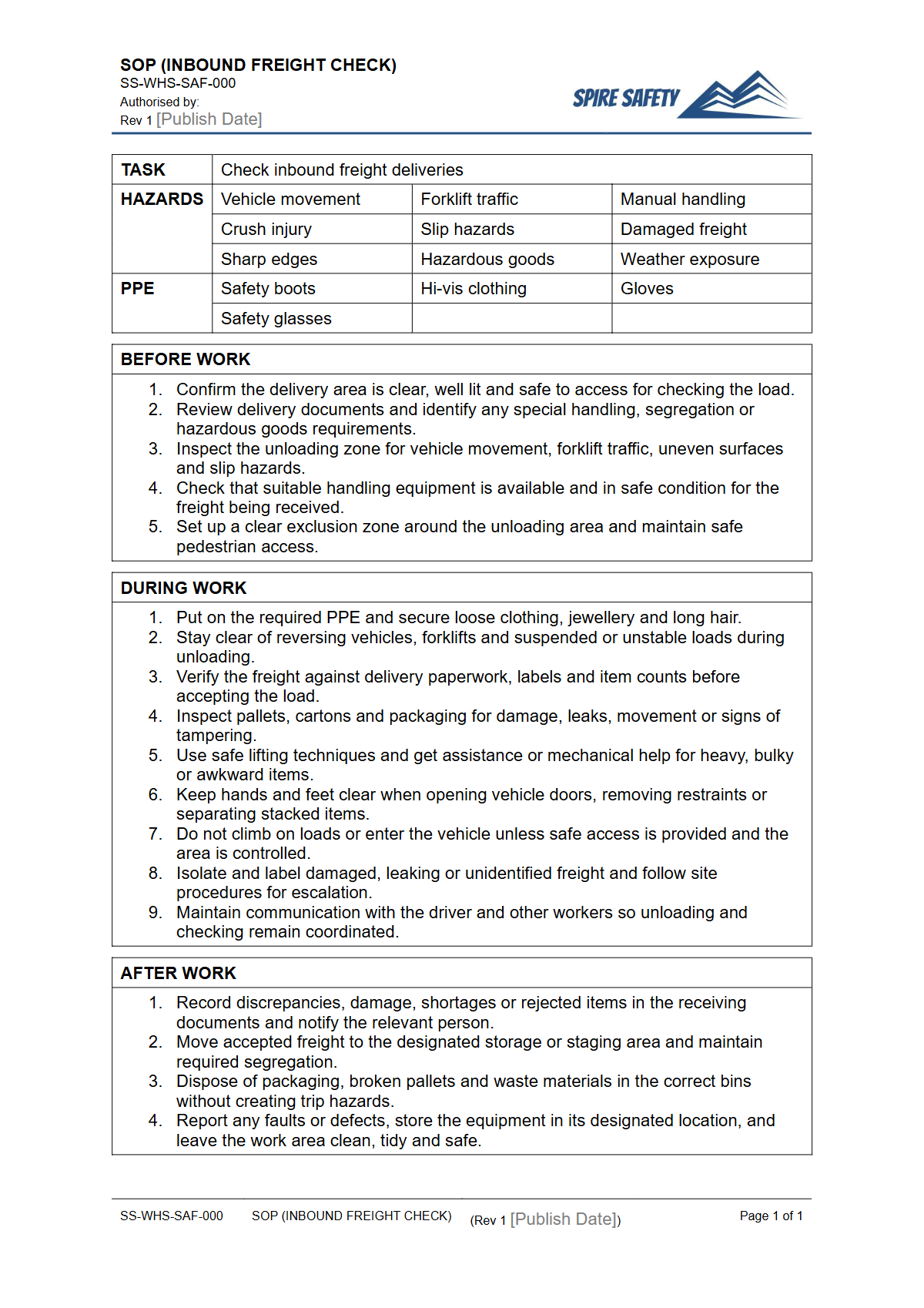
Purpose of the Free Safe Operating Procedure (Inbound Freight Check) Template
An SOP for checking inbound freight establishes a consistent, safe method for all workers involved in the receiving process. Its primary purpose is to identify and control hazards to prevent incidents and injuries.
Key risks addressed include musculoskeletal disorders from hazardous manual tasks, collisions between pedestrians and vehicles, and falls from loading docks. In more automated environments, it also helps manage risks associated with machinery like conveyors; our FREE Conveyer System SOP (Safe Operating Procedure) Template can provide more specific guidance on that equipment.
By implementing a formal procedure, your organisation demonstrates a commitment to health and safety, clarifies worker responsibilities, and creates a more efficient, predictable workflow.
Video walkthrough
How to use the Free Safe Operating Procedure (Inbound Freight Check) Template
This template is provided in both DOCX and PDF formats for your convenience. The DOCX version is fully editable, allowing you to tailor the content to the unique aspects of your workplace, including adding your company logo and specific site details.
Customisation is Essential
For this document to be effective, you MUST customise it to reflect your site's specific layout, equipment, types of freight, and internal processes. We are not familiar with your unique operational risks, so you must conduct your own risk assessment and incorporate the relevant controls into this SOP.
A generic procedure is not sufficient to meet your safety duties.
Integrating into Your Safety System
Once customised, this SOP should become a formal part of your safety framework. This means training all relevant workers on the procedure, making it easily accessible in the work area, and ensuring supervisors enforce its use.
A well-implemented SOP is a cornerstone of a robust WHS management system, helping to standardise safe work practices across your entire team.
Review and Improvement
Safe Operating Procedures are not static documents. This SOP should be reviewed regularly—typically annually, or whenever there is a change in equipment, processes, or after an incident or near-miss occurs.
Incorporating feedback from workers and findings from WHS compliance auditing ensures the procedure remains relevant and effective at controlling risks.
When to use this Safe Operating Procedure
The Inbound Freight Check SOP should be used every time a delivery vehicle arrives at your site to unload goods. It is a step-by-step guide that should be followed from the moment the truck enters the receiving area until it safely departs. Beyond daily operations, this procedure is a critical tool for:
- Inducting and training new warehouse or receiving staff.
- Conducting refresher training for existing team members.
- Performing risk assessments on your receiving processes.
- Investigating incidents or near-misses related to freight handling.
Using this template consistently helps ensure all legal and safety obligations are considered during this high-risk task. You can find more templates for various tasks in our free WHS resources library.
Who should use this Safe Operating Procedure
This SOP is intended for all personnel involved in the receiving of freight. This includes:
- Warehouse and Receiving Staff: The primary users who will follow the procedure daily.
- Forklift and Plant Operators: Individuals operating machinery to unload goods, who must coordinate their actions with ground staff. If you use specific machinery like telehandlers, consider using this SOP alongside our FREE Telehandler SOP Template.
- Supervisors and Managers: Responsible for ensuring the SOP is followed, providing training, and reviewing its effectiveness.
- WHS Representatives: Use the SOP as a benchmark for workplace inspections and safety discussions.
For highly complex or unusual receiving tasks that fall outside this standard procedure, it may be necessary to seek expert guidance through professional WHS consulting to develop a specific safe work method statement (SWMS).
Common mistakes
Common mistakes to avoid
- Using a generic template without customising it for your specific site, vehicles, and freight types.
- Failing to adequately train workers on the procedure and confirm their understanding before they start the task.
- Not enforcing the procedure, allowing workers to develop unsafe 'shortcuts' over time.
- Forgetting to review and update the SOP after a near-miss, incident, or change in the work environment.
Legal references
Legal considerations
The following legal requirements may be relevant to this type of work.
- Work Health and Safety Act (Harmonised) — Provides the primary duties for protecting workers and other people from work health and safety risks.
- Work Health and Safety Regulations (Harmonised) — Sets out requirements supporting the management of workplace hazards and risks.
The following codes may be relevant to this type of work.
- Managing WHS Risks Code of Practice — Provides practical guidance on identifying hazards, assessing risks and applying effective controls.
- Work Health and Safety Consultation, Cooperation and Coordination Code of Practice — Provides practical guidance on consulting workers and coordinating with other duty holders.
- Managing the Work Environment and Facilities Code of Practice — Provides practical guidance on safe work environments, workplace facilities and related controls.
Did you know
Transport and Warehousing Risks
The transport, postal, and warehousing industry has one of the highest rates of serious workers' compensation claims in Australia, with vehicle incidents and body stressing (manual handling) being major causes.
Consultation is Key
Under model WHS laws, employers have a legal duty to consult with workers on matters that affect their health and safety. Involving your team in drafting SOPs isn't just good practice—it's a requirement.
FAQ
Frequently asked questions
01What should be included in an inbound freight check SOP?
02Who is responsible for developing a Safe Operating Procedure?
03How often should an SOP for inbound freight be reviewed?
04Is an SOP a legal requirement in Australia?
Share this resource
Free Safe Operating Procedure (Inbound Freight Check) Template
Browse Categories
How To Use It
- 1Download and open in Word or PDF.
- 2Replace the placeholders with your business details.
- 3Get it reviewed by a WHS specialist before rollout.
Need it customised?
Our WHS consultants can adapt this template to your site, run a gap analysis, or audit what you already have in place.
Book a Free Consultation WHS consulting servicesor call 1300 156 382
Related templates
- Free Safe Operating Procedure (Inbound Load Staging) Template
- Free Safe Operating Procedure (Incontinence Linen Bag) Template
- Free Safe Operating Procedure (Incubator) Template
- Free Safe Operating Procedure (Induction Cooktop) Template
- Free Safe Operating Procedure (Induction Heater) Template
- Free Safe Operating Procedure (Industrial Fan) Template