
Free Safe Operating Procedure (Irrigation Head Check) Template
Need to standardise safety for irrigation head checks? This procedure helps define hazards and controls for maintenance. Download our free template today.
Free Safe Operating Procedure (Irrigation Head Check) Template
DOCX • 126 KB + PDF
Updated Oct 2026
No signup required
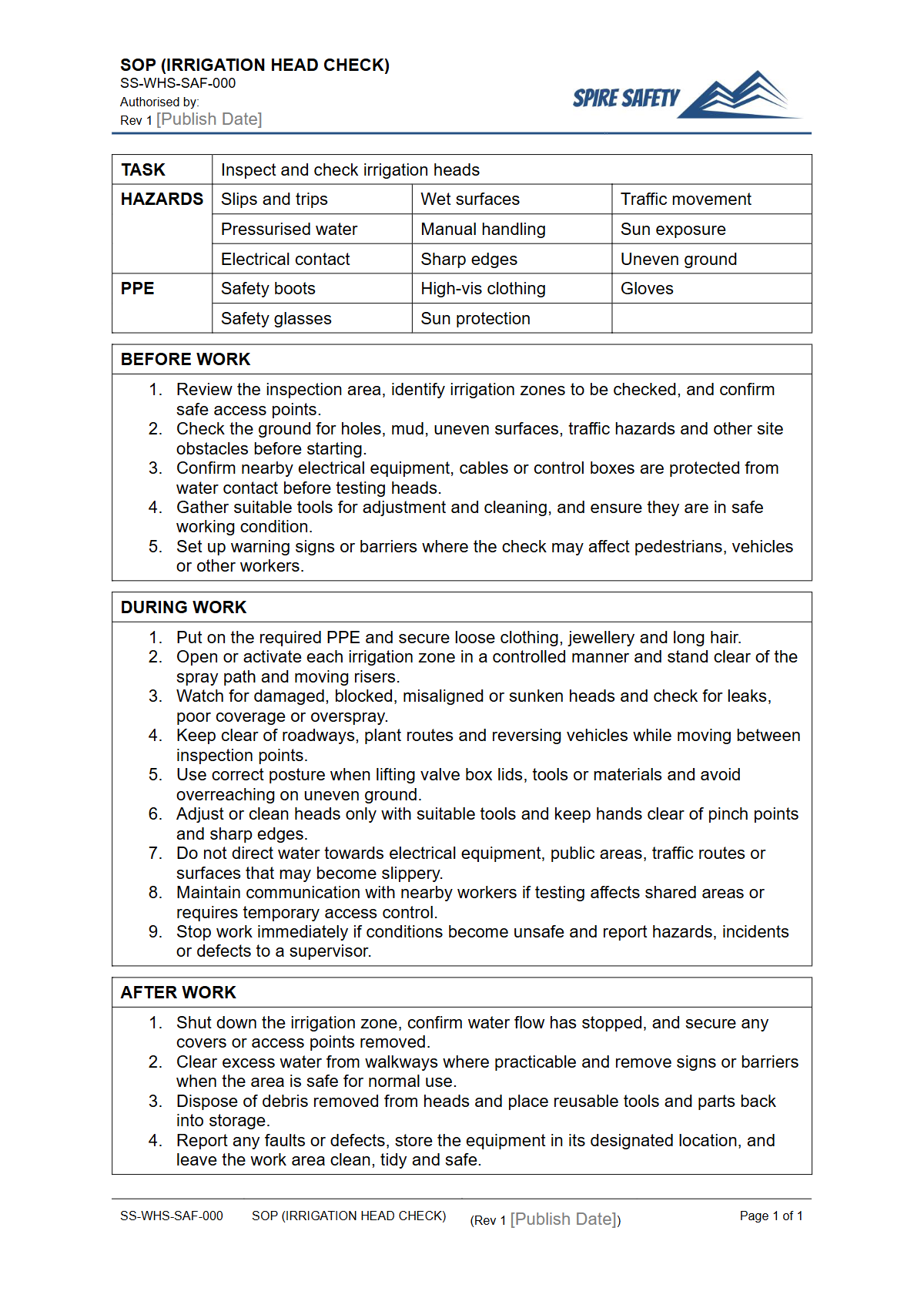
Purpose of the Free Safe Operating Procedure (Irrigation Head Check) Template
This Free Safe Operating Procedure (Irrigation Head Check) Template provides a structured starting point for developing a documented process for inspecting, maintaining, and repairing irrigation sprinkler heads. A Safe Operating Procedure (SOP) is a critical administrative control that outlines the step-by-step tasks required to complete a job safely.
Using this template helps your organisation identify hazards associated with irrigation systems, such as high-pressure water release, slips on wet surfaces, ergonomic strains from awkward postures, and potential interaction with other machinery.
By formalising your procedure, you create a consistent, safe method for all workers to follow, reducing the risk of injury and ensuring the task is completed efficiently. Documented procedures are a fundamental component of a comprehensive WHS management system, demonstrating a commitment to proactive safety management and meeting your duties under WHS legislation.
Video walkthrough
How to use the Free Safe Operating Procedure (Irrigation Head Check) Template
This downloadable document, available in both DOCX and PDF formats, is designed to be adapted to your specific workplace. It is crucial to recognise that this template is not a finished document.
To be effective, it must be customised in consultation with the workers who will be performing the task.
We have created this template as a guide, but it is essential that you customise it for your own business operations. Follow these steps:
- Download: Choose the DOCX version for easy editing.
- Consult: Discuss the procedure with your maintenance staff, groundskeepers, or agricultural workers. Their direct experience is invaluable for identifying practical hazards and effective controls.
- Customise: Add your company name, specific site details, and the makes and models of the irrigation equipment used. Modify the steps to reflect your actual process.
- Risk Assess: Use the prompts in the template to conduct a site-specific risk assessment, adding any unique hazards found in your operational environment. This SOP should be used alongside our broader FREE Irrigation System SOP (Safe Operating Procedure) Template for a more holistic view.
- Finalise & Train: Once finalised, formally approve the SOP. Ensure all relevant workers are trained on the procedure and that this training is documented.
- Review: Schedule regular reviews of the SOP (e.g., annually, or after an incident) to ensure it remains current and effective.
When to use it
This Safe Operating Procedure should be used whenever a worker is required to inspect, test, clean, or replace an irrigation sprinkler head. It formalises the safety requirements for both planned and unplanned maintenance activities. Common situations include:
- Routine preventative maintenance schedules (e.g., weekly or monthly system checks).
- Troubleshooting issues such as blockages, low pressure, or incorrect spray patterns.
- Replacing damaged or broken sprinkler heads.
- Preparing irrigation systems for seasonal startup or shutdown.
- Inducting and training new employees on the correct procedure.
For agricultural operations, integrating this task-specific SOP with procedures for other machinery is vital. For example, ensuring irrigation checks are coordinated with the use of equipment covered by documents like our FREE Grain Drill SOP Template helps prevent conflicting activities and maintains a safe work area.
Who should use it
This SOP is intended for any person conducting a business or undertaking (PCBU) whose workers perform irrigation maintenance tasks. It should be actively used by:
- Workers: Groundskeepers, landscapers, farm hands, maintenance personnel, and gardeners should use the SOP as a direct guide for performing the task safely.
- Supervisors and Managers: Team leaders and managers are responsible for ensuring workers are trained on the SOP and follow it correctly. They also oversee its implementation and review.
- WHS Professionals: Safety advisors can use this template to develop and integrate safety procedures into the organisation's overall safety framework. The finalised document serves as evidence of a safe system of work during WHS compliance auditing.
While this SOP covers head checks, major repairs involving excavation might require separate procedures, such as those found in a FREE Trencher SOP Template. You can explore our complete free WHS resources library for more templates to support your safety management needs.
Common mistakes
Common mistakes to avoid
- Failing to isolate the water supply before starting work.
- Using the template as-is without customising it for specific site conditions.
- Not training workers on the finalised SOP or documenting the training.
- Forgetting to check for nearby electrical hazards like pumps or lighting.
Legal references
Legal considerations
The following legal requirements may be relevant to this type of work.
- Work Health and Safety Act (Harmonised) — Provides the primary duties for protecting workers and other people from work health and safety risks.
- Work Health and Safety Regulations (Harmonised) — Sets out requirements supporting the management of workplace hazards and risks.
The following codes may be relevant to this type of work.
- Managing WHS Risks Code of Practice — Provides practical guidance on identifying hazards, assessing risks and applying effective controls.
- Work Health and Safety Consultation, Cooperation and Coordination Code of Practice — Provides practical guidance on consulting workers and coordinating with other duty holders.
- Managing the Work Environment and Facilities Code of Practice — Provides practical guidance on safe work environments, workplace facilities and related controls.
Did you know
Water Pressure Risks
Even seemingly low-pressure irrigation systems can eject a sprinkler head with enough force to cause serious eye injuries or dental damage if safety procedures aren't followed.
Consultation is Key
Under Australian WHS laws, employers (PCBUs) have a legal duty to consult with workers on matters that affect their health and safety, including the development of Safe Operating Procedures.
FAQ
Frequently asked questions
01What hazards are involved in checking irrigation heads?
02Is this SOP template enough for WHS compliance?
03How often should an irrigation head check SOP be reviewed?
04What personal protective equipment (PPE) is needed for irrigation head checks?
Share this resource
Free Safe Operating Procedure (Irrigation Head Check) Template
Browse Categories
How To Use It
- 1Download and open in Word or PDF.
- 2Replace the placeholders with your business details.
- 3Get it reviewed by a WHS specialist before rollout.
Need it customised?
Our WHS consultants can adapt this template to your site, run a gap analysis, or audit what you already have in place.
Book a Free Consultation WHS consulting servicesor call 1300 156 382
Related templates
- Free Safe Operating Procedure (Irrigation Leak Repair) Template
- Free Safe Operating Procedure (Irrigation Line Flush) Template
- Free Safe Operating Procedure (Irrigation Valve Check) Template
- Free Safe Operating Procedure (Irrigation Zone Test) Template
- Free Safe Operating Procedure (Isolation Signage Setup) Template
- Free Safe Operating Procedure (Jackhammer) Template