
Free Safe Operating Procedure (Load Guiding) Template
Download our free Safe Operating Procedure for Load Guiding. This customisable DOCX & PDF helps you define safe work steps for guiding suspended loads.
Free Safe Operating Procedure (Load Guiding) Template
DOCX • 126 KB + PDF
Updated Oct 2026
No signup required
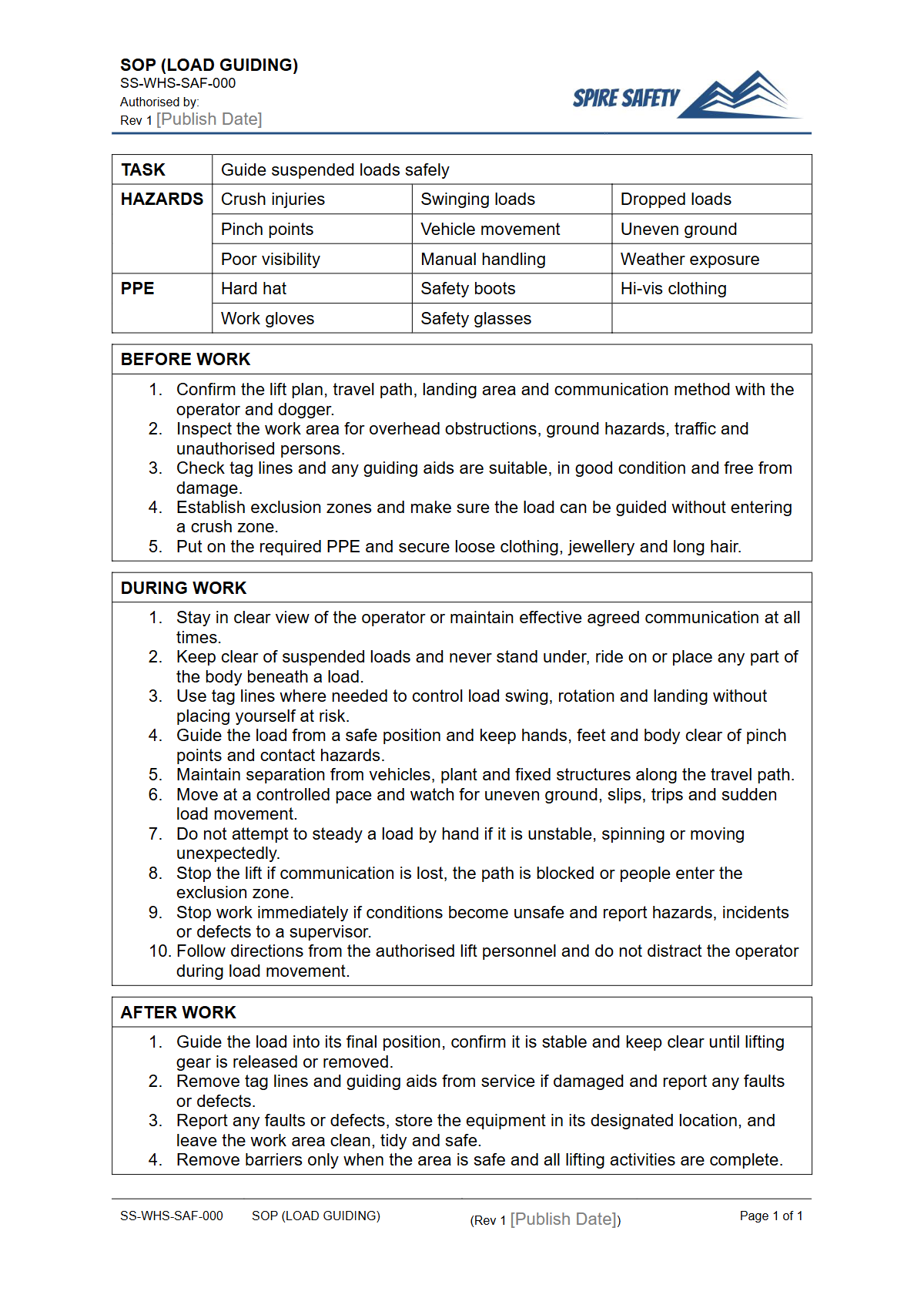
Purpose of the Free Safe Operating Procedure (Load Guiding) Template
Guiding suspended loads is a high-risk task that requires clear, documented procedures to protect workers. This free Safe Operating Procedure (Load Guiding) template provides a structured starting point for defining the approved, step-by-step process for controlling loads during lifting operations.
It helps your organisation detail critical safety measures, from pre-lift checks to communication protocols and emergency responses, minimising the risk of incidents caused by swinging, rotating, or uncontrolled loads.
A well-drafted SOP is essential for managing struck-by hazards, which are a leading cause of serious workplace injuries. By formalising procedures for tasks like using taglines, selecting exclusion zones, and using hand signals, you create a repeatable and trainable system of work.
This document is designed to complement other equipment-specific procedures, such as our free Telehandler SOP template, to form a more complete safety framework for your lifting activities.
Video walkthrough
How to use the Free Safe Operating Procedure (Load Guiding) Template
This template is available as a fully editable DOCX file, allowing for complete customisation to your specific operational needs. To use it effectively, you must adapt the content to reflect your site's unique environment, equipment, personnel, and risk profile.
This involves consulting with workers and supervisors who perform the task to ensure the procedure is practical and addresses all relevant hazards.
Steps for implementation:
- Download: Get the DOCX or PDF version.
- Consult: Engage with your team, including doggers, riggers, crane operators, and supervisors, to gather input on current practices and risks.
- Customise: Modify the template by adding site-specific details, such as types of loads handled, communication equipment used, designated lift paths, and emergency contact information.
- Review and Approve: Have a competent person, such as a WHS manager or supervisor, review and formally approve the final document.
- Train: Ensure all relevant personnel are thoroughly trained on the finalised SOP and that their understanding is verified.
Important: This is a template only. We are not WHS consultants providing advice.
To supports your compliance efforts with WHS legislation, you must customise this document for your specific workplace, plant, and processes. It is a critical component for organisations committed to developing comprehensive WHS management systems.
When to use a Load Guiding SOP
A Safe Operating Procedure for load guiding should be used for any lifting operation where a suspended load requires manual control to prevent uncontrolled movement. This is particularly crucial in situations such as:
- Lifting in windy conditions.
- Moving loads with a large surface area.
- Operating in congested areas or near personnel.
- Placing loads with precision.
- Navigating loads through tight spaces or around obstacles.
Implementing this procedure ensures that a consistent, safe method is followed every time, reducing the potential for human error. The documented process can also serve as valuable evidence of your risk management activities during a WHS compliance audit.
Who should use it
This SOP is intended for use by a range of personnel within an organisation. Key users include:
- Persons Conducting a Business or Undertaking (PCBUs): To meet their primary duty of care to provide and maintain a safe system of work.
- WHS Managers and Safety Officers: For developing, implementing, and reviewing safety documentation.
- Supervisors and Foremen: To enforce procedures, conduct pre-start meetings, and oversee lifting operations on-site.
- Workers: Specifically doggers, riggers, and designated spotters who physically perform the load guiding task. The SOP serves as their primary guide for safe work execution and training.
Effectively customising and implementing safety documents can be a complex process. If you require expert assistance in adapting this template or improving your overall safety framework, our WHS consulting services can provide tailored support.
You can also explore our extensive library of free WHS resources for other helpful templates and guides.
Common mistakes
Common mistakes to avoid
- Using taglines that are too short, forcing personnel inside the danger zone.
- Wrapping the tagline around hands, wrists, or other body parts instead of holding it securely.
- Failing to establish and confirm clear communication signals between the spotter and the plant operator before the lift commences.
- Not inspecting taglines for damage, knots, fraying, or contamination before use.
Legal references
Legal considerations
The following legal requirements may be relevant to this type of work.
- Work Health and Safety Act (Harmonised) — Provides the primary duties for protecting workers and other people from work health and safety risks.
- Work Health and Safety Regulations (Harmonised) — Sets out requirements supporting the management of workplace hazards and risks.
The following codes may be relevant to this type of work.
- Managing WHS Risks Code of Practice — Provides practical guidance on identifying hazards, assessing risks and applying effective controls.
- Work Health and Safety Consultation, Cooperation and Coordination Code of Practice — Provides practical guidance on consulting workers and coordinating with other duty holders.
- Managing the Work Environment and Facilities Code of Practice — Provides practical guidance on safe work environments, workplace facilities and related controls.
Did you know
Struck-by Hazards
"Struck-by" incidents involving moving or falling objects are a leading cause of serious injuries and fatalities in construction and logistics. Effective load guiding directly mitigates this high-consequence risk.
Tagline Material
Taglines should be made from non-conductive material, like polypropylene rope, especially when working near powerlines. Wire ropes must never be used as taglines due to the risk of electrical conductivity and severe hand injuries.
FAQ
Frequently asked questions
01What is the purpose of a tagline when guiding a load?
02Who is qualified to guide a load in Australia?
03Is a Safe Operating Procedure a legal requirement for load guiding?
04How often should a load guiding SOP be reviewed?
Share this resource
Free Safe Operating Procedure (Load Guiding) Template
Browse Categories
How To Use It
- 1Download and open in Word or PDF.
- 2Replace the placeholders with your business details.
- 3Get it reviewed by a WHS specialist before rollout.
Need it customised?
Our WHS consultants can adapt this template to your site, run a gap analysis, or audit what you already have in place.
Book a Free Consultation WHS consulting servicesor call 1300 156 382
Related templates
- Free Safe Operating Procedure (Load Indicator Test) Template
- Free Safe Operating Procedure (Load Landing) Template
- Free Safe Operating Procedure (Load Manifest Check) Template
- Free Safe Operating Procedure (Load Test Setup) Template
- Free Safe Operating Procedure (Loading Bay Cleaning) Template
- Free Safe Operating Procedure (Loading Bay Inspection) Template