
Free Safe Operating Procedure (Marina Waste Handling) Template
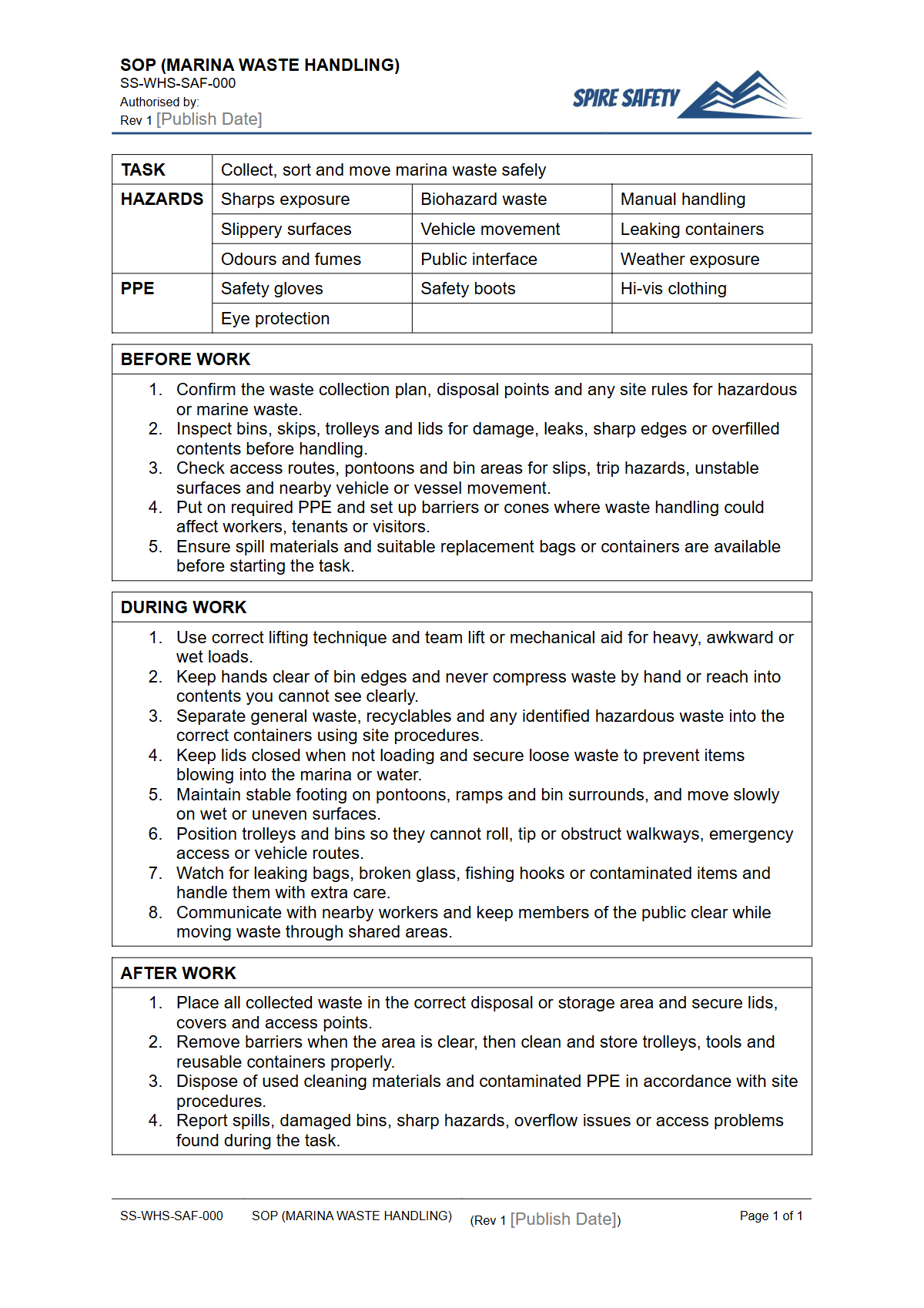
Download our free Safe Operating Procedure (Marina Waste Handling) template. A customisable DOCX & PDF to help manage marina waste safely.
Free Safe Operating Procedure (Marina Waste Handling) Template
DOCX • 126 KB + PDF
Updated Oct 2026
No signup required
Purpose of the Free Safe Operating Procedure (Marina Waste Handling) Template
Managing waste in a marina environment presents unique health, safety, and environmental risks. Our Free Safe Operating Procedure (Marina Waste Handling) Template provides a structured framework for your business to document and standardise these critical tasks.
This resource, available as a customisable DOCX and PDF, helps you establish clear, step-by-step instructions for workers handling various waste streams, from general refuse to hazardous materials like oils and batteries.
A Safe Operating Procedure (SOP) is a fundamental administrative control measure that outlines a specific task's safest and most effective method. For marina waste handling, this includes procedures for segregation, collection, transport, storage, and disposal of waste. Implementing this SOP helps in meeting your duty of care obligations, reducing the risk of injuries, preventing pollution, and forming a key part of a comprehensive WHS management system.
Video walkthrough
How to use the Free Safe Operating Procedure (Marina Waste Handling) Template
This document is a template, not a finished procedure. To be effective, it must be adapted to your specific workplace.
Start by downloading the DOCX file and consulting with your team, including marina staff, supervisors, and health and safety representatives. Walk through the waste handling processes on-site and identify the specific equipment used, waste types generated, and hazards present at your location.
You will need to add details such as:
- Specific marina layout and waste collection points.
- Types of waste handling equipment used (e.g., trolleys, compactors, bilge pumps).
- Required Personal Protective Equipment (PPE), such as gloves, safety glasses, and respiratory protection.
- Emergency procedures for spills, fires, or injuries.
- Contact details for waste disposal contractors and emergency services.
Important Note: We have created this template as a starting point. You must customise it to reflect the specific hazards, equipment, waste types, and control measures relevant to your marina and state/territory regulations.
For complex operations, consider engaging our expert WHS consulting services for guidance.
Key Hazards in Marina Waste Handling
Effectively managing risk starts with identifying potential hazards. Marina waste handling involves a range of risks that must be addressed in your SOP, including:
- Manual Handling Injuries: Lifting heavy bins, bags, or drums can lead to musculoskeletal disorders.
- Chemical Exposure: Contact with oils, fuels, solvents, cleaning agents, or battery acid can cause skin irritation, respiratory issues, or poisoning.
- Biological Hazards: Handling sewage (blackwater) or greywater presents risks of infection from bacteria and pathogens.
- Slips, Trips, and Falls: Wet or oily surfaces on jetties, pontoons, and work areas are common slip hazards.
- Fire and Explosion: Improper storage of flammable materials like oily rags, fuels, or certain chemicals can create a significant fire risk.
- Environmental Contamination: Spills or improper disposal can pollute waterways, harming marine life and breaching environmental laws.
Your emergency response plan might include the use of a defibrillator, as outlined in a specific Safe Operating Procedure for Defibrillator Operation.
When to Use This Safe Operating Procedure
This SOP should be the go-to reference for any task involving waste management within the marina. It should be actively used and referred to during:
- Daily rounds for collecting general waste and recyclables from vessels and public areas.
- Pumping out holding tanks (blackwater and greywater).
- Handling and segregating hazardous waste such as used oil, filters, batteries, and expired flares.
- Operating waste management equipment like compactors or shredders.
- Training and induction for new employees or contractors involved in waste management duties.
The principles of procedural safety can be applied to many other tasks around the worksite. You can explore many other templates in our free WHS resources library.
Who is Responsible for This Safe Operating Procedure?
Under WHS legislation, the Person Conducting a Business or Undertaking (PCBU) – the marina operator – has the primary duty of care. This includes ensuring safe systems of work, like SOPs, are developed, implemented, and maintained. Responsibilities are shared down the line:
- Management: Responsible for providing resources (equipment, PPE, training), allocating time for procedure development, and ensuring the SOP is reviewed and updated.
- Supervisors: Tasked with ensuring workers are trained on the SOP, follow it correctly, and that controls are working effectively.
- Workers: Have a responsibility to follow the procedures outlined in the SOP, use PPE as required, and report any hazards or incidents to their supervisor.
It's also best practice to conduct a periodic WHS compliance audit to verify that the implemented procedures are effective and being consistently followed by all staff.
Common mistakes
Common mistakes to avoid
- Failing to customise the template for specific site conditions, equipment, and waste streams.
- Neglecting to provide adequate training and supervision for staff on the finalised procedure.
- Not providing or maintaining the correct Personal Protective Equipment (PPE) specified in the SOP.
- Improperly mixing different types of hazardous waste, creating new chemical risks or fire hazards.
Legal references
Legal considerations
The following legal requirements may be relevant to this type of work.
- Work Health and Safety Act (Harmonised) — Provides the primary duties for protecting workers and other people from work health and safety risks.
- Work Health and Safety Regulations (Harmonised) — Sets out requirements supporting the management of workplace hazards and risks.
The following codes may be relevant to this type of work.
- Managing WHS Risks Code of Practice — Provides practical guidance on identifying hazards, assessing risks and applying effective controls.
- Work Health and Safety Consultation, Cooperation and Coordination Code of Practice — Provides practical guidance on consulting workers and coordinating with other duty holders.
- Managing the Work Environment and Facilities Code of Practice — Provides practical guidance on safe work environments, workplace facilities and related controls.
Did you know
Environmental Impact
Marina pollution, particularly from oils, chemicals and plastics, can have a severe impact on local marine ecosystems. Proper waste segregation and disposal are critical environmental controls.
Duty of Care
Under Australian model WHS laws, a PCBU (Person Conducting a Business or Undertaking) has a primary duty of care to ensure the health and safety of workers and others at the workplace.
FAQ
Frequently asked questions
01Is this Safe Operating Procedure template enough for my marina to be compliant?
02What types of waste does this marina SOP template cover?
03Who should be trained on the Marina Waste Handling SOP?
04How often should a Safe Operating Procedure be reviewed?
Share this resource
Free Safe Operating Procedure (Marina Waste Handling) Template
Browse Categories
How To Use It
- 1Download and open in Word or PDF.
- 2Replace the placeholders with your business details.
- 3Get it reviewed by a WHS specialist before rollout.
Need it customised?
Our WHS consultants can adapt this template to your site, run a gap analysis, or audit what you already have in place.
Book a Free Consultation WHS consulting servicesor call 1300 156 382
Related templates
- Free Safe Operating Procedure (Marine Battery Change) Template
- Free Safe Operating Procedure (Marine Deck Inspection) Template
- Free Safe Operating Procedure (Marine Hose Handling) Template
- Free Safe Operating Procedure (Marine VHF Radio) Template
- Free Safe Operating Procedure (Marine Waste Segregation) Template
- Free Safe Operating Procedure (Mask Fit Check) Template