
Free Safe Operating Procedure (Marine Hose Handling) Template
Download our Free Safe Operating Procedure (Marine Hose Handling) Template.
Free Safe Operating Procedure (Marine Hose Handling) Template
DOCX • 126 KB + PDF
Updated Oct 2026
No signup required
Purpose of the Free Safe Operating Procedure (Marine Hose Handling) Template
Handling marine hoses, whether for transferring fuel, chemicals, or other liquids, involves significant risks. This Safe Operating Procedure (SOP) template provides a structured framework for documenting the safe methods required to perform these tasks.
It helps your organisation control hazards such as high-pressure fluid release, musculoskeletal injuries from manual handling, slips and falls, and environmental spills. Formalising these steps is a key part of demonstrating due diligence and integrating safe work practices into your broader WHS management systems.
Video walkthrough
How to use the Free Safe Operating Procedure (Marine Hose Handling) Template
This resource is provided in both DOCX and PDF formats for your convenience. To effectively implement it, download the DOCX file and tailor it to the specific context of your workplace.
This includes adding details about the exact types of hoses used, the substances being transferred, your specific equipment (pumps, couplings), and the environmental conditions of your site. It is critical that this customisation is performed by a competent person.
Important: This is a template, not a finished document. We have provided a comprehensive starting point aligned with Australian WHS principles, but you must review and adapt every section to reflect your unique operational risks and control measures.
For complex operations, consider seeking specialist WHS consulting to ensure your final document is robust and fit-for-purpose.
What is included in the template?
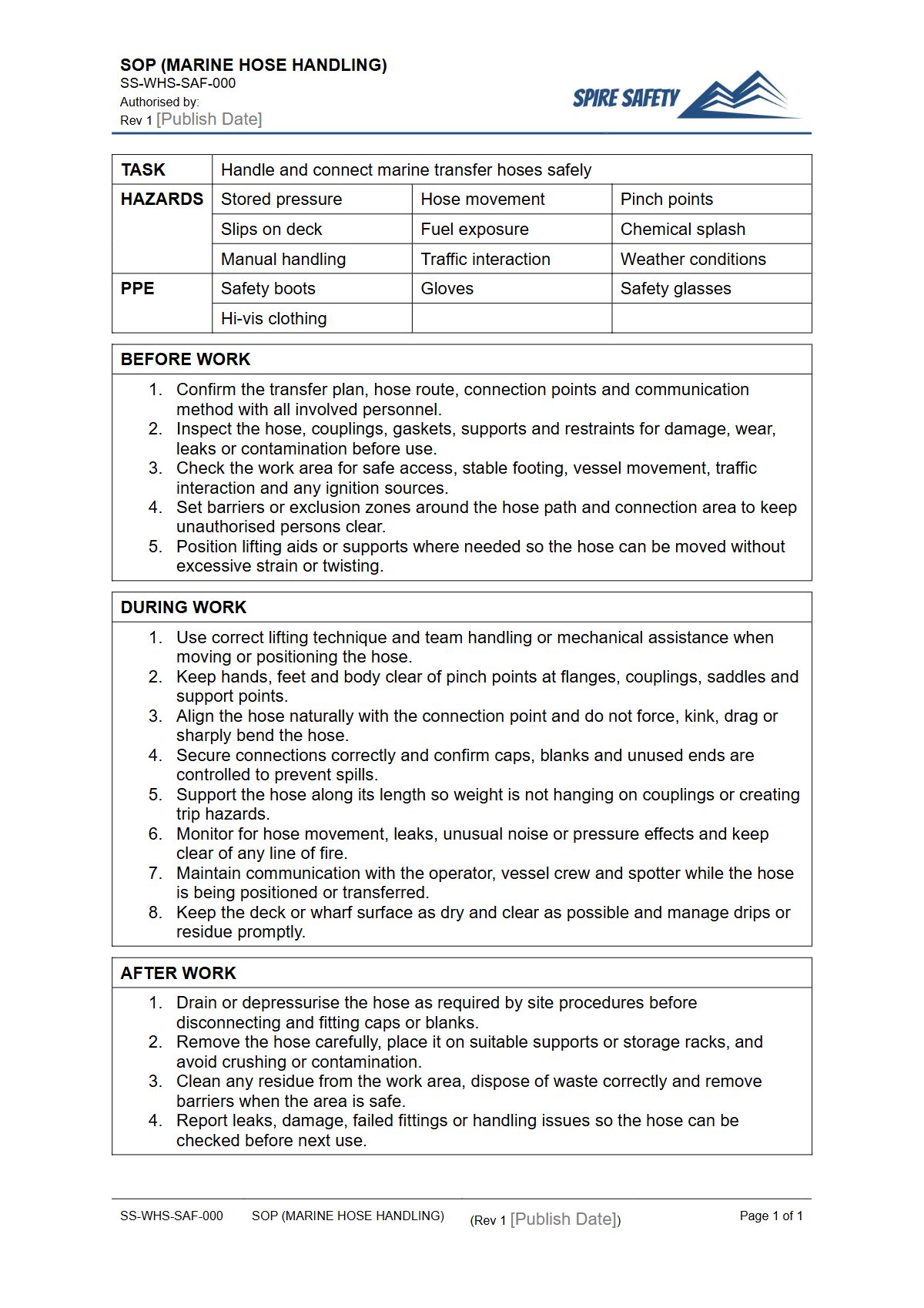
Our marine hose handling SOP template prompts you to detail essential safety information, including:
- Required Personal Protective Equipment (PPE)
- Associated hazards and risk control measures
- A step-by-step procedure for pre-operational checks, connection, operation, disconnection, and storage
- Guidance on depressurisation and draining
- Emergency response actions for spills, leaks, or injuries
A well-defined emergency plan is crucial. This may include having immediate access to spill kits and first aid, and ensuring team members understand the procedure for defibrillator operation if one is available on site.
When to use it
A Safe Operating Procedure for marine hose handling should be a core document used in several situations. It is essential for inducting and training new workers, ensuring they understand the approved methods from day one.
It also serves as a critical reference tool for experienced operators to refresh their knowledge and for supervisors to conduct pre-start briefings or toolbox talks. Furthermore, the SOP is a benchmark document used during internal reviews and external WHS compliance auditing to verify that prescribed safety processes are being followed correctly.
Who should use it
This SOP should be used by all personnel directly involved in marine hose handling tasks, including dockhands, vessel crew, and maintenance staff. Supervisors and managers are responsible for ensuring the procedure is implemented, understood, and adhered to.
WHS professionals can also use this template as a foundational document when developing risk assessments and training programs related to port, marina, or vessel operations. Often, these tasks require workers to access connection points at height, making documented procedures for tasks like safe step ladder use equally important.
By establishing and following a clear, documented procedure, your organisation can significantly reduce the likelihood of incidents, protect your workers, and safeguard the marine environment. You can explore more templates like this one in our free WHS resources library.
Common mistakes
Common mistakes to avoid
- Failing to depressurise the system fully before attempting to disconnect couplings.
- Using hoses that are visibly damaged, worn, or not rated for the specific substance or pressure.
- Applying poor manual handling techniques, leading to back strains and other musculoskeletal injuries.
- Neglecting regular inspections of hoses, fittings, and connections for wear and tear.
Legal references
Legal considerations
The following legal requirements may be relevant to this type of work.
- Work Health and Safety Act (Harmonised) — Provides the primary duties for protecting workers and other people from work health and safety risks.
- Work Health and Safety Regulations (Harmonised) — Sets out requirements supporting the management of workplace hazards and risks.
The following codes may be relevant to this type of work.
- Managing WHS Risks Code of Practice — Provides practical guidance on identifying hazards, assessing risks and applying effective controls.
- Work Health and Safety Consultation, Cooperation and Coordination Code of Practice — Provides practical guidance on consulting workers and coordinating with other duty holders.
- Managing the Work Environment and Facilities Code of Practice — Provides practical guidance on safe work environments, workplace facilities and related controls.
Did you know
Manual Handling Risk
Musculoskeletal disorders, often resulting from hazardous manual tasks like lifting and dragging heavy hoses, account for a significant portion of all serious workers' compensation claims in Australia.
High-Pressure Injection
A pinhole leak in a high-pressure hose can release fluid at a velocity high enough to penetrate skin and cause severe, limb-threatening injuries, even if the entry wound appears minor.
FAQ
Frequently asked questions
01What hazards are typically covered in a marine hose handling SOP?
02Is this template suitable for all types of marine hoses (e.g., oil, chemical, potable water)?
03How often should a Safe Operating Procedure for marine hose handling be reviewed?
04Who is responsible for training workers on this SOP?
Share this resource
Free Safe Operating Procedure (Marine Hose Handling) Template
Browse Categories
How To Use It
- 1Download and open in Word or PDF.
- 2Replace the placeholders with your business details.
- 3Get it reviewed by a WHS specialist before rollout.
Need it customised?
Our WHS consultants can adapt this template to your site, run a gap analysis, or audit what you already have in place.
Book a Free Consultation WHS consulting servicesor call 1300 156 382
Related templates
- Free Safe Operating Procedure (Marine VHF Radio) Template
- Free Safe Operating Procedure (Marine Waste Segregation) Template
- Free Safe Operating Procedure (Mask Fit Check) Template
- Free Safe Operating Procedure (Masonry Saw) Template
- Free Safe Operating Procedure (Massage Room Cleaning) Template
- Free Safe Operating Procedure (Massage Table Cleaning) Template