
Free Safe Operating Procedure (Medical Gas Cylinder) Template
Properly manage the risks associated with medical gas cylinders using our structured Safe Operating Procedure. Download this free template to get started.
Free Safe Operating Procedure (Medical Gas Cylinder) Template
DOCX • 126 KB + PDF
Updated Oct 2026
No signup required
Purpose of the Free Safe Operating Procedure (Medical Gas Cylinder) Template
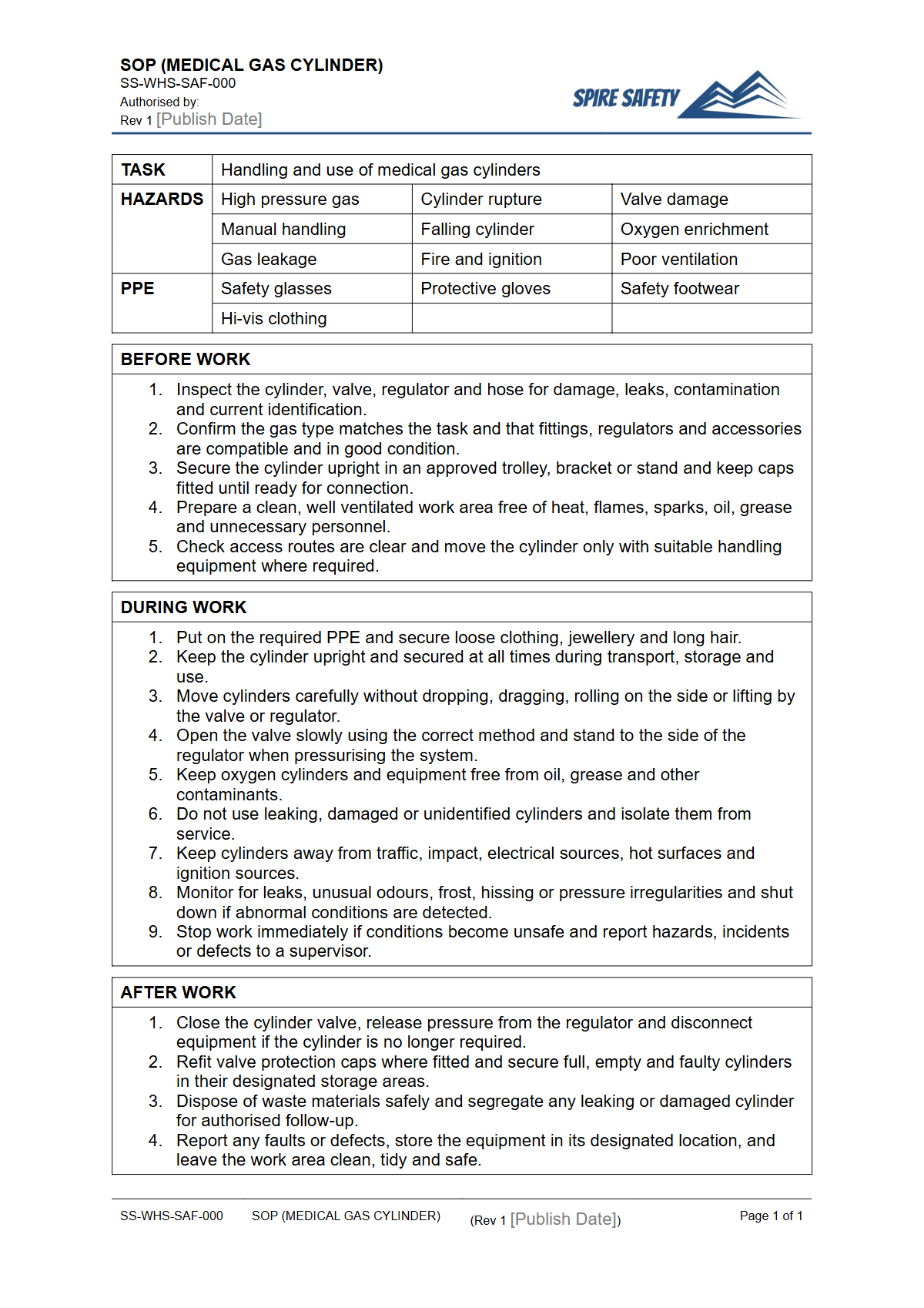
Medical gas cylinders, such as those containing oxygen, nitrous oxide, and medical air, are essential in healthcare settings but pose significant risks if mishandled. This Free Safe Operating Procedure (Medical Gas Cylinder) Template provides a structured framework for documenting the step-by-step process for their safe storage, handling, transport, and use.
Implementing a comprehensive SOP helps your organisation standardise safe work practices, train personnel effectively, and demonstrate due diligence in managing workplace health and safety risks associated with hazardous chemicals and pressurised systems.
Video walkthrough
How to use the Free Safe Operating Procedure (Medical Gas Cylinder) Template
This template is provided as a fully editable DOCX file, allowing you to adapt it to your specific operational needs. After downloading, you will need to conduct a site-specific risk assessment and update the document with details relevant to your workplace, including the types of gases used, specific equipment, emergency contacts, and assigned responsibilities.
A PDF version is also available for easy distribution once your customisations are complete.
Important: It's essential to recognise that this template is a starting point. We strongly recommend you customise it to reflect the specific types of medical gases, equipment, and work environment at your facility.
This procedure should be reviewed and approved by a competent person before implementation.
When to implement this Safe Operating Procedure
A Safe Operating Procedure for medical gas cylinders should be used during every task involving the cylinders, from receiving them at the loading dock to connecting them for patient use and handling empty units. It is a critical document for daily operations, staff induction, and refresher training.
This procedure should be integrated into your overarching safety framework, as it is a fundamental component of effective WHS management systems that ensure consistent and safe work practices across the organisation.
Who is this SOP for?
This SOP is intended for all personnel who may interact with medical gas cylinders. This includes, but is not limited to, clinical staff like nurses and doctors, paramedics, facilities and maintenance staff, porters, and warehouse operators.
Managers and supervisors should use it as a tool for training and for monitoring safe work behaviour. Reading and understanding the SOP is a prerequisite for any worker required to handle medical gases, complementing practical, hands-on training.
Key Hazards in Medical Gas Cylinder Handling
Handling medical gas cylinders involves several distinct hazards that must be controlled. The high pressure of the contents means a damaged cylinder can become a dangerous projectile.
The gases themselves present risks: oxygen can violently accelerate fires, inert gases like nitrogen can cause asphyxiation in poorly ventilated areas, and administering the wrong gas can have fatal consequences. These pressure-related risks share principles with other pressurised plant, which are detailed in documents like our Free Air Compressor SOP.
Core Components of a Medical Gas Cylinder SOP
A robust procedure should guide workers through every stage of the cylinder's lifecycle in the workplace. Our template prompts you to detail the following critical steps:
Receiving and Storage
Procedures should cover inspecting cylinders upon delivery for any damage, ensuring they are stored upright, and securing them with chains or straps to prevent falling. It is vital to segregate full and empty cylinders and to separate certain gas types, particularly oxygen and flammable gases. In facilities handling large quantities, moving pallets of cylinders may require specific plant, each needing its own SOP like our FREE Telehandler SOP.
Transportation and Connection
Cylinders must always be transported using a purpose-built trolley, with the cylinder secured. The template outlines rules against rolling, dragging, or dropping them.
Before connecting a cylinder, the procedure should require staff to inspect the valve, use the correct regulator and seals for the specific gas, and ensure connections are tight but not over-tightened.
In-Use and Emergency Procedures
The SOP should instruct users to open valves slowly and to check for leaks using an approved leak-detection solution. A critical safety rule is to always close the main cylinder valve when the equipment is not in use.
The procedure must also contain clear, actionable steps for emergencies such as a major leak, fire, or an incident involving incorrect gas administration. The effectiveness of these procedures can be verified through routine workplace inspections or formal WHS compliance auditing.
Customising Your Template
To make this SOP effective, you must populate it with site-specific information. This includes listing the exact types of medical gases your facility uses, the makes and models of regulators and other equipment, and the names or roles of responsible personnel.
Adding site maps for storage areas and emergency contact numbers is also crucial. For complex sites or those unsure about their specific risks, engaging external experts through WHS consulting can provide valuable clarity and help ensure your procedures are robust and practical.
Common mistakes
Common mistakes to avoid
- Storing cylinders unsecured, lying down, or near heat sources and doorways.
- Using the wrong type of regulator or failing to check seals and connections for leaks.
- Opening the cylinder valve too quickly, which can cause a rapid pressure surge and damage the regulator.
- Manually carrying, rolling, or dragging cylinders instead of using a purpose-built trolley.
Legal references
Legal considerations
The following legal requirements may be relevant to this type of work.
- Work Health and Safety Act (Harmonised) — Provides the primary duties for protecting workers and other people from work health and safety risks.
- Work Health and Safety Regulations (Harmonised) — Sets out requirements supporting the management of workplace hazards and risks.
The following codes may be relevant to this type of work.
- Managing WHS Risks Code of Practice — Provides practical guidance on identifying hazards, assessing risks and applying effective controls.
- Work Health and Safety Consultation, Cooperation and Coordination Code of Practice — Provides practical guidance on consulting workers and coordinating with other duty holders.
- Managing the Work Environment and Facilities Code of Practice — Provides practical guidance on safe work environments, workplace facilities and related controls.
Did you know
Cylinder Colours
In Australia, medical gas cylinders are colour-coded for identification. Medical oxygen cylinders have a white body and a black shoulder, while medical air cylinders have a white body with a black and white quartered shoulder.
Oxygen Enrichment
A small leak from an oxygen cylinder can create an oxygen-enriched atmosphere, dramatically increasing fire risk. Materials that don't normally burn in air, like clothing, can ignite easily and burn fiercely in this environment.
FAQ
Frequently asked questions
01What is a Safe Operating Procedure for a medical gas cylinder?
02Why is cylinder segregation important for medical gases?
03How often should medical gas cylinders be inspected?
04Can I use this template for industrial gas cylinders too?
Share this resource
Free Safe Operating Procedure (Medical Gas Cylinder) Template
Browse Categories
How To Use It
- 1Download and open in Word or PDF.
- 2Replace the placeholders with your business details.
- 3Get it reviewed by a WHS specialist before rollout.
Need it customised?
Our WHS consultants can adapt this template to your site, run a gap analysis, or audit what you already have in place.
Book a Free Consultation WHS consulting servicesor call 1300 156 382
Related templates
- Free Safe Operating Procedure (Medication Fridge Clean) Template
- Free Safe Operating Procedure (Mesh Bender) Template
- Free Safe Operating Procedure (Mesh Cutter) Template
- Free Safe Operating Procedure (Metal Detector) Template
- Free Safe Operating Procedure (Metal Locator) Template
- Free Safe Operating Procedure (Metal Pickling) Template