
Free Safe Operating Procedure (Mobility Scooter Clean) Template
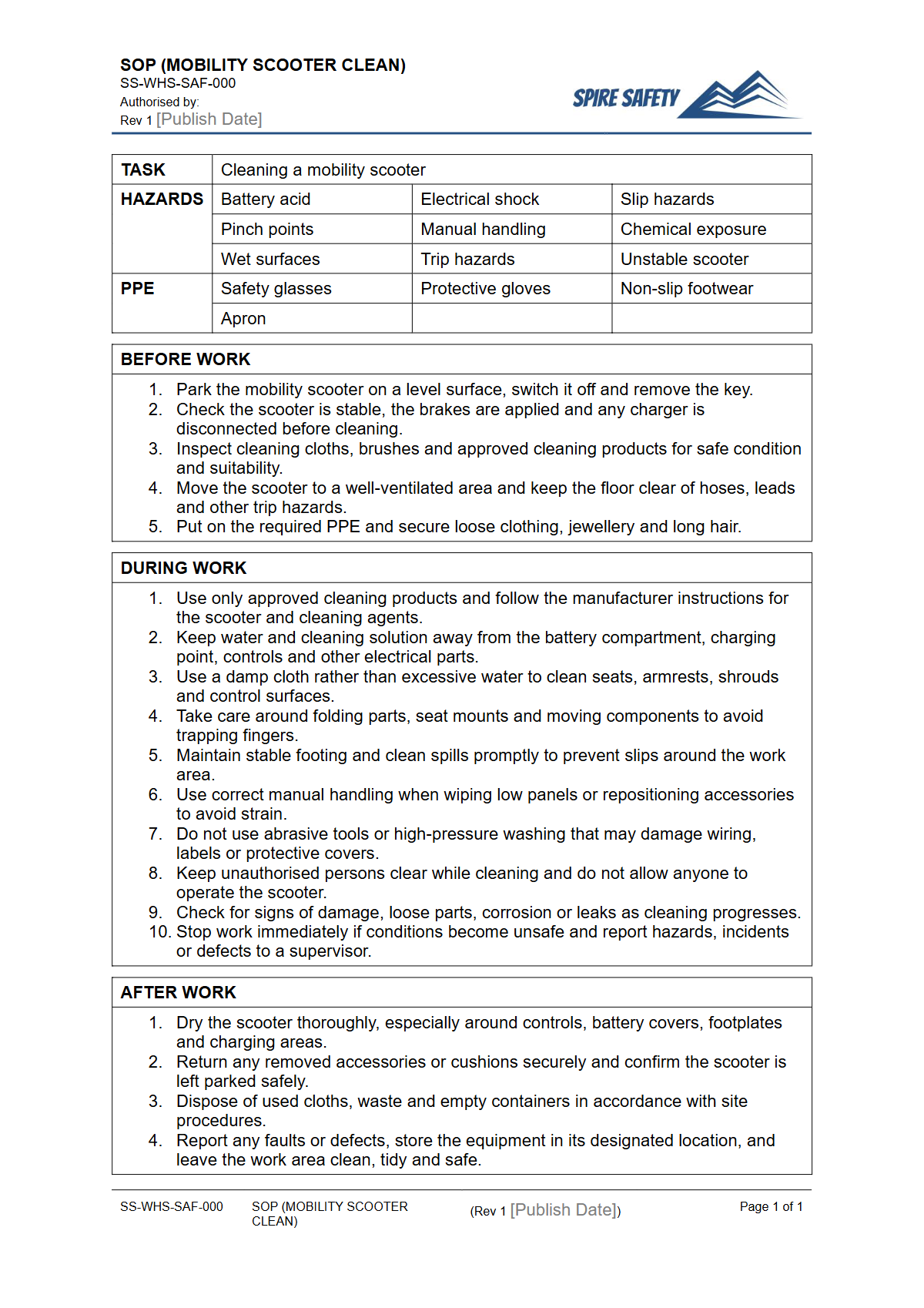
Download our free Safe Operating Procedure (Mobility Scooter Clean) template. This resource helps outline safety steps for cleaning mobility scooters.
Free Safe Operating Procedure (Mobility Scooter Clean) Template
DOCX • 126 KB + PDF
Updated Oct 2026
No signup required
Purpose of the Free Safe Operating Procedure (Mobility Scooter Clean) Template
This free Safe Operating Procedure (Mobility Scooter Clean) template provides a structured framework for businesses to create a documented process for cleaning mobility scooters safely. A well-defined SOP is critical for minimising risks associated with cleaning agents, water ingress, and manual handling, ensuring the safety of workers and the integrity of the equipment.
The primary goal is to help you establish a clear, repeatable, and safe method for the task. This task, while seemingly simple, involves several potential hazards including exposure to cleaning chemicals, slip and trip risks from wet floors, and electrical hazards related to the scooter's battery and motor.
By implementing a formal procedure, you can standardise the cleaning process, ensure appropriate controls are in place, and demonstrate due diligence in managing workplace health and safety. It forms a crucial part of broader WHS management systems, providing workers with clear instructions to follow.
Video walkthrough
How to use the Free Safe Operating Procedure (Mobility Scooter Clean) Template
Download the template in your preferred format (DOCX for easy editing or PDF) and adapt it to your specific operational context. This step is essential.
You must add details relevant to your workplace, such as the specific make and model of scooters, the approved cleaning chemicals you use (including references to their Safety Data Sheets - SDS), required Personal Protective Equipment (PPE), and emergency procedures. A section for pre-operational checks and post-cleaning inspection is included to ensure the equipment remains in safe working order.
We provide this template as a starting point; it is your responsibility to ensure the final document is comprehensive and reflects the actual risks in your work environment. If you need expert assistance in this customisation process, our WHS consulting team can provide tailored support.
When to use it
This Safe Operating Procedure should be used whenever a mobility scooter requires cleaning. This could be part of a regular maintenance schedule in an aged care facility, a pre-hire hygiene clean for a rental company, or after a repair at a service centre.
The procedure is vital for ensuring consistency and safety across all staff and shifts. It is particularly important when using powered equipment for cleaning, such as pressure washers or an air compressor for drying components, as these introduce higher levels of risk that must be managed through a formal process.
The SOP serves as both a training tool for new staff and a reference guide for experienced workers.
Who should use it
The procedure is designed for any worker tasked with cleaning mobility scooters, including maintenance personnel, cleaning staff, healthcare assistants, and workshop technicians. Supervisors and managers also have a key role in implementing the SOP, providing the necessary training, and ensuring it is followed correctly.
Periodically, a safety manager or external auditor should review the procedure's effectiveness as part of regular WHS compliance auditing activities to ensure it remains current and effective in controlling risks. This ensures the document evolves with any changes in equipment, chemicals, or work practices, maintaining a high standard of safety.
A documented SOP is more than just a piece of paper; it is a fundamental tool for risk management. It helps create a consistent safety culture where tasks are performed correctly and safely every time. For more templates and safety documents, explore our comprehensive free WHS resources library.
Common mistakes
Common mistakes to avoid
- Using the template 'as-is' without adding site-specific details like chemical names and emergency contacts.
- Failing to provide the specific Personal Protective Equipment (PPE) listed in the customised SOP.
- Not training workers on the final procedure or verifying their understanding before they start the task.
- Overlooking electrical safety, such as failing to protect the battery and controls from water ingress.
Legal references
Legal considerations
The following legal requirements may be relevant to this type of work.
- Work Health and Safety Act (Harmonised) — Provides the primary duties for protecting workers and other people from work health and safety risks.
- Work Health and Safety Regulations (Harmonised) — Sets out requirements supporting the management of workplace hazards and risks.
The following codes may be relevant to this type of work.
- Managing WHS Risks Code of Practice — Provides practical guidance on identifying hazards, assessing risks and applying effective controls.
- Work Health and Safety Consultation, Cooperation and Coordination Code of Practice — Provides practical guidance on consulting workers and coordinating with other duty holders.
- Managing the Work Environment and Facilities Code of Practice — Provides practical guidance on safe work environments, workplace facilities and related controls.
Did you know
TGA Regulation
In Australia, mobility scooters are regulated as medical devices by the Therapeutic Goods Administration (TGA) to ensure they meet certain standards for safety and performance.
Safe Systems of Work
The model WHS laws require employers to provide and maintain safe systems of work for all tasks, including routine activities like cleaning, to eliminate or minimise risks to health and safety.
FAQ
Frequently asked questions
01What are the main hazards when cleaning a mobility scooter?
02Does this SOP template cover specific cleaning chemicals?
03Who is responsible for training workers on this SOP?
04How often should an SOP for cleaning mobility scooters be reviewed?
Share this resource
Free Safe Operating Procedure (Mobility Scooter Clean) Template
Browse Categories
How To Use It
- 1Download and open in Word or PDF.
- 2Replace the placeholders with your business details.
- 3Get it reviewed by a WHS specialist before rollout.
Need it customised?
Our WHS consultants can adapt this template to your site, run a gap analysis, or audit what you already have in place.
Book a Free Consultation WHS consulting servicesor call 1300 156 382
Related templates
- Free Safe Operating Procedure (Moisture Meter) Template
- Free Safe Operating Procedure (Monorail Hoist) Template
- Free Safe Operating Procedure (Mooring Area Inspection) Template
- Free Safe Operating Procedure (Mooring Line Handling) Template
- Free Safe Operating Procedure (Mooring Winch) Template
- Free Safe Operating Procedure (Mortar Mixer) Template