
Free Safe Operating Procedure (Mooring Area Inspection) Template
Manage risks associated with mooring areas with our free Safe Operating Procedure template. Download this customisable document to formalise your inspections.
Free Safe Operating Procedure (Mooring Area Inspection) Template
DOCX • 126 KB + PDF
Updated Oct 2026
No signup required
Purpose of the Free Safe Operating Procedure (Mooring Area Inspection) Template
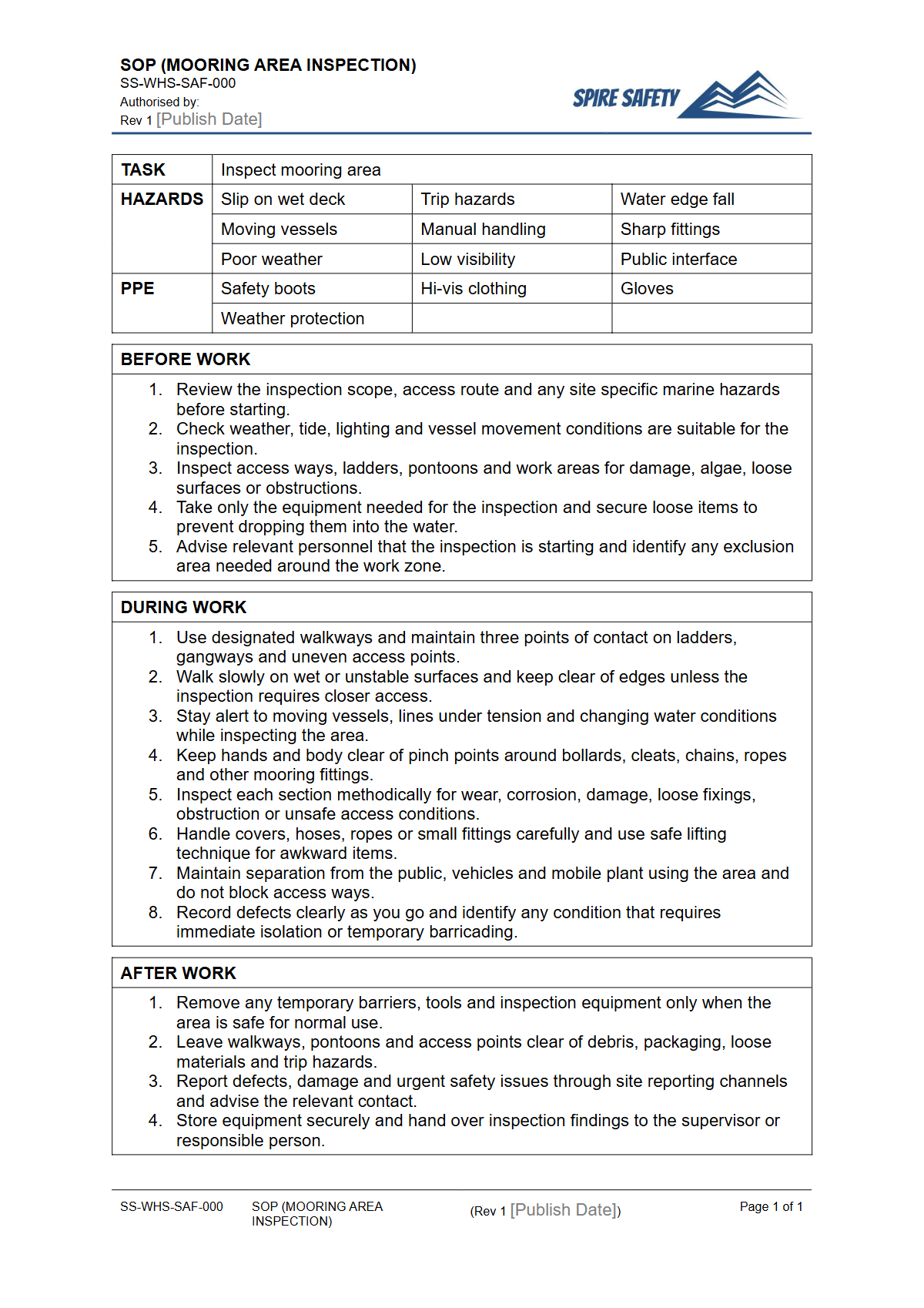
This Free Safe Operating Procedure (Mooring Area Inspection) Template provides a structured framework for businesses to establish and document a consistent inspection process for mooring areas, including wharves, jetties, docks, and marinas. The primary purpose is to manage health and safety risks by providing clear, step-by-step instructions for personnel.
A documented procedure helps ensure that inspections are performed thoroughly and consistently, regardless of who is conducting them.
Mooring environments present a unique combination of hazards, such as slips, trips, and falls on wet or uneven surfaces, falls from height into water, and risks associated with damaged infrastructure like deteriorating decking, corroded ladders, or compromised bollards and cleats. Implementing a formal SOP is a critical component of a proactive safety strategy.
It helps your organisation demonstrate due diligence and is a fundamental part of an effective WHS management system, ensuring that risks are identified, assessed, and controlled in a systematic way.
Video walkthrough
How to use the Free Safe Operating Procedure (Mooring Area Inspection) Template
This resource is available for download as a DOCX file, which is fully editable in Microsoft Word or other compatible programs, and as a PDF for easy viewing. The DOCX version is designed to be adapted to your specific operational needs and workplace environment.
It is crucial to methodically work through the document, adding details about your specific location, equipment, personnel, and emergency protocols.
Important: This is a template, not a finished document. To be effective, you must customise it to reflect the specific hazards and control measures relevant to your workplace.
We have provided a comprehensive starting point, but you need to conduct your own risk assessment and integrate the findings into the final procedure.
What to Customise
- Site Details: Specify the exact location(s) the SOP applies to.
- PPE Requirements: List the mandatory Personal Protective Equipment, such as high-visibility clothing, non-slip safety footwear, and personal flotation devices where a risk of falling into water exists.
- Step-by-Step Instructions: Detail the sequence of the inspection. This should cover pre-start checks (e.g., checking weather conditions), the inspection route, and specific items to check (e.g., decking, handrails, lighting, life-saving equipment, bollards, fendering).
- Defect Reporting: Define the process for reporting and rectifying any hazards or damage identified during the inspection.
- Emergency Procedures: Outline actions to be taken in an emergency, including man-overboard protocols and first aid response.
Integrating this SOP with procedures for specific machinery used in the area creates a more robust safety framework. For example, if materials are loaded onto vessels, you might also require a FREE Conveyer System SOP to manage associated risks.
When to Conduct a Mooring Area Inspection
The frequency of inspections should be determined by a risk assessment, considering factors like the level of use, environmental conditions, and the age and condition of the infrastructure. As a general guide, inspections should be scheduled:
- Routinely: Daily or weekly checks are common for high-traffic areas to identify immediate hazards like spills, debris, or damaged safety equipment.
- Periodically: More detailed monthly or quarterly inspections may be required to assess structural wear and tear.
- Before Use: A brief pre-use check is advisable before any significant mooring operation.
- After Significant Events: Inspections are essential after severe weather events (storms, floods), vessel impact, or any other incident that could have compromised the integrity of the area.
Regularly scheduled inspections form a key part of your safety assurance activities. These records are often reviewed during a formal WHS compliance audit to verify that safety processes are being followed as documented.
Who Should Use This Safe Operating Procedure
This SOP should be used by all personnel tasked with inspecting, maintaining, or supervising mooring areas. This includes, but is not limited to, dock masters, marina managers, maintenance teams, safety officers, and supervisors.
It is also a valuable resource for training new employees, ensuring they understand the potential hazards and the established procedures for working safely.
Competency is key. Personnel must be trained on the contents of the final, customised SOP and be deemed competent to carry out the inspection safely and effectively.
For workers who operate machinery in the vicinity, their training should encompass all relevant procedures. For instance, an operator using lifting equipment near the wharf's edge should be familiar with this inspection SOP in addition to the FREE Telehandler SOP for their specific machine.
For organisations seeking to develop a comprehensive suite of safety documentation, expert guidance can streamline the process and ensure alignment with best practice. Spire Safety provides specialist WHS consulting to help businesses of all sizes build practical and effective safety management systems.
You can also explore our free WHS resources library for more templates and guides.
Common mistakes
Common mistakes to avoid
- Failing to customise the template with site-specific details and hazards.
- Using the SOP as a 'tick-and-flick' exercise without a thorough physical inspection.
- Neglecting to train all relevant personnel on the finalised procedure.
- Not reviewing the SOP after an incident or changes to the mooring environment.
Legal references
Legal considerations
The following legal requirements may be relevant to this type of work.
- Work Health and Safety Act (Harmonised) — Provides the primary duties for protecting workers and other people from work health and safety risks.
- Work Health and Safety Regulations (Harmonised) — Sets out requirements supporting the management of workplace hazards and risks.
The following codes may be relevant to this type of work.
- Managing WHS Risks Code of Practice — Provides practical guidance on identifying hazards, assessing risks and applying effective controls.
- Work Health and Safety Consultation, Cooperation and Coordination Code of Practice — Provides practical guidance on consulting workers and coordinating with other duty holders.
- Managing the Work Environment and Facilities Code of Practice — Provides practical guidance on safe work environments, workplace facilities and related controls.
Did you know
The Strength of a Bollard
A single mooring bollard on a commercial wharf is engineered to withstand immense forces, often rated for safe working loads exceeding 100 or even 200 tonnes.
A Leading Cause of Injury
Slips, trips, and falls are one of the most common causes of workplace injury in Australia, a risk particularly heightened on wet and uneven surfaces common to mooring areas.
FAQ
Frequently asked questions
01What is a Safe Operating Procedure (SOP) for a mooring area inspection?
02How often should mooring areas be inspected?
03Who is responsible for creating and implementing a mooring inspection SOP?
04Can this template be used for any type of mooring facility?
Share this resource
Free Safe Operating Procedure (Mooring Area Inspection) Template
Browse Categories
How To Use It
- 1Download and open in Word or PDF.
- 2Replace the placeholders with your business details.
- 3Get it reviewed by a WHS specialist before rollout.
Need it customised?
Our WHS consultants can adapt this template to your site, run a gap analysis, or audit what you already have in place.
Book a Free Consultation WHS consulting servicesor call 1300 156 382
Related templates
- Free Safe Operating Procedure (Mooring Line Handling) Template
- Free Safe Operating Procedure (Mooring Winch) Template
- Free Safe Operating Procedure (Mortar Mixer) Template
- Free Safe Operating Procedure (Mortar Pump) Template
- Free Safe Operating Procedure (Mortising Machine) Template
- Free Safe Operating Procedure (Motel Room Turnaround) Template