
Free Safe Operating Procedure (Plant Division) Template
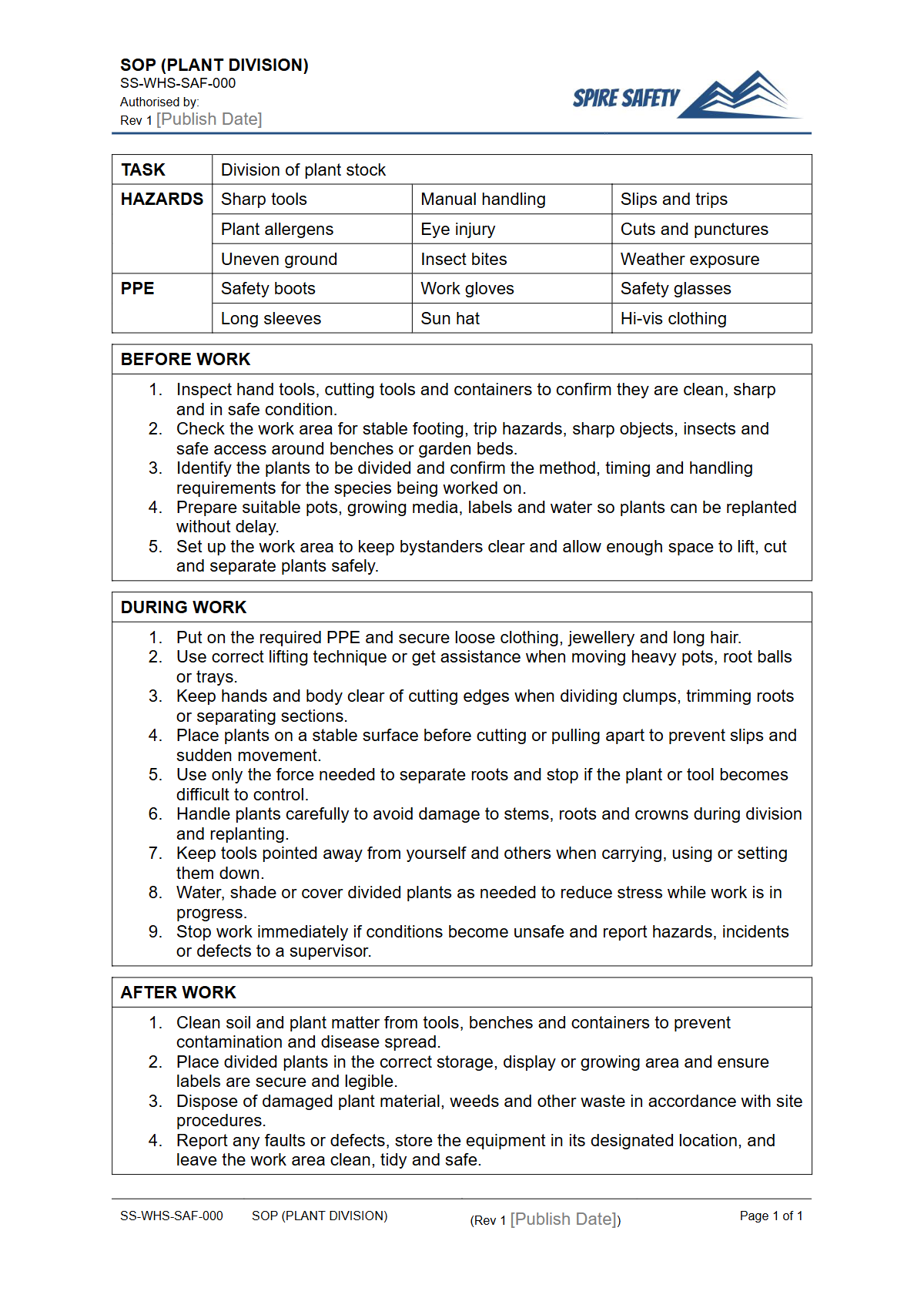
Download our free Safe Operating Procedure (Plant Division) template. This DOCX and PDF resource helps you outline safe work practices for plant.
Free Safe Operating Procedure (Plant Division) Template
DOCX • 126 KB + PDF
Updated Oct 2026
No signup required
Purpose of the Free Safe Operating Procedure (Plant Division) Template
Operating plant and machinery presents significant risks in many Australian workplaces. This free Safe Operating Procedure (Plant Division) template provides a structured framework for documenting the steps required to safely operate mobile plant and equipment.
A well-drafted Safe Operating Procedure (SOP) is a key administrative control measure used to manage risks, standardise processes, and provide clear instructions to workers. It serves as a vital training tool and a reference point for supervisors and operators, ensuring tasks are performed consistently and safely every time.
Using this template helps a Person Conducting a Business or Undertaking (PCBU) meet their primary duty of care under WHS legislation. It forms an essential part of your overall safety documentation and supports the implementation of robust WHS management systems. By clearly defining pre-start checks, operational steps, shutdown procedures, and emergency actions, you create a safer environment and reduce the likelihood of incidents involving plant.
Video walkthrough
How to use the Free Safe Operating Procedure (Plant Division) Template
This document is a foundational template designed for customisation. It is not a complete, ready-to-use procedure.
You must adapt the content to reflect the specific types of plant, the unique environment of your workplace, and the particular risks associated with your operations. After downloading the DOCX or PDF file, follow these steps:
- Consultation: Engage with the workers who operate the plant, as well as supervisors and health and safety representatives. Their hands-on experience is invaluable for identifying practical steps and potential hazards that might otherwise be missed.
- Risk Assessment: Conduct a thorough risk assessment for each piece of plant and the tasks it performs. The controls identified in the risk assessment must be incorporated into the SOP.
- Customisation: Populate the template with your company details, the specific make and model of the plant, and a detailed, step-by-step description of the safe operating sequence. Include information on required Personal Protective Equipment (PPE), pre-operational checks, and emergency procedures specific to your site.
- Review and Approval: Have the draft SOP reviewed by a competent person, such as a WHS manager or supervisor, before it is officially approved for use.
- Training and Communication: Ensure all relevant workers are trained on the contents of the new SOP. Make the document readily accessible in the work area where the plant is used.
Important: This is a template that we provide as a starting point. It is your responsibility to customise it to your specific machinery, workplace, and legal obligations.
Failure to tailor the SOP to your unique circumstances can undermine its effectiveness as a safety tool.
When to use a Safe Operating Procedure
An SOP for plant should be developed and implemented before any worker is permitted to operate the equipment. It is a core document used in several key situations.
It forms the basis of operator training and competency verification, ensuring everyone is instructed on the same approved method. It should also be readily available in the work area as a daily reference guide for operators and supervisors.
SOPs are also crucial for incident investigation. If an accident or near-miss occurs, the SOP helps determine if procedures were followed and if they need to be updated.
This process may lead to identifying the need for more specific instructions, such as those found in our free telehandler SOP template for specialised lifting equipment. Regular reviews, typically annually or after any change in equipment or process, also necessitate referring back to and updating the SOP.
Who should use this Safe Operating Procedure
The development and implementation of an SOP for plant involves several key roles within an organisation. WHS managers or advisors are often responsible for overseeing the creation process, ensuring the document aligns with legislative requirements and the organisation's safety management system.
Supervisors and line managers have a direct responsibility to ensure their teams understand and adhere to the procedures outlined in the SOP. They must provide training and monitor compliance on the ground.
Ultimately, the end-users are the plant operators themselves. They rely on the SOP for clear, unambiguous instructions on how to perform their tasks safely.
For specialised equipment, this general plant template can be supplemented with more specific guides, like the one for earthmoving detailed in our free scraper SOP template. To ensure these procedures are being followed correctly, organisations may engage external consultants for WHS compliance auditing to verify implementation and effectiveness.
This template is just one of many tools available to help you build a safer workplace. For a comprehensive range of checklists, forms, and procedure templates, browse our full free WHS resources library.
Common mistakes
Common mistakes to avoid
- Using a generic downloaded template without customising it for the specific plant and worksite.
- Failing to consult with the actual plant operators during the development and review process.
- Not providing adequate training on the finalised SOP, treating it only as a paperwork exercise.
- Forgetting to review and update the SOP after an incident, near-miss, or change in process.
Legal references
Legal considerations
The following legal requirements may be relevant to this type of work.
- Work Health and Safety Act (Harmonised) — Provides the primary duties for protecting workers and other people from work health and safety risks.
- Work Health and Safety Regulations (Harmonised) — Sets out requirements supporting the management of workplace hazards and risks.
The following codes may be relevant to this type of work.
- Managing WHS Risks Code of Practice — Provides practical guidance on identifying hazards, assessing risks and applying effective controls.
- Work Health and Safety Consultation, Cooperation and Coordination Code of Practice — Provides practical guidance on consulting workers and coordinating with other duty holders.
- Managing the Work Environment and Facilities Code of Practice — Provides practical guidance on safe work environments, workplace facilities and related controls.
Did you know
Operator Consultation
Under Australian WHS laws, PCBUs have a mandatory duty to consult with workers on matters that directly affect their health and safety. This includes the development of Safe Operating Procedures.
Mobile Plant Risks
Incidents involving mobile plant are a leading cause of workplace fatalities and serious injuries in Australia, often involving collisions with pedestrians or other vehicles, and rollovers.
FAQ
Frequently asked questions
01What is a Safe Operating Procedure (SOP) for plant?
02Is a SWMS the same as an SOP for plant?
03Who is responsible for writing a Safe Operating Procedure?
04How often should SOPs for plant be reviewed?
Share this resource
Free Safe Operating Procedure (Plant Division) Template
Browse Categories
How To Use It
- 1Download and open in Word or PDF.
- 2Replace the placeholders with your business details.
- 3Get it reviewed by a WHS specialist before rollout.
Need it customised?
Our WHS consultants can adapt this template to your site, run a gap analysis, or audit what you already have in place.
Book a Free Consultation WHS consulting servicesor call 1300 156 382
Related templates
- Free Safe Operating Procedure (Plant Hardening) Template
- Free Safe Operating Procedure (Plant Labelling) Template
- Free Safe Operating Procedure (Plant Propagation) Template
- Free Safe Operating Procedure (Plant Repotting) Template
- Free Safe Operating Procedure (Plant Room Cleaning) Template
- Free Safe Operating Procedure (Plant Room Housekeeping) Template