
Free Safe Operating Procedure (Poolside Furniture Move) Template
Need to document the process for safely moving poolside furniture? Our free Safe Operating Procedure template provides a structured starting point.
Free Safe Operating Procedure (Poolside Furniture Move) Template
DOCX • 126 KB + PDF
Updated Oct 2026
No signup required
Purpose of the Free Safe Operating Procedure (Poolside Furniture Move) Template
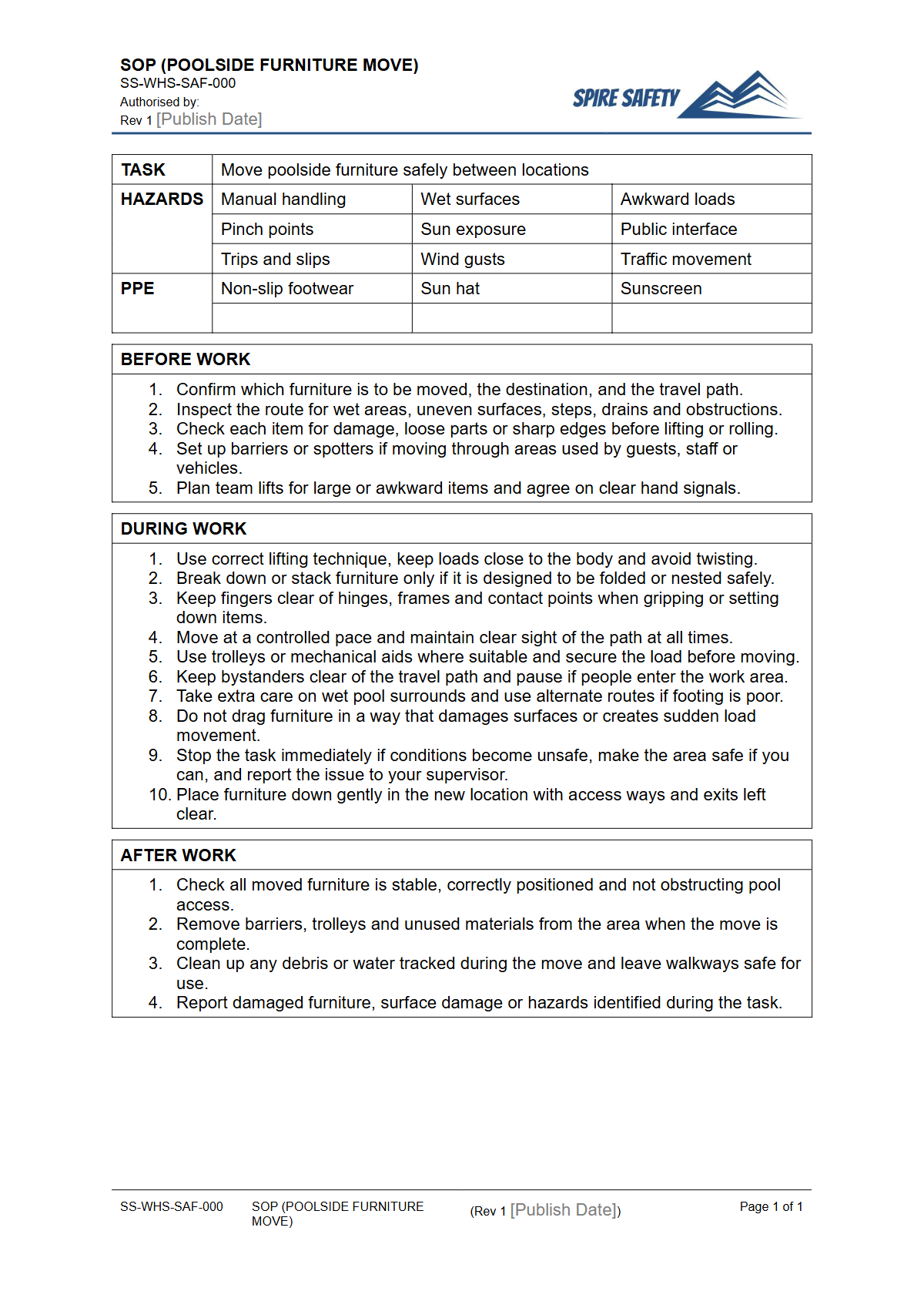
Establishing a clear, documented process for routine tasks is fundamental to workplace safety. This free Safe Operating Procedure (Poolside Furniture Move) template provides a structured starting point for organisations to formalise their process for relocating sun loungers, tables, umbrellas, and other items around a pool area.
The primary purpose of this SOP is to control risks associated with hazardous manual tasks in a wet and often busy environment. By clearly defining steps and safety controls, you can significantly reduce the risk of musculoskeletal injuries, slips, trips, and falls.
Implementing documented procedures like this is a key component of building robust WHS management systems that protect your workers and patrons.
Video walkthrough
How to use the Free Safe Operating Procedure (Poolside Furniture Move) Template
Our template is provided in both DOCX and PDF formats for your convenience. To use it effectively, download the DOCX version and adapt it to the unique conditions of your workplace.
This involves consulting with the workers who actually perform the task to identify specific hazards they face. You should detail the exact types of furniture being moved, the layout of your pool area, any mechanical aids available (like trolleys or carts), and the required Personal Protective Equipment (PPE).
Once customised, the SOP should be used to train all relevant staff, ensuring everyone understands the safest way to perform the job.
Important: This document is a template and must be customised for your specific business needs. We have provided a framework based on Australian WHS principles, but you must conduct your own risk assessment and consultation to ensure the final SOP is suitable for your workplace.
When to use this Safe Operating Procedure
This SOP should be followed whenever non-fixed furniture is moved around a pool area. Common situations include daily setup and pack-down, rearranging for special events or functions, clearing the area for cleaning or maintenance, and moving items into storage for seasonal changes.
Using the SOP consistently ensures that even during busy periods or unusual circumstances, safety is not compromised. Regular reviews of your procedures, often as part of a WHS compliance audit, can ensure they remain relevant and effective as conditions change.
Who should use this SOP
This procedure is designed for any worker tasked with moving poolside furniture. This may include poolside attendants, hotel porters, groundskeeping staff, maintenance teams, and event setup crews.
It is also a critical tool for supervisors and managers. They are responsible for ensuring workers are properly trained on the SOP, have access to the required equipment and PPE, and follow the procedure correctly.
Where roles and responsibilities are complex, engaging specialist WHS consulting can help clarify duties and improve safety oversight across your entire operation.
Key Elements of the Poolside Furniture SOP
A comprehensive Safe Operating Procedure for moving poolside furniture should address several key areas to be effective. Our template prompts you to consider and document the following:
- Hazard Identification: Pinpointing potential sources of harm, such as musculoskeletal strain from lifting, awkward postures, slippery surfaces, trip hazards from furniture or hoses, sun exposure, and lacerations from damaged items.
- Risk Control Measures: Documenting the specific actions to be taken to eliminate or minimise risks. This includes using team lifts, employing mechanical aids, mandating non-slip footwear and gloves, and scheduling tasks to avoid peak sun or public access times.
- Pre-Operational Checks: Listing inspections that must be carried out before work begins, such as checking furniture for sharp edges or instability, ensuring trolley wheels run smoothly, and clearing the path of any obstructions.
- Step-by-Step Instructions: Providing a clear, sequential guide for completing the task safely from start to finish. This breaks the process down into manageable steps, reducing the chance of error.
- Emergency Procedures: Outlining the correct response in case of an injury or incident.
While this SOP focuses on poolside furniture, your facility may use a range of equipment that also requires documented procedures. For instance, tasks involving commercial kitchen equipment also need clear guidance, like our Safe Operating Procedure for deep fryer use. Similarly, any grounds maintenance machinery should have its own SOP, which you can browse in our free WHS resources library for more examples.
Common mistakes
Common mistakes to avoid
- Forgetting to inspect furniture for damage (sharp edges, instability) before moving it.
- Not using mechanical aids like trolleys or carts for heavy, bulky, or multiple items.
- Failing to account for environmental factors like wet surfaces, public access, and sun exposure.
- Using a generic procedure that doesn't match the specific types of furniture (e.g., heavy cantilever umbrellas vs. light plastic chairs).
Legal references
Legal considerations
The following legal requirements may be relevant to this type of work.
- Work Health and Safety Act (Harmonised) — Provides the primary duties for protecting workers and other people from work health and safety risks.
- Work Health and Safety Regulations (Harmonised) — Sets out requirements supporting the management of workplace hazards and risks.
The following codes may be relevant to this type of work.
- Managing WHS Risks Code of Practice — Provides practical guidance on identifying hazards, assessing risks and applying effective controls.
- Work Health and Safety Consultation, Cooperation and Coordination Code of Practice — Provides practical guidance on consulting workers and coordinating with other duty holders.
- Managing the Work Environment and Facilities Code of Practice — Provides practical guidance on safe work environments, workplace facilities and related controls.
Did you know
Manual Handling Risk
Musculoskeletal disorders, often resulting from hazardous manual tasks, account for a significant portion of serious workers' compensation claims in Australia each year.
Slips and Trips
Slips, trips, and falls are a leading cause of workplace injuries. Wet and slippery surfaces, like those commonly found around pools, pose a particularly high risk that must be actively managed.
FAQ
Frequently asked questions
01Is a Safe Operating Procedure for moving pool furniture legally required in Australia?
02What are the main hazards when moving poolside furniture?
03How often should we review our Poolside Furniture Move SOP?
04Can I use this template for moving office furniture?
Share this resource
Free Safe Operating Procedure (Poolside Furniture Move) Template
Browse Categories
How To Use It
- 1Download and open in Word or PDF.
- 2Replace the placeholders with your business details.
- 3Get it reviewed by a WHS specialist before rollout.
Need it customised?
Our WHS consultants can adapt this template to your site, run a gap analysis, or audit what you already have in place.
Book a Free Consultation WHS consulting servicesor call 1300 156 382
Related templates
- Free Safe Operating Procedure (Port Gate Check) Template
- Free Safe Operating Procedure (Port Litter Cleanup) Template
- Free Safe Operating Procedure (Port Shed Cleaning) Template
- Free Safe Operating Procedure (Port Waste Handling) Template
- Free Safe Operating Procedure (Portable Appliance Test) Template
- Free Safe Operating Procedure (Portable Bandsaw) Template