
Free Safe Operating Procedure (Potable Water Cart) Template
Our free Safe Operating Procedure for potable water carts provides a solid foundation for documenting safe work practices.
Free Safe Operating Procedure (Potable Water Cart) Template
DOCX • 126 KB + PDF
Updated Oct 2026
No signup required
Purpose of the Free Safe Operating Procedure (Potable Water Cart) Template
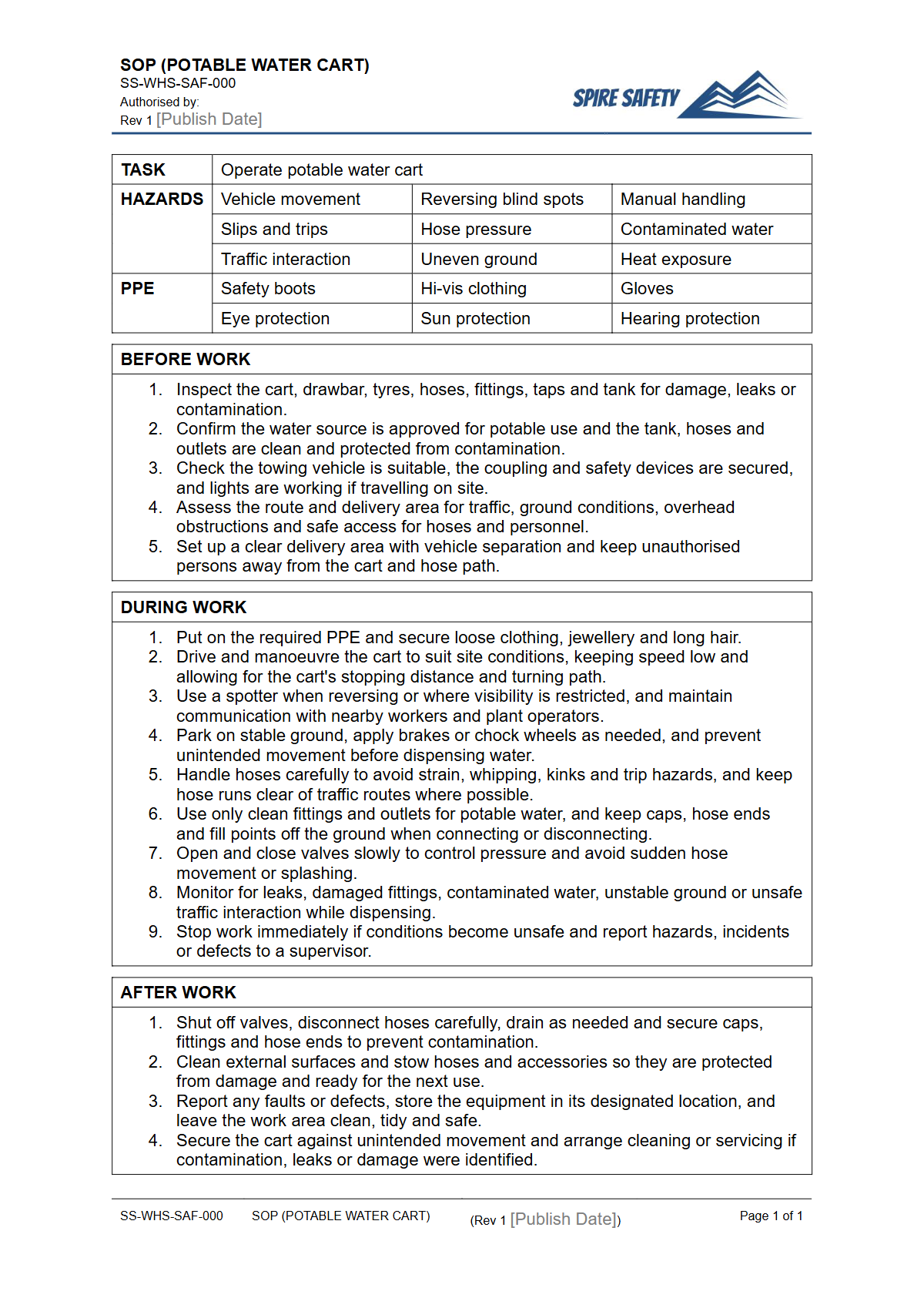
Operating a potable water cart, like any mobile plant, introduces significant risks into the workplace. This free Safe Operating Procedure (Potable Water Cart) template provides a structured framework for documenting the required steps to operate the equipment safely.
The primary purpose is to help Persons Conducting a Business or Undertaking (PCBUs) identify hazards, assess risks, and implement effective control measures. A documented SOP is a critical tool for ensuring tasks are performed consistently and safely, reducing the risk of incidents, injuries, or health issues related to water contamination. It forms a key part of your operational risk management and is a fundamental component of effective WHS management systems.
Video walkthrough
How to use the Free Safe Operating Procedure (Potable Water Cart) Template
This document is a template and must be customised to reflect the specific equipment, environment, and tasks at your workplace. To use the template effectively, consult with operators, supervisors, and other relevant workers.
Your final SOP should detail the specific make and model of the water cart, the unique site conditions it operates in, and your organisation's specific procedures.
The template is structured to guide you through key safety stages:
- Pre-Operational Checks: Lists essential inspections for mechanical soundness, safety features (like beacons and alarms), and cleanliness of the water tank and dispensing equipment.
- Operational Procedure: Outlines the step-by-step process for driving, filling, transporting, and dispensing water safely, including traffic management and communication protocols.
- Shutdown Procedure: Details the correct sequence for parking, securing the vehicle, and cleaning the equipment to maintain hygiene standards.
- Emergency Procedures: Covers actions to take in case of a vehicle rollover, spillage, contamination event, or other foreseeable emergencies.
Note: We have developed this template as a guide. It is the responsibility of the PCBU to ensure the final document is tailored to their specific workplace needs and is reviewed by competent persons before implementation.
When to use a Potable Water Cart SOP
A Safe Operating Procedure for a potable water cart should be used whenever this equipment is operated. It is particularly crucial in environments like construction sites, mining operations, large-scale public events, and agricultural settings where a reliable source of safe drinking water is required.
The SOP should be a core part of worker induction and training for any new operator. It also serves as a reference for refresher training and a standard against which to measure operator competency and safe work behaviour.
For other heavy vehicle operations, you might also find our free Grader SOP template useful for establishing consistent safety protocols.
Who should use it
This SOP should be developed, implemented, and used by several key roles within an organisation:
- PCBUs and Site Managers: Responsible for ensuring adequate resources are allocated for the development, implementation, and review of the SOP.
- Supervisors: Responsible for training workers on the SOP, ensuring it is followed, and monitoring its effectiveness on a day-to-day basis.
- Operators: The primary users of the SOP, who must understand and follow the documented procedures to ensure their own safety and the safety of others.
- WHS Professionals: Involved in the risk assessment process, drafting the SOP, and integrating it into the broader safety management system. If you require assistance in developing site-specific procedures, consider engaging professional WHS consulting services.
Key Hazards and Control Measures
Operating a potable water cart involves several key hazards beyond general traffic risks. The SOP must address these specifically:
- Vehicle Operation: Risks include collisions, rollovers (especially on uneven terrain), and interaction with pedestrians or other vehicles. Controls involve traffic management plans, operator training, and vehicle maintenance. This process is similar to managing risks for other large equipment, as outlined in documents like our FREE Scraper SOP Template.
- Water Quality and Contamination: The primary health risk. Controls include using designated filling points, regular tank cleaning and disinfection, water quality testing, and secure tank lids.
- Manual Handling: Risks associated with handling heavy hoses and fittings. Controls include proper lifting techniques, using mechanical aids where possible, and ergonomic assessments.
- Slips, Trips, and Falls: Water spillage can create slippery surfaces. Controls involve good housekeeping, managing leaks, and wearing appropriate non-slip footwear.
Integrating the SOP into Your Safety System
A standalone SOP has limited value. Its effectiveness is multiplied when it is integrated into a comprehensive WHS management system.
This involves linking the SOP to your training and competency records, incident reporting system, and hazard identification processes. Regular reviews and updates are essential to ensure the procedure remains current and effective, especially after an incident or when new equipment is introduced.
An independent review through a WHS compliance auditing program can help identify gaps and opportunities for improvement in your documented safety procedures. Using this SOP alongside other equipment-specific documents, like a FREE Trencher SOP Template, helps build a robust and comprehensive safety framework for your site.
You can explore our complete free WHS resources library for more templates to support your safety management system.
Common mistakes
Common mistakes to avoid
- Failing to properly customise the template for the specific water cart model and site conditions.
- Neglecting pre-operational checks, particularly those related to the water tank's cleanliness and security.
- Inadequate documentation and record-keeping for water source, testing, and tank cleaning.
- Assuming operators are competent without providing specific training on the SOP and emergency procedures.
Legal references
Legal considerations
The following legal requirements may be relevant to this type of work.
- Work Health and Safety Act (Harmonised) — Provides the primary duties for protecting workers and other people from work health and safety risks.
- Work Health and Safety Regulations (Harmonised) — Sets out requirements supporting the management of workplace hazards and risks.
The following codes may be relevant to this type of work.
- Managing WHS Risks Code of Practice — Provides practical guidance on identifying hazards, assessing risks and applying effective controls.
- Work Health and Safety Consultation, Cooperation and Coordination Code of Practice — Provides practical guidance on consulting workers and coordinating with other duty holders.
- Managing the Work Environment and Facilities Code of Practice — Provides practical guidance on safe work environments, workplace facilities and related controls.
Did you know
Water Quality is Critical
According to the Australian Drinking Water Guidelines (ADWG), maintaining water quality from source to tap is paramount. Potable water carts are a key part of this chain on worksites and must be managed carefully to prevent contamination.
Vehicle Incidents
Vehicle collisions are a leading cause of workplace fatalities in Australia. A significant portion of these involve heavy or mobile vehicles, highlighting the need for robust traffic management and safe operating procedures.
FAQ
Frequently asked questions
01What are the key hazards of operating a potable water cart?
02How often should a Potable Water Cart SOP be reviewed?
03Is specific training required to operate a potable water cart?
04Can this template be used for non-potable water carts (e.g., for dust suppression)?
Share this resource
Free Safe Operating Procedure (Potable Water Cart) Template
Browse Categories
How To Use It
- 1Download and open in Word or PDF.
- 2Replace the placeholders with your business details.
- 3Get it reviewed by a WHS specialist before rollout.
Need it customised?
Our WHS consultants can adapt this template to your site, run a gap analysis, or audit what you already have in place.
Book a Free Consultation WHS consulting servicesor call 1300 156 382
Related templates
- Free Safe Operating Procedure (Potato Peeler) Template
- Free Safe Operating Procedure (Potting Bench Cleaning) Template
- Free Safe Operating Procedure (Potting Mix Handling) Template
- Free Safe Operating Procedure (Poultry Feeding) Template
- Free Safe Operating Procedure (Poultry Litter Change) Template
- Free Safe Operating Procedure (Powder Coating) Template