
Free Safe Operating Procedure (Reception Area Cleaning) Template
Maintain a clean and safe reception with our Safe Operating Procedure template. Download this customisable guide to formalise your cleaning processes today.
Free Safe Operating Procedure (Reception Area Cleaning) Template
DOCX • 126 KB + PDF
Updated Oct 2026
No signup required
Purpose of the Free Safe Operating Procedure (Reception Area Cleaning) Template
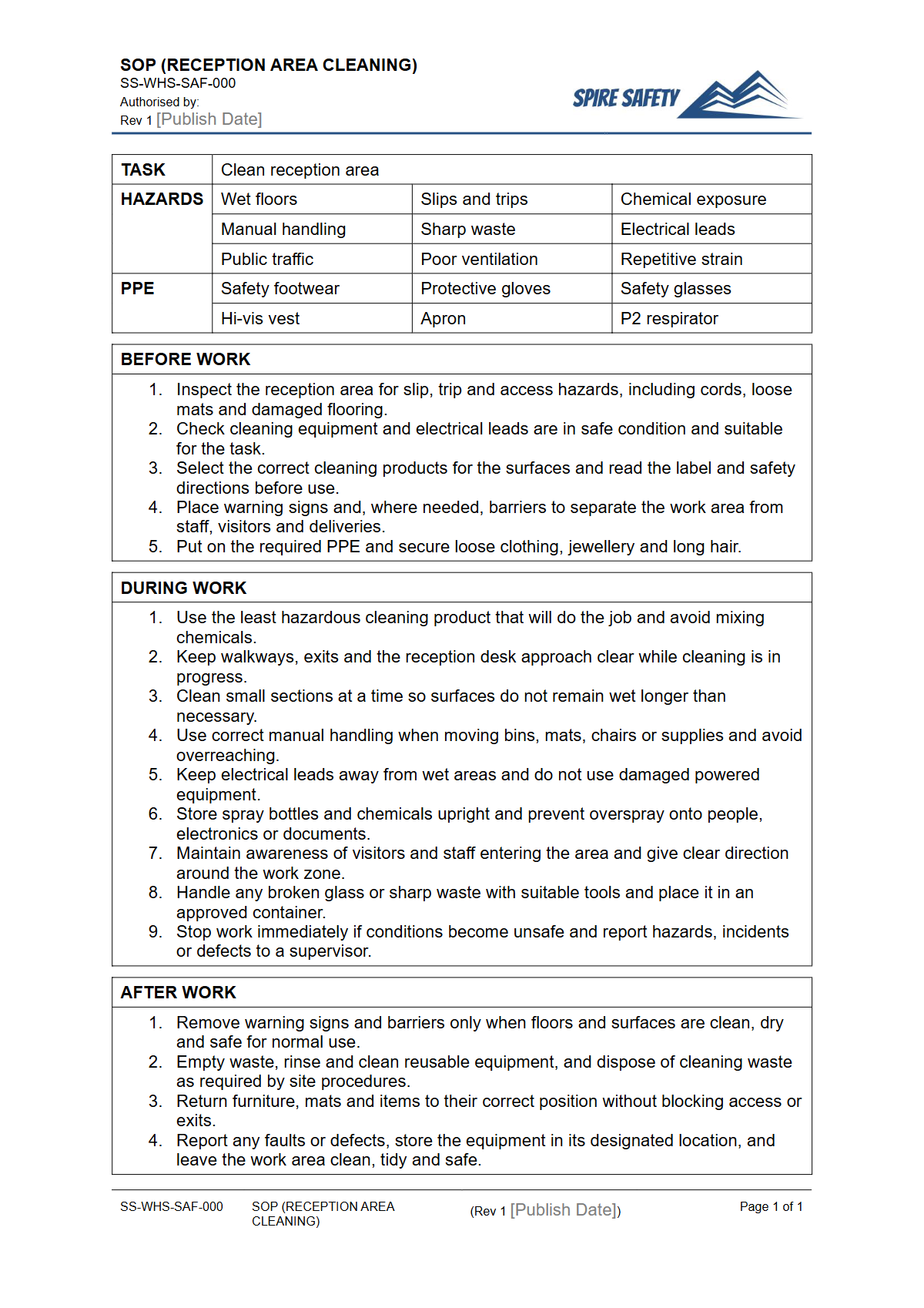
A reception area is the first point of contact for clients, visitors, and staff, making its cleanliness and safety paramount. This Free Safe Operating Procedure (Reception Area Cleaning) Template provides a structured framework for documenting the required steps to maintain a hygienic and hazard-free entrance to your workplace.
It helps your organisation formalise cleaning protocols, manage risks associated with chemical use and manual tasks, and ensure a consistent standard of presentation. By implementing a clear SOP, you can effectively train employees, reduce the likelihood of incidents like slips and falls, and demonstrate a commitment to workplace health and safety.
This document serves as a foundational tool, designed to be adapted into your broader WHS management systems. It outlines key safety considerations, from pre-cleaning checks and Personal Protective Equipment (PPE) requirements to waste disposal and emergency procedures. Using a standardised procedure ensures that all cleaning personnel, whether full-time cleaners or reception staff with cleaning duties, understand their responsibilities and the safe work methods required for each task.
Video walkthrough
How to use the Free Safe Operating Procedure (Reception Area Cleaning) Template
This Safe Operating Procedure template is provided in both DOCX and PDF formats for your convenience. The DOCX file is fully editable, allowing you to tailor the content to the unique environment of your reception area.
To use the template effectively, you should systematically work through each section and replace the placeholder text with information specific to your site.
Customisation is Essential
It is crucial to note that this is a template, not a finished document. We have provided a structured starting point based on common Australian WHS practice, but you must customise every section to reflect the specific equipment, cleaning chemicals (including Safety Data Sheets), hazards, and control measures relevant to your workplace.
This includes adding your company branding, identifying specific high-traffic zones, and detailing the procedures for cleaning furniture, floors, glass, and electronic equipment. After customisation, ensure the document is reviewed and approved by a competent person before being issued to staff.
When to use it
A Safe Operating Procedure for reception cleaning should be a core component of your daily operational safety. It is a critical reference document in several scenarios:
- Staff Training and Induction: Use the SOP to train new employees or contractors responsible for cleaning duties, ensuring they understand the approved methods from day one.
- Daily or Routine Cleaning: It should be readily accessible to staff as a guide for performing their regular cleaning tasks safely and efficiently.
- Post-Incident Review: Following a spill, slip, or other incident, the SOP can be reviewed to determine if procedures were followed and if they require updates to prevent recurrence.
- Safety Audits and Inspections: An up-to-date and implemented SOP serves as evidence of a formalised safety process during internal or external audits. Conducting regular WHS compliance auditing helps verify that the procedures outlined in the SOP are being followed correctly in practice.
Who should use it
This template is designed for use by various personnel within an organisation to ensure a consistent and safe approach to cleaning. Key users include:
- WHS Managers and Officers: To develop, implement, and review safety procedures as part of the overall safety management system. They are responsible for ensuring the SOP is tailored to the workplace and meets regulatory expectations.
- Facilities and Office Managers: To manage the day-to-day cleanliness and safety of the premises, schedule cleaning tasks, and supervise staff.
- Cleaning Staff and Contractors: As the primary end-users, this SOP provides them with clear, step-by-step instructions on how to perform their jobs safely.
- Reception and Administrative Staff: In businesses where receptionists or other admin staff have cleaning responsibilities, this document provides essential guidance on performing those tasks without compromising their safety.
If your cleaning tasks involve specialised equipment like an air compressor for dusting electronics, you may need to develop additional specific procedures. You can use resources like our Free Air Compressor SOP Template as a guide for those specific tasks.
For broader safety challenges beyond documentation, engaging professional WHS consulting can provide tailored solutions for your business.
By defining clear roles and responsibilities, this Safe Operating Procedure helps foster a culture of safety and accountability across your entire organisation. Explore our complete free WHS resources library for more templates to support your safety management efforts.
Common mistakes
Common mistakes to avoid
- Using the template as-is without customising it for specific site hazards, chemicals, and equipment.
- Failing to adequately train all relevant staff on the finalised SOP and confirm their understanding.
- Neglecting to make Safety Data Sheets (SDS) for all cleaning chemicals readily accessible to staff.
- Not using warning signs (e.g., 'Wet Floor' signs) when mopping or cleaning up spills in a high-traffic area.
Legal references
Legal considerations
The following legal requirements may be relevant to this type of work.
- Work Health and Safety Act (Harmonised) — Provides the primary duties for protecting workers and other people from work health and safety risks.
- Work Health and Safety Regulations (Harmonised) — Sets out requirements supporting the management of workplace hazards and risks.
The following codes may be relevant to this type of work.
- Managing WHS Risks Code of Practice — Provides practical guidance on identifying hazards, assessing risks and applying effective controls.
- Work Health and Safety Consultation, Cooperation and Coordination Code of Practice — Provides practical guidance on consulting workers and coordinating with other duty holders.
- Managing the Work Environment and Facilities Code of Practice — Provides practical guidance on safe work environments, workplace facilities and related controls.
Did you know
Slips, Trips, and Falls
According to Safe Work Australia, slips, trips and falls are a leading cause of serious workplace injuries, with cleaning activities being a common contributing factor due to wet floors and trailing electrical cords.
Chemical Dilution
Using a higher concentration of a cleaning chemical than recommended does not necessarily improve its effectiveness. In many cases, it can create stronger fumes, leave a sticky residue that attracts more dirt, and increase the risk of harm to the user and surfaces.
FAQ
Frequently asked questions
01What hazards should a reception cleaning SOP cover?
02How often should a Safe Operating Procedure for cleaning be reviewed?
03Is personal protective equipment (PPE) necessary for reception cleaning?
04Can this Safe Operating Procedure template be used for other office areas?
Share this resource
Free Safe Operating Procedure (Reception Area Cleaning) Template
Browse Categories
How To Use It
- 1Download and open in Word or PDF.
- 2Replace the placeholders with your business details.
- 3Get it reviewed by a WHS specialist before rollout.
Need it customised?
Our WHS consultants can adapt this template to your site, run a gap analysis, or audit what you already have in place.
Book a Free Consultation WHS consulting servicesor call 1300 156 382
Related templates
- Free Safe Operating Procedure (Reception Desk Cleaning) Template
- Free Safe Operating Procedure (Recliner Chair Cleaning) Template
- Free Safe Operating Procedure (Recycling Bay Cleanup) Template
- Free Safe Operating Procedure (Recycling Bin Service) Template
- Free Safe Operating Procedure (Recycling Contamination) Template
- Free Safe Operating Procedure (Recycling Dropoff Check) Template