
Free Safe Operating Procedure (Returned Goods Handling) Template
Manage the risks of processing returns with our free template. This Safe Operating Procedure for returned goods helps you create a consistent process.
Free Safe Operating Procedure (Returned Goods Handling) Template
DOCX • 126 KB + PDF
Updated Oct 2026
No signup required
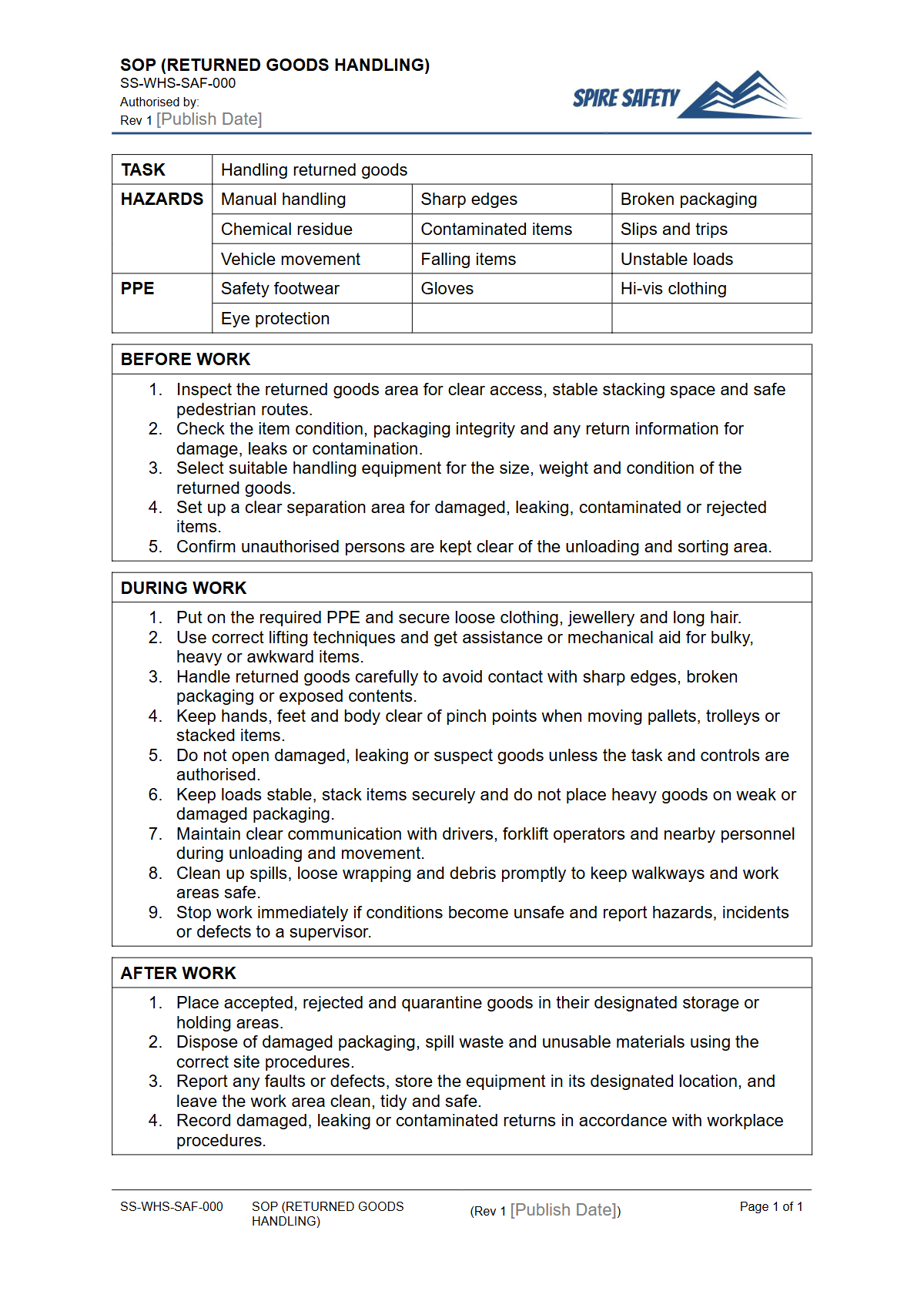
Purpose of the Free Safe Operating Procedure (Returned Goods Handling) Template
This Free Safe Operating Procedure (Returned Goods Handling) Template provides a structured framework for managing the health and safety risks associated with processing customer returns. In settings like warehouses, distribution centres, and retail stores, returned goods introduce unique hazards, including unknown contents, damaged packaging, unexpected weights, and potential exposure to spilled substances.
This SOP template helps your organisation establish a clear, repeatable process to control these risks. By documenting your procedure, you ensure every team member handles returns consistently, simplify new employee training, and demonstrate a proactive approach to workplace safety.
Video walkthrough
How to use the Free Safe Operating Procedure (Returned Goods Handling) Template
Download the template in your preferred format (DOCX for easy editing or PDF) and adapt it to your specific operational needs. A generic procedure is not effective; safety relies on precise, site-specific details.
Important: This document is a template and must be customised to suit the specific items, equipment, and environment in your workplace. We recommend a person with competence in risk assessment and procedure development completes this customisation in consultation with the workers who will be performing the task.
Your customisation should include:
- Your company name and specific location details.
- The positions or roles responsible for each step.
- A detailed, step-by-step guide from receiving a returned item to its final disposition (e.g., restock, quarantine, repair, or disposal).
- Hazards specific to your products, such as batteries in electronics, liquids, or heavy/awkward furniture.
- Required Personal Protective Equipment (PPE) like gloves, safety glasses, or steel-capped boots.
- Emergency procedures for spills, injuries, or discovery of dangerous goods.
A well-defined SOP is a cornerstone of a functional safety system. Integrating this procedure into your overall framework ensures it is managed, reviewed, and improved over time.
Spire Safety can assist with developing comprehensive WHS management systems that embed safe practices into your daily operations.
Key Hazards in Returned Goods Handling
The process of managing returns is more hazardous than it may appear. Key risks that your SOP should address include:
Manual Handling Injuries
This is one of the most significant risks. Team members lift, carry, and move packages of varying weights, sizes, and shapes, often repetitively.
This can lead to musculoskeletal injuries affecting the back, shoulders, and arms. Your SOP should mandate correct lifting techniques and the use of mechanical aids like trolleys or pallet jacks where appropriate.
Cuts and Lacerations
Opening packages with box cutters or knives is a common source of injury. Additionally, the returned items themselves may be broken, with sharp edges of plastic or glass.
The SOP must specify safe methods for opening packages and mandate the use of appropriate hand protection.
Unknown Contents and Substances
You can never be 100% certain of what is inside a returned package. A customer might return a damaged product that is leaking an unknown liquid, or incorrectly return a hazardous item.
Your procedure must include steps for quarantining and assessing suspicious packages. For larger logistics operations, a conveyer system SOP can help standardise the movement of goods through inspection zones.
Slips, Trips, and Falls
The returns area can quickly become cluttered with cardboard, plastic wrap, and other packaging materials. Spills from damaged goods can also create slick surfaces.
Good housekeeping is a critical safety control and should be built into the daily procedure to keep walkways clear and floors clean.
When to Use This Safe Operating Procedure
This SOP should be the standard procedure for any task involving the receipt, inspection, or processing of returned goods. It is essential for businesses with a physical returns desk, a dedicated warehouse returns department, or any e-commerce operation handling reverse logistics.
It formalises an otherwise ad-hoc process, making it safer and more efficient. Regular reviews and WHS compliance auditing can verify that the SOP is being followed correctly and remains effective.
Who Should Use This Procedure?
This procedure is intended for all personnel involved in the returns lifecycle. This includes:
- Warehouse and logistics operatives
- Retail staff who accept returns from customers
- Quality control or inspection teams
- Supervisors and managers responsible for overseeing returns operations
Having a documented SOP is only the first step. All relevant workers must receive training on the finalised procedure to ensure they understand the steps and the hazards involved.
For organisations facing unique safety challenges or needing expert guidance on procedure implementation, our WHS consulting services provide tailored support.
This document is one of many tools available to help you build a safer workplace. For more templates, checklists, and guides, explore our complete free WHS resources library.
Common mistakes
Common mistakes to avoid
- Assuming all returned packages are safe and contain what is expected.
- Failing to provide or use appropriate PPE, such as gloves and safety glasses.
- Using poor lifting techniques or not using available mechanical aids for heavy items.
- Letting packaging materials and waste accumulate, creating trip hazards.
Legal references
Legal considerations
The following legal requirements may be relevant to this type of work.
- Work Health and Safety Act (Harmonised) — Provides the primary duties for protecting workers and other people from work health and safety risks.
- Work Health and Safety Regulations (Harmonised) — Sets out requirements supporting the management of workplace hazards and risks.
The following codes may be relevant to this type of work.
- Managing WHS Risks Code of Practice — Provides practical guidance on identifying hazards, assessing risks and applying effective controls.
- Work Health and Safety Consultation, Cooperation and Coordination Code of Practice — Provides practical guidance on consulting workers and coordinating with other duty holders.
- Managing the Work Environment and Facilities Code of Practice — Provides practical guidance on safe work environments, workplace facilities and related controls.
Did you know
Manual Task Risks
Manual handling injuries account for a significant portion of all serious workers' compensation claims in Australia. Establishing clear procedures for tasks like lifting returned goods is a key control measure.
The 'Reverse Logistics' Boom
The rise of e-commerce has led to a massive increase in product returns, a field known as reverse logistics. This surge makes standardised, safe handling procedures more critical than ever for businesses.
FAQ
Frequently asked questions
01What are the most common hazards when handling returned goods?
02Is a Safe Operating Procedure legally required for handling returned goods?
03How often should our returned goods SOP be reviewed?
04What is the difference between an SOP and a Safe Work Method Statement (SWMS)?
Share this resource
Free Safe Operating Procedure (Returned Goods Handling) Template
Browse Categories
How To Use It
- 1Download and open in Word or PDF.
- 2Replace the placeholders with your business details.
- 3Get it reviewed by a WHS specialist before rollout.
Need it customised?
Our WHS consultants can adapt this template to your site, run a gap analysis, or audit what you already have in place.
Book a Free Consultation WHS consulting servicesor call 1300 156 382
Related templates
- Free Safe Operating Procedure (Rewinder) Template
- Free Safe Operating Procedure (Rice Cooker) Template
- Free Safe Operating Procedure (Ride-On Mower Operation) Template
- Free Safe Operating Procedure (Rigging Gear Storage) Template
- Free Safe Operating Procedure (Rigging Setup) Template
- Free Safe Operating Procedure (Road Broom) Template