
Free Safe Operating Procedure (Roof Cutter) Template
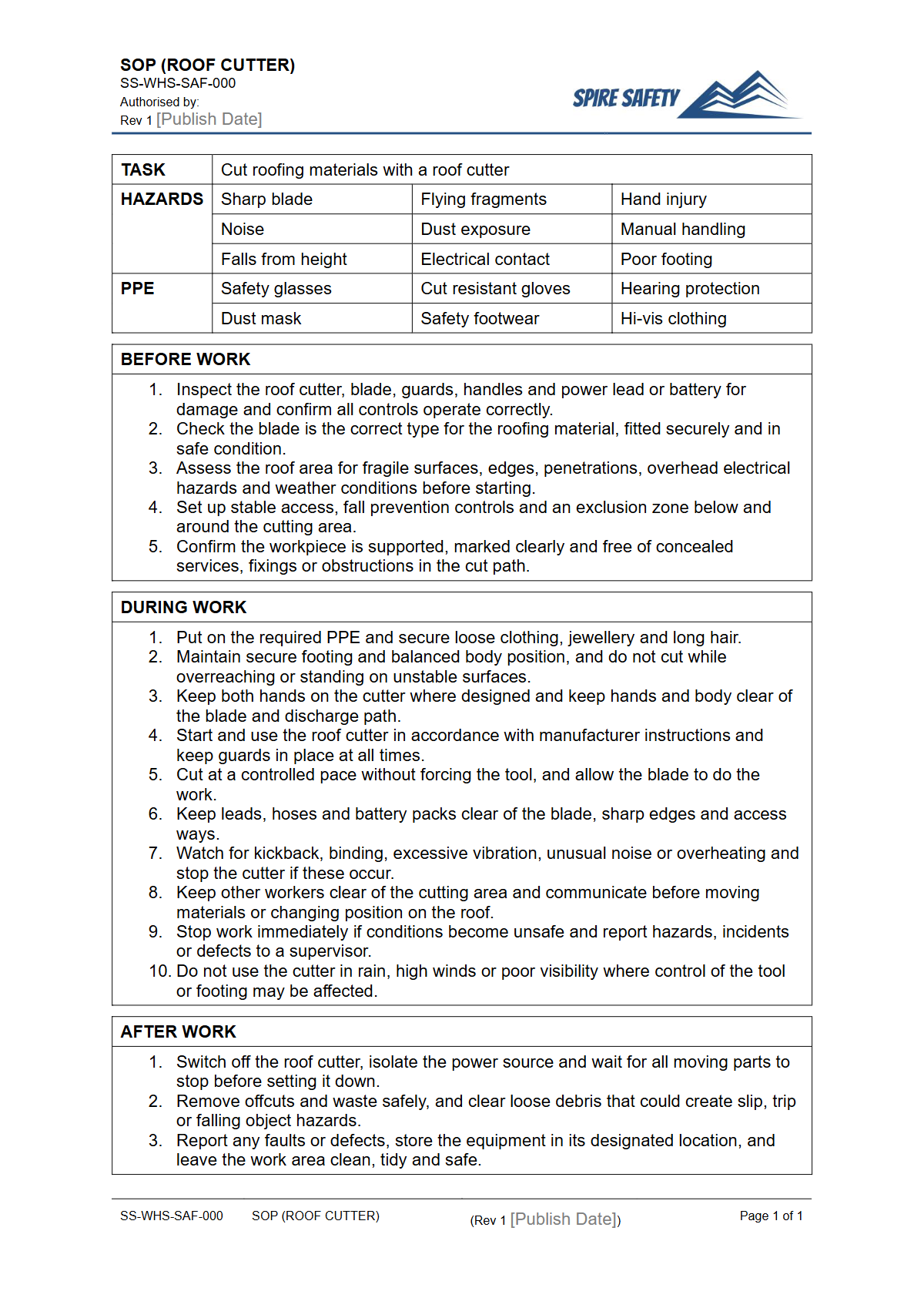
Download our free Safe Operating Procedure (Roof Cutter) template to document safe work practices.
Free Safe Operating Procedure (Roof Cutter) Template
DOCX • 126 KB + PDF
Updated Oct 2026
No signup required
Purpose of the Free Safe Operating Procedure (Roof Cutter) Template
Operating a roof cutter introduces significant workplace hazards, including severe lacerations, kickback, dust inhalation, and noise exposure. This free Safe Operating Procedure (Roof Cutter) template provides a structured starting point for documenting the required controls to manage these risks effectively.
A well-developed SOP is a critical tool for any organisation, demonstrating a commitment to worker safety and forming a key component of robust WHS management systems. It outlines a step-by-step process for using the equipment safely, covering pre-start checks, operational steps, and post-use procedures to minimise the chance of injury or incident.
Video walkthrough
How to use the Free Safe Operating Procedure (Roof Cutter) Template
To get the most value from this resource, it must be adapted to your specific operational context. This document is a template, not a finished procedure.
Download the DOCX or PDF file and begin by customising the content to reflect the exact make and model of the roof cutter used at your site, the materials being cut, and the unique environmental conditions of your workplace. It is crucial to consult with the workers who actually operate the equipment during this process, as their direct experience is invaluable for identifying practical risks and effective controls.
We strongly recommend you conduct a site-specific risk assessment and use its findings to populate the SOP.
Key Customisation Steps:
- Plant and Equipment Details: Replace placeholder text with the specific manufacturer, model, and serial number of your roof cutter.
- Site-Specific Hazards: Add any hazards unique to your work environment, such as working at heights, managing electrical leads, or dealing with specific weather conditions.
- Consultation: Involve your team in reviewing and refining the draft SOP. This ensures the procedure is practical and helps build a stronger safety culture.
- Training and Competency: Integrate the SOP into your training matrix. Ensure all operators are trained on the final, approved procedure before use. For related equipment, consider adapting our FREE Circular Saw SOP Template.
When to Use a Roof Cutter SOP
A Safe Operating Procedure for a roof cutter should be used as a primary reference document in several key situations. It must be readily available to workers before they begin any task involving the equipment.
It serves as a foundational document for initial worker training and for conducting periodic refresher courses to ensure safe work habits are maintained. The SOP is also an essential reference when conducting risk assessments, incident investigations, or workplace safety inspections.
For broader site safety, procedures for other high-risk plant, such as those detailed in our FREE Telehandler SOP Template, should also be established and followed.
Who Should Use This SOP Template
This template is designed for use by Persons Conducting a Business or Undertaking (PCBUs), site managers, supervisors, and WHS professionals responsible for creating and implementing safety documentation. Supervisors will use the finalised SOP to train their teams and monitor compliance on the job.
Workers and operators are the end-users of the approved procedure, following its steps to perform their tasks safely and consistently. If your organisation lacks the internal resources to develop and implement these documents effectively, our specialist WHS consulting services can provide expert guidance.
Ultimately, everyone on site has a responsibility to understand and adhere to the safety procedures relevant to their work.
By systematically documenting safe work methods, you create a clear, consistent standard for your team. This not only helps meet WHS obligations but also drives operational efficiency and reduces the likelihood of costly incidents.
Explore our complete free WHS resources library for more templates to support your safety management system.
Common mistakes
Common mistakes to avoid
- Using a dull blade or the wrong type of blade for the material being cut.
- Failing to conduct and document pre-start inspections of the tool and its safety guards.
- Not wearing appropriate personal protective equipment (PPE), especially respiratory and eye protection.
- Cutting materials that are not properly secured, leading to vibration and blade pinching.
Legal references
Legal considerations
The following legal requirements may be relevant to this type of work.
- Work Health and Safety Act (Harmonised) — Provides the primary duties for protecting workers and other people from work health and safety risks.
- Work Health and Safety Regulations (Harmonised) — Sets out requirements supporting the management of workplace hazards and risks.
The following codes may be relevant to this type of work.
- Managing WHS Risks Code of Practice — Provides practical guidance on identifying hazards, assessing risks and applying effective controls.
- Work Health and Safety Consultation, Cooperation and Coordination Code of Practice — Provides practical guidance on consulting workers and coordinating with other duty holders.
- Managing the Work Environment and Facilities Code of Practice — Provides practical guidance on safe work environments, workplace facilities and related controls.
Did you know
Power Tool Dangers
According to Safe Work Australia data, between 2015 and 2019, power tools were involved in over 8,500 serious injury claims, highlighting the critical need for documented safe work procedures.
FAQ
Frequently asked questions
01What PPE is required when using a roof cutter?
02How do you prevent kickback with a roof cutter?
03Is a Safe Operating Procedure a legal requirement in Australia?
04What pre-operational checks are needed for a roof cutter?
Share this resource
Free Safe Operating Procedure (Roof Cutter) Template
Browse Categories
How To Use It
- 1Download and open in Word or PDF.
- 2Replace the placeholders with your business details.
- 3Get it reviewed by a WHS specialist before rollout.
Need it customised?
Our WHS consultants can adapt this template to your site, run a gap analysis, or audit what you already have in place.
Book a Free Consultation WHS consulting servicesor call 1300 156 382
Related templates
- Free Safe Operating Procedure (Roof Drain Clearing) Template
- Free Safe Operating Procedure (Roof Gutter Inspection) Template
- Free Safe Operating Procedure (Roof Ladder) Template
- Free Safe Operating Procedure (Roof Plant Cleaning) Template
- Free Safe Operating Procedure (Roof Plant Inspection) Template
- Free Safe Operating Procedure (Roof Seamer) Template