
Free Safe Operating Procedure (Rotisserie Oven) Template
Download our free Safe Operating Procedure for rotisserie ovens to manage hazards in your workplace. This template helps you document safety steps.
Free Safe Operating Procedure (Rotisserie Oven) Template
DOCX • 126 KB + PDF
Updated Oct 2026
No signup required
Purpose of the Free Safe Operating Procedure (Rotisserie Oven) Template
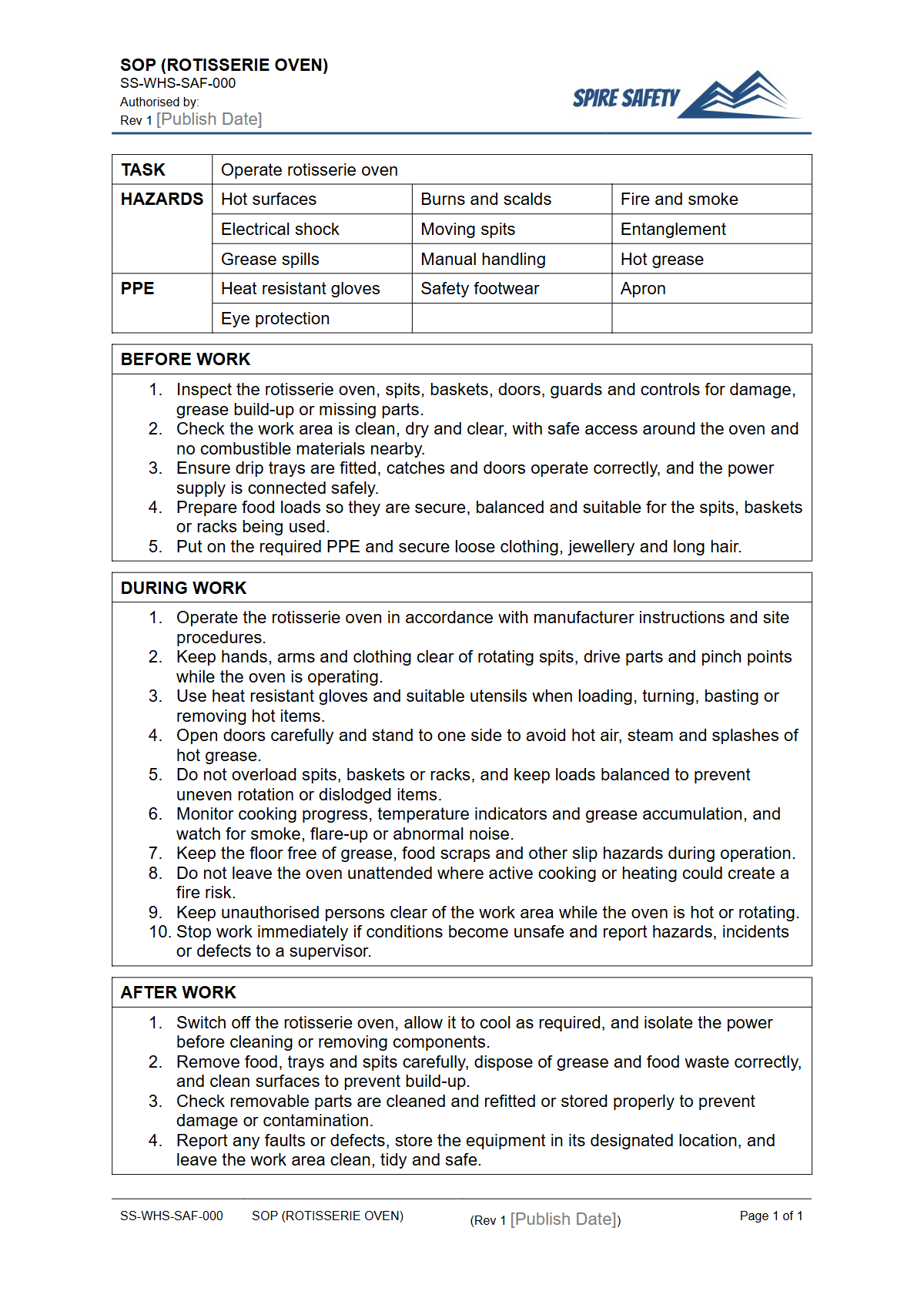
Operating a commercial rotisserie oven involves significant risks, including severe burns from hot surfaces and liquids, electrical hazards, and musculoskeletal injuries from manual handling. Our Free Safe Operating Procedure (Rotisserie Oven) Template provides a structured framework for documenting the safest way to perform tasks associated with this equipment.
A documented SOP is a fundamental tool for managing workplace risks, ensuring consistent training, and demonstrating due diligence in your safety management practices. It standardises the expected performance and safety behaviours for all workers, reducing the chance of incidents.
This document formalises the steps for safe operation, cleaning, and maintenance, helping to control identified hazards. It acts as a critical training resource for new employees and a reference for experienced staff.
Similar to our free Safe Operating Procedure for deep fryers, this template is designed for a specific piece of high-risk kitchen equipment, ensuring the controls are relevant and effective.
Video walkthrough
How to use the Free Safe Operating Procedure (Rotisserie Oven) Template
This resource is available for download in both DOCX and PDF formats for your convenience. The DOCX file is fully editable, allowing you to tailor the content directly to your operational needs.
The goal is to create a procedure that is specific to the make and model of the rotisserie oven used in your workplace, the environment it’s used in, and the specific tasks your workers perform.
Important: This is a template, not a finished document. You must customise it to reflect your specific site conditions, risk assessment findings, and legal obligations.
We strongly recommend developing the final SOP in consultation with the workers who operate the equipment daily, as their practical input is invaluable for creating a procedure that is both safe and workable. Integrating customised SOPs is a key component of building comprehensive WHS management systems.
When to use a Rotisserie Oven SOP
A Safe Operating Procedure for a rotisserie oven should be used as a core part of your daily operational and safety processes. It is essential during several key phases:
- Worker Induction and Training: Use the SOP as the primary training document for any new staff member who will be required to operate the rotisserie oven.
- Refresher Training: Conduct periodic refresher training for all relevant staff to reinforce safe work practices and address any complacency.
- Pre-operational Checks: Workers should reference the SOP daily before starting the oven to ensure all safety guards and features are in place and functional.
- Incident Investigation: If an incident or near-miss occurs, the SOP should be reviewed as part of the investigation to determine if the procedure was followed and if it needs to be updated.
- Audits and Reviews: The procedure serves as evidence of your risk control measures during internal or external safety audits. The process of regular WHS compliance auditing helps ensure that documented procedures like this are being followed correctly in practice.
Who should use this SOP
This Safe Operating Procedure is intended for use by various personnel within a business to ensure a collaborative approach to safety:
- Persons Conducting a Business or Undertaking (PCBUs): Business owners and directors can use this template to fulfil their primary duty of care to provide and maintain a safe system of work.
- Managers and Supervisors: Kitchen managers and team leaders are responsible for implementing the SOP, providing training, and ensuring workers comply with its instructions.
- Workers: Kitchen hands, chefs, and any other staff who operate, clean, or perform minor maintenance on the rotisserie oven must be trained on and follow the procedure.
- Health and Safety Representatives (HSRs): HSRs can use the SOP as a benchmark during workplace inspections and when consulting with management on safety matters.
By defining and documenting safe work methods, you create a safer environment for everyone. For more guidance on creating site-specific documents, you can explore our extensive free WHS resources library for other templates and guides.
Key Information in the Rotisserie Oven SOP Template
Our template provides a clear, organised structure for you to populate. It includes dedicated sections for:
- Required Personal Protective Equipment (PPE): Specifies items like heat-resistant gloves, aprons, and non-slip footwear.
- Pre-operational Safety Checks: A step-by-step checklist to complete before turning the machine on, covering guards, controls, and cleanliness.
- Step-by-Step Operating Instructions: A logical sequence for safely loading, cooking, and unloading product.
- Shutdown and Cleaning Procedures: Detailed instructions for powering down the oven and cleaning it safely to prevent burns and electrical hazards.
- Emergency Procedures: Clear steps to take in case of fire, electrical shock, or injury.
Customising these sections thoroughly is critical. If you require assistance in adapting this template or developing other complex safety documents, consider engaging professional WHS consulting services to ensure your documentation is robust and effective.
Common mistakes
Common mistakes to avoid
- Failing to customise the generic template to the specific make and model of the oven.
- Neglecting to include detailed cleaning and sanitising procedures, creating both WHS and food safety risks.
- Not training all relevant workers on the finalised SOP and keeping records of that training.
- Forgetting to schedule and document regular reviews of the SOP, making it obsolete over time.
Legal references
Legal considerations
The following legal requirements may be relevant to this type of work.
- Work Health and Safety Act (Harmonised) — Provides the primary duties for protecting workers and other people from work health and safety risks.
- Work Health and Safety Regulations (Harmonised) — Sets out requirements supporting the management of workplace hazards and risks.
The following codes may be relevant to this type of work.
- Managing WHS Risks Code of Practice — Provides practical guidance on identifying hazards, assessing risks and applying effective controls.
- Work Health and Safety Consultation, Cooperation and Coordination Code of Practice — Provides practical guidance on consulting workers and coordinating with other duty holders.
- Managing the Work Environment and Facilities Code of Practice — Provides practical guidance on safe work environments, workplace facilities and related controls.
Did you know
Burn Severity
Hot surfaces on commercial kitchen equipment like rotisserie ovens can exceed 200°C. A contact burn from a surface this hot can cause a severe third-degree burn in less than a second.
Electrical Risks
Faulty wiring or improper cleaning of electrical kitchen appliances are leading causes of electrical shocks and fires in commercial settings. Regular electrical testing and tagging is a critical control measure.
FAQ
Frequently asked questions
01What is a Safe Operating Procedure for a rotisserie oven?
02Is this rotisserie oven SOP template ready to use immediately?
03Who is responsible for creating and implementing a SOP?
04How often should we review our rotisserie oven SOP?
Share this resource
Free Safe Operating Procedure (Rotisserie Oven) Template
Browse Categories
How To Use It
- 1Download and open in Word or PDF.
- 2Replace the placeholders with your business details.
- 3Get it reviewed by a WHS specialist before rollout.
Need it customised?
Our WHS consultants can adapt this template to your site, run a gap analysis, or audit what you already have in place.
Book a Free Consultation WHS consulting servicesor call 1300 156 382
Related templates
- Free Safe Operating Procedure (Rotor Safety) Template
- Free Safe Operating Procedure (Roughness Tester) Template
- Free Safe Operating Procedure (Route Sheet Handover) Template
- Free Safe Operating Procedure (Rugby Post Inspection) Template
- Free Safe Operating Procedure (Runway Sweeper) Template
- Free Safe Operating Procedure (Safety Valve Test) Template