
Free Safe Operating Procedure (Section Roller) Template
Download our free Safe Operating Procedure (Section Roller) template. This document provides a clear framework for operating section rollers safely.
Free Safe Operating Procedure (Section Roller) Template
DOCX • 126 KB + PDF
Updated Oct 2026
No signup required
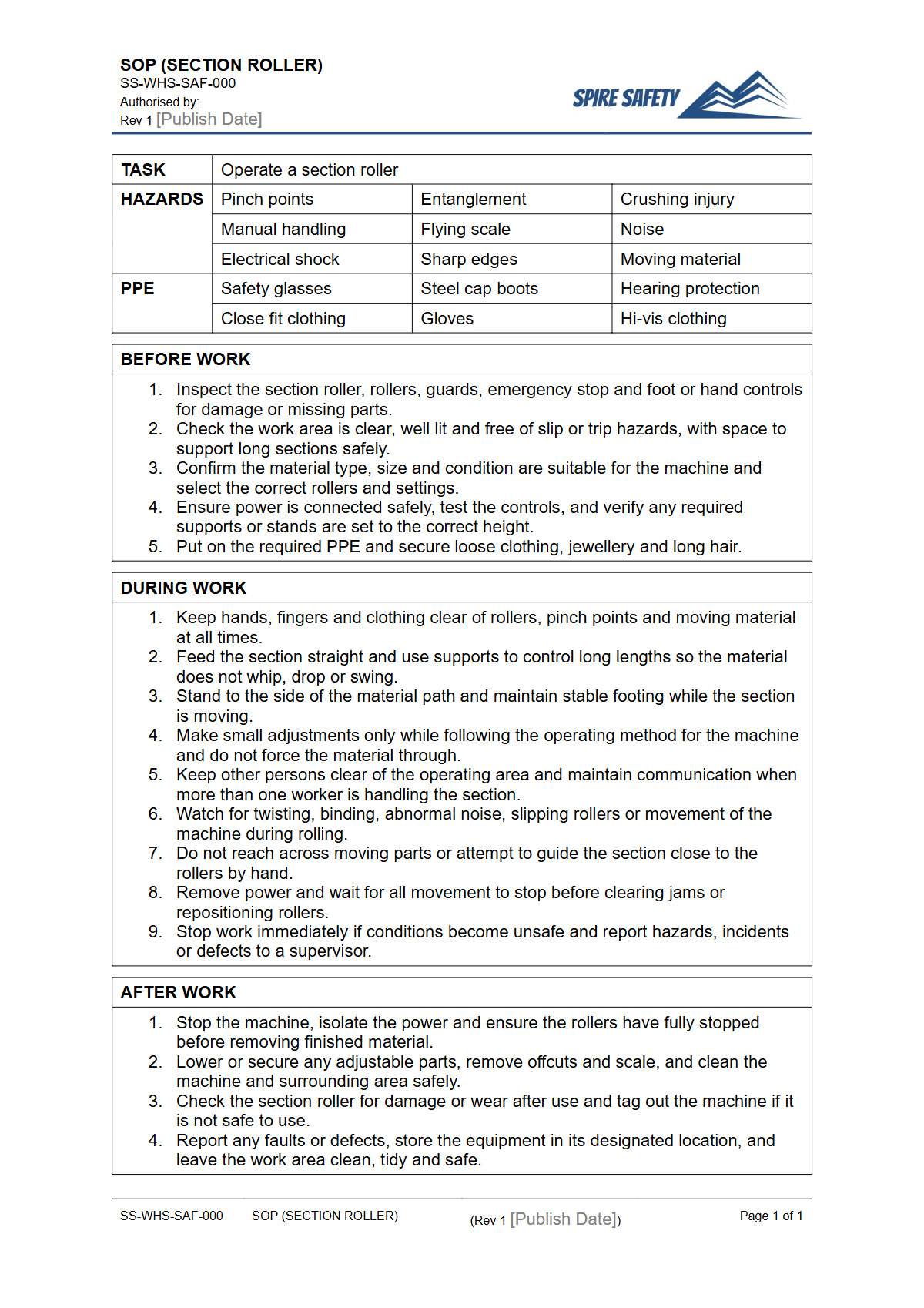
Purpose of the Free Safe Operating Procedure (Section Roller) Template
Operating heavy machinery like a section roller introduces significant risks into the workplace. This free Safe Operating Procedure (Section Roller) template provides a structured foundation for documenting the safe methods required to operate this equipment.
A well-developed SOP is a critical administrative control that helps standardise tasks, train workers, and systematically manage hazards. It outlines the step-by-step processes for pre-start checks, operation, and shutdown, ensuring that safety is integrated into every stage of the work.
Using this template helps your organisation meet its duty of care by formally identifying risks associated with section rollers, such as entanglement in moving parts, crushing injuries from rollers, or being struck by material. It prompts you to detail the specific control measures necessary to mitigate these risks, such as machine guarding, use of personal protective equipment (PPE), and emergency stop procedures.
This creates a clear, auditable record of your risk management process for this specific piece of plant.
Video walkthrough
How to use the Free Safe Operating Procedure (Section Roller) Template
This document is provided as a starting point in DOCX and PDF formats. To make it effective, you must customise it to reflect the unique conditions of your workplace.
Download the template and consult with the workers who actually operate the section roller. Their direct experience is invaluable for identifying practical hazards and effective controls.
You will need to add site-specific details, including:
- The specific make and model of the section roller.
- Required PPE (e.g., safety glasses, steel-capped boots, hearing protection).
- Location of emergency stop buttons and isolation points.
- Site-specific emergency procedures and contact details.
- Details of any unique materials or profiles being processed.
Important Note: This is a generic template and must be customised to your specific machinery, tasks, and operational environment. We are not responsible for the implementation or compliance of the final document, as this depends entirely on the information you add.
The goal is to integrate the finalised SOP into your broader safety framework, such as your WHS management system, to ensure it is used effectively.
Key Elements of a Section Roller SOP
A robust Safe Operating Procedure for a section roller should cover several key phases of the task to be effective. Our template is structured to guide you through these areas, ensuring a comprehensive approach to safety.
The main sections you will need to populate include pre-operational checks, step-by-step operating instructions, and post-operational tasks.
Pre-Operational Checks
This section details the inspections a worker must perform before starting the machine. It includes verifying that all guards are in place and functional, checking that emergency stops are working correctly, ensuring the work area is clear of trip hazards, and confirming the machine is in good mechanical condition.
These checks are fundamental to preventing incidents caused by equipment failure.
Safe Operating Steps
Here, you will outline the sequence of actions for safely performing a task with the section roller. This includes instructions on how to correctly feed material into the machine, how to make adjustments during operation, and what operator posture to maintain to avoid entanglement.
This part of the SOP is crucial for training and for standardising the safest known method for the job. The effectiveness of these procedures can be verified through routine observation and WHS compliance auditing services.
Post-Operational Tasks
This section describes the required steps after the work is complete. It covers safe shutdown procedures, isolating the machine from its power source, cleaning the equipment and work area, and reporting any faults or damage observed during operation.
A consistent shutdown process prevents incidents that can occur when machinery is left in an unsafe state.
When to use a Section Roller Safe Operating Procedure
A Safe Operating Procedure is a dynamic document used throughout the lifecycle of the equipment in your workplace. It should be used during worker induction and training to demonstrate the expected safe work method before an operator uses the machine for the first time.
It also serves as an excellent tool for refresher training to prevent complacency and bad habits from forming.
The SOP should be readily available at or near the machine for easy reference during operation. Furthermore, it must be reviewed and updated following any incident or near-miss, when a new model of section roller is introduced, or when the process itself changes.
This ensures it remains relevant and effective, much like you would manage a conveyer system SOP or any other procedure for high-risk plant.
Who should use this SOP Template
This SOP template is designed for use by various roles within an organisation. A Person Conducting a Business or Undertaking (PCBU) has the primary responsibility for ensuring a safe work environment and can use this template to fulfil that duty.
WHS Managers and Safety Officers will typically lead the development, implementation, and review of the SOP.
Supervisors and team leaders use the finalised document to train their teams and monitor day-to-day compliance. Most importantly, operators of the section roller are the end-users who must understand and follow the procedure to protect themselves and their colleagues.
Involving operators in the initial drafting process, just as you would for an air compressor SOP template, is the best way to ensure the final document is practical and effective. For expert guidance in developing and implementing your safety documents, our WHS consulting team can provide tailored support.
Common mistakes
Common mistakes to avoid
- Using the template without customising it for the specific machine and work environment.
- Failing to provide hands-on, supervised training in conjunction with the written procedure.
- Operating the machine with guards removed or disabled.
- Wearing loose clothing, unrestrained long hair, or jewellery that could become entangled in the rollers.
Legal references
Legal considerations
The following legal requirements may be relevant to this type of work.
- Work Health and Safety Act (Harmonised) — Provides the primary duties for protecting workers and other people from work health and safety risks.
- Work Health and Safety Regulations (Harmonised) — Sets out requirements supporting the management of workplace hazards and risks.
The following codes may be relevant to this type of work.
- Managing WHS Risks Code of Practice — Provides practical guidance on identifying hazards, assessing risks and applying effective controls.
- Work Health and Safety Consultation, Cooperation and Coordination Code of Practice — Provides practical guidance on consulting workers and coordinating with other duty holders.
- Managing the Work Environment and Facilities Code of Practice — Provides practical guidance on safe work environments, workplace facilities and related controls.
Did you know
Entanglement Risk
Rotating machinery, like section rollers, can grab and pull in an object in less than a second. A machine rotating at just one metre per second can draw a worker in from nearly three metres away during the average human reaction time.
FAQ
Frequently asked questions
01What are the main hazards of a section roller?
02Does a Safe Operating Procedure replace the manufacturer's manual?
03How often should a section roller SOP be reviewed?
04Is competency training still required if we have an SOP?
Share this resource
Free Safe Operating Procedure (Section Roller) Template
Browse Categories
How To Use It
- 1Download and open in Word or PDF.
- 2Replace the placeholders with your business details.
- 3Get it reviewed by a WHS specialist before rollout.
Need it customised?
Our WHS consultants can adapt this template to your site, run a gap analysis, or audit what you already have in place.
Book a Free Consultation WHS consulting servicesor call 1300 156 382
Related templates
- Free Safe Operating Procedure (Security Door Cleaning) Template
- Free Safe Operating Procedure (Security Gate Operation) Template
- Free Safe Operating Procedure (Security Key Handover) Template
- Free Safe Operating Procedure (Security Log Handover) Template
- Free Safe Operating Procedure (Security Patrol Handover) Template
- Free Safe Operating Procedure (Security Patrol) Template