
Free Safe Operating Procedure (Solar Shade Cleaning) Template
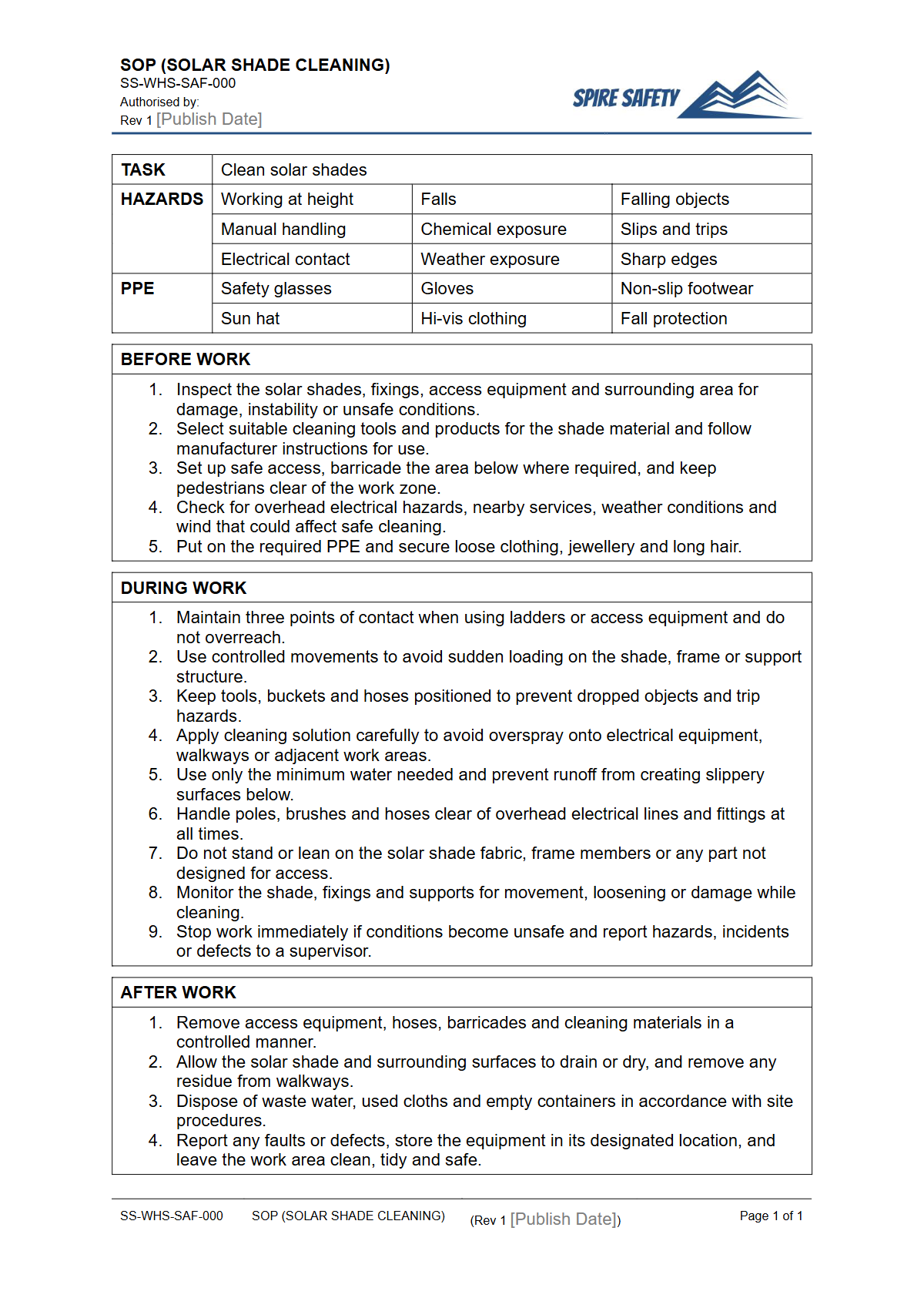
Download our free Safe Operating Procedure for solar shade cleaning. This customisable template helps you outline safety steps for this high-risk task.
Free Safe Operating Procedure (Solar Shade Cleaning) Template
DOCX • 126 KB + PDF
Updated Oct 2026
No signup required
Purpose of the Free Safe Operating Procedure (Solar Shade Cleaning) Template
Cleaning solar shades and panels is a critical maintenance task that presents significant safety risks, including working at heights, electrical hazards, and manual handling. Our free Safe Operating Procedure (Solar shade Cleaning) template provides a structured framework for documenting the specific steps required to perform this job safely.
By establishing a clear, repeatable process, you can minimise workplace incidents, ensure consistent training, and demonstrate a commitment to safety. A well-drafted SOP is a fundamental component of effective WHS management systems, helping to formalise risk controls and operational discipline.
Video walkthrough
How to use the Free Safe Operating Procedure (Solar Shade Cleaning) Template
This document is a template and must be customised to reflect the specific hazards and controls in your workplace. Download the DOCX or PDF file and adapt it by conducting a site-specific risk assessment.
Your procedure should detail the exact equipment used, such as water-fed poles, squeegees, and any mobile plant or access equipment. If using elevated work platforms, you may need a specific procedure like our FREE Telehandler SOP Template. Also, specify the required Personal Protective Equipment (PPE), pre-start checks, cleaning methods, and emergency response plans relevant to your operations.
Key Customisation Steps:
- Site Assessment: Identify all potential hazards, such as fragile roof surfaces, overhead powerlines, and access limitations.
- Equipment List: List all tools and equipment, including their specific pre-use inspection requirements.
- Step-by-Step Process: Detail each stage of the task, from initial setup and electrical isolation to the cleaning process and final pack-down.
- PPE Requirements: Define the mandatory PPE based on your risk assessment, which could include harnesses, non-slip footwear, gloves, and eye protection.
- Emergency Procedures: Outline clear steps for responding to incidents like falls, electric shock, or chemical spills.
When to use this Safe Operating Procedure
A Safe Operating Procedure for solar shade cleaning should be developed and approved before any work begins. It is a vital tool for planning high-risk activities and serves as the primary reference for worker training, inductions, and competency assessments.
The SOP should be reviewed and communicated during pre-start meetings or toolbox talks to ensure every team member understands the required safety controls for the day's task. It is a living document that should be updated whenever a process, piece of equipment, or environmental condition changes. This includes considering ancillary equipment that may need its own procedure, such as the one detailed in our Free Air Compressor SOP (Safe Operating Procedure) Template.
Who should use this Safe Operating Procedure
This SOP is designed for use by multiple roles within an organisation:
- Persons Conducting a Business or Undertaking (PCBUs) use it to fulfil their primary duty of care by providing a safe system of work.
- Managers and Supervisors use it to train workers, assign tasks, and monitor that the prescribed safety measures are being followed correctly. The effectiveness of its implementation can be formally checked through periodic WHS compliance auditing.
- Workers must use the SOP to understand and follow the required steps to perform their job safely, protecting themselves and their colleagues.
- WHS Professionals use it as part of the broader safety management system to standardise procedures and manage operational risks.
By implementing this procedure, your organisation creates a safer environment for everyone involved in solar shade maintenance. For more templates covering a wide range of tasks and equipment, browse our complete free WHS resources library.
Common mistakes
Common mistakes to avoid
- Failing to electrically isolate panels or inverters before starting work.
- Using high-pressure water jets that can force water past seals and damage the panel.
- Working from an unsecured ladder or on a roof without appropriate fall protection.
- Using abrasive chemicals or rough brushes that can scratch the panel's anti-reflective coating.
Legal references
Legal considerations
The following legal requirements may be relevant to this type of work.
- Work Health and Safety Act (Harmonised) — Provides the primary duties for protecting workers and other people from work health and safety risks.
- Work Health and Safety Regulations (Harmonised) — Sets out requirements supporting the management of workplace hazards and risks.
The following codes may be relevant to this type of work.
- Managing WHS Risks Code of Practice — Provides practical guidance on identifying hazards, assessing risks and applying effective controls.
- Work Health and Safety Consultation, Cooperation and Coordination Code of Practice — Provides practical guidance on consulting workers and coordinating with other duty holders.
- Managing the Work Environment and Facilities Code of Practice — Provides practical guidance on safe work environments, workplace facilities and related controls.
Did you know
Efficiency Loss
Depending on the level of soiling, dirty solar panels can lose anywhere from 5% to 25% of their energy output. Regular, safe cleaning is essential for maintaining performance and return on investment.
FAQ
Frequently asked questions
01Is a Safe Operating Procedure mandatory for cleaning solar shades in Australia?
02What are the main hazards involved in solar shade cleaning?
03Can I use this template for cleaning large-scale commercial solar farms?
04What kind of PPE is typically required for solar shade cleaning?
Share this resource
Free Safe Operating Procedure (Solar Shade Cleaning) Template
Browse Categories
How To Use It
- 1Download and open in Word or PDF.
- 2Replace the placeholders with your business details.
- 3Get it reviewed by a WHS specialist before rollout.
Need it customised?
Our WHS consultants can adapt this template to your site, run a gap analysis, or audit what you already have in place.
Book a Free Consultation WHS consulting servicesor call 1300 156 382
Related templates
- Free Safe Operating Procedure (Solvent Handling) Template
- Free Safe Operating Procedure (Solvent Recycling Unit) Template
- Free Safe Operating Procedure (SOP) Template
- Free Safe Operating Procedure (Sound Level Meter) Template
- Free Safe Operating Procedure (Soup Kettle) Template
- Free Safe Operating Procedure (Spa Equipment Cleaning) Template