
Free Safe Operating Procedure (Steam Iron) Template
Manage workplace risks from steam irons with our detailed Safe Operating Procedure template. Download our free DOCX and PDF to standardise your processes.
Free Safe Operating Procedure (Steam Iron) Template
DOCX • 126 KB + PDF
Updated Oct 2026
No signup required
Purpose of the Free Safe Operating Procedure (Steam Iron) Template
Using a steam iron in a workplace, whether it's a commercial laundry, hotel, retail store, or design studio, carries genuine risks. Hazards like severe burns, electrical shock, and slips from spilled water or tangled cords need to be managed systematically.
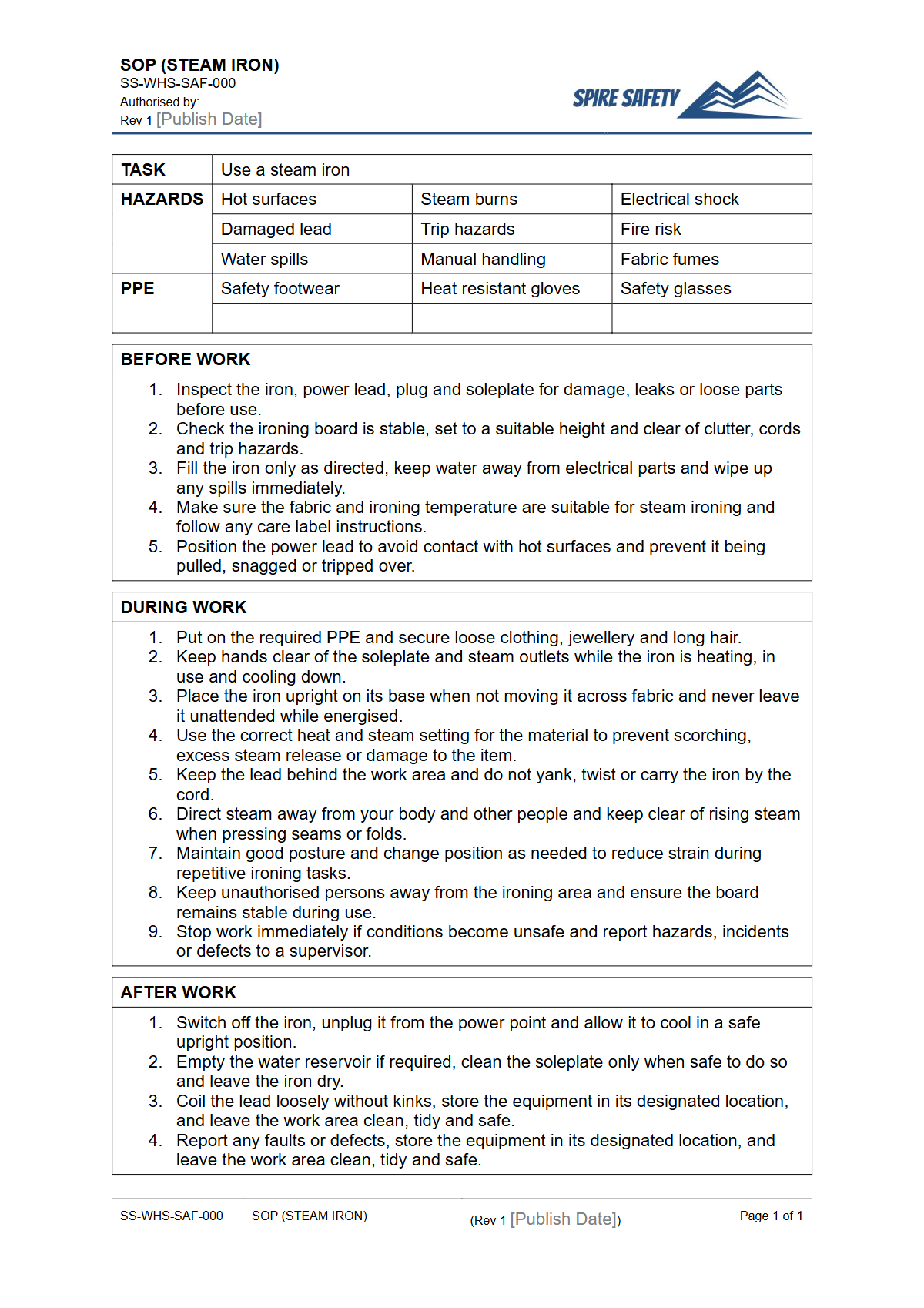
This Free Safe Operating Procedure (Steam Iron) Template provides a structured framework for documenting the required steps to use this common piece of equipment safely. It helps organisations meet their duty of care by providing clear, accessible instructions to workers, standardising training, and forming a key part of your safety management system.
An SOP ensures that every operator, regardless of experience, understands the approved method for pre-start checks, operation, filling, emptying, and shutdown. Formalising these steps reduces the likelihood of accidents, equipment damage, and workplace injuries.
A documented procedure is also invaluable during incident investigations and safety audits, demonstrating a proactive approach to risk management. Integrating such procedures is a fundamental aspect of building robust WHS management systems that protect both employees and the business.
Video walkthrough
How to use the Free Safe Operating Procedure (Steam Iron) Template
This document is a comprehensive starting point, not a final solution. To make it effective, you must adapt it to your specific operational context.
Download the template in DOCX format for easy editing and add site-specific information, including the exact make and model of the steam iron, emergency contact details, locations of first aid kits and fire extinguishers, and any unique environmental factors in your workplace.
You should also review and amend the risk control measures based on your own formal risk assessment. For instance, while our template outlines general personal protective equipment (PPE), your assessment may identify a need for specific types of gloves or footwear.
For complex environments or if you need assistance with this process, consider engaging WHS consulting services to ensure your documentation is thorough and practical.
Please note: We have provided this template as a starting point. You must customise it with your own site-specific details, equipment models, and emergency procedures to ensure it is relevant to your workplace.
When to use it
A Safe Operating Procedure for a steam iron should be a living document integrated into your daily operations. It must be used as the primary training document for any new worker tasked with using the iron.
It should also be used for periodic refresher training to prevent complacency and ensure long-term adherence to safe practices.
The SOP should be positioned in a visible and easily accessible location near the ironing station. This allows operators to quickly reference it if they are unsure about a step, particularly concerning safety checks or emergency shutdown.
It also serves as a checklist for supervisors conducting competency assessments or routine workplace inspections. Regular reviews of the SOP, especially after an incident or when new equipment is introduced, are essential to keep it current and effective.
Who should use it
This SOP is intended for all personnel who are required to operate a steam iron as part of their job duties. This includes, but is not limited to, laundry attendants, hotel housekeeping staff, retail employees, tailors, alteration specialists, and dry cleaners.
Its clear, step-by-step format is designed to be understood by workers with varying levels of experience.
Supervisors and managers should also use this document to guide their training programs, conduct performance observations, and ensure uniform safety standards are maintained across all shifts. The principles of documenting safe use are transferable to other heated hand tools, as seen in resources like our FREE Soldering Iron SOP (Safe Operating Procedure) Template. Health and Safety Representatives (HSRs) can also use the SOP as a reference tool during workplace inspections and consultations with workers.
Key Hazards & Control Measures
Operating a steam iron introduces several hazards that must be controlled. A thorough risk assessment is the first step, leading to the implementation of controls like those listed in this SOP.
- Burns: The hot soleplate and steam can cause serious contact burns. Controls include never leaving the iron face down, using the provided heel rest, allowing a full cool-down period before storage, and wearing appropriate PPE if deemed necessary by a risk assessment.
- Electrical Shock: Frayed cords, internal faults, or water ingress can create a severe electrocution risk. Controls include routine visual inspections, a formal test-and-tag program, never filling the iron while it is plugged in, and immediately removing faulty equipment from service. The effectiveness of these controls can be verified through a WHS compliance auditing schedule.
- Slips, Trips & Falls: Cords trailing across walkways and water spilled on floors are common trip and slip hazards. Controls include positioning the ironing board to minimise cord travel, using cord holders, and immediately cleaning up any water spills.
- Ergonomic Strain: Prolonged or repetitive ironing can lead to musculoskeletal injuries. Controls include using an adjustable-height ironing board, taking regular breaks, and ensuring the work area is set up to minimise awkward postures.
By documenting and implementing these controls, you create a safer system of work for everyone. For more guidance on specific workplace hazards, you can explore our free WHS resources library for a wide range of templates and guides.
Common mistakes
Common mistakes to avoid
- Leaving the iron face down on fabric or the ironing board, creating a fire and burn risk.
- Wrapping the power cord tightly around the iron while it is still hot, which can melt or damage the cord's insulation.
- Overfilling the water reservoir or filling it while the unit is plugged into the power outlet.
- Using a domestic-grade extension cord that is not rated for the iron's power consumption, creating an electrical fire risk.
Legal references
Legal considerations
The following legal requirements may be relevant to this type of work.
- Work Health and Safety Act (Harmonised) — Provides the primary duties for protecting workers and other people from work health and safety risks.
- Work Health and Safety Regulations (Harmonised) — Sets out requirements supporting the management of workplace hazards and risks.
The following codes may be relevant to this type of work.
- Managing WHS Risks Code of Practice — Provides practical guidance on identifying hazards, assessing risks and applying effective controls.
- Work Health and Safety Consultation, Cooperation and Coordination Code of Practice — Provides practical guidance on consulting workers and coordinating with other duty holders.
- Managing the Work Environment and Facilities Code of Practice — Provides practical guidance on safe work environments, workplace facilities and related controls.
Did you know
Hotter Than Boiling
The soleplate of a standard steam iron can reach temperatures exceeding 200°C. This is more than double the temperature of boiling water, making accidental contact a significant burn hazard.
FAQ
Frequently asked questions
01What PPE is required when using a workplace steam iron?
02How often should a steam iron be electrically tested and tagged?
03Is a Safe Operating Procedure legally required for a steam iron?
04Can I use tap water in any commercial steam iron?
Share this resource
Free Safe Operating Procedure (Steam Iron) Template
Browse Categories
How To Use It
- 1Download and open in Word or PDF.
- 2Replace the placeholders with your business details.
- 3Get it reviewed by a WHS specialist before rollout.
Need it customised?
Our WHS consultants can adapt this template to your site, run a gap analysis, or audit what you already have in place.
Book a Free Consultation WHS consulting servicesor call 1300 156 382
Related templates
- Free Safe Operating Procedure (Steam Room Cleaning) Template
- Free Safe Operating Procedure (Steam Wand Cleaning) Template
- Free Safe Operating Procedure (Stick Blender) Template
- Free Safe Operating Procedure (Stillages) Template
- Free Safe Operating Procedure (Stock Picking Trolley) Template
- Free Safe Operating Procedure (Stock Replenishment) Template