
Free Safe Operating Procedure (Steam Room Cleaning) Template
Download our free Safe Operating Procedure (Steam Room Cleaning) Template to manage WHS risks. This customisable document helps you outline a safe work method.
Free Safe Operating Procedure (Steam Room Cleaning) Template
DOCX • 126 KB + PDF
Updated Oct 2026
No signup required
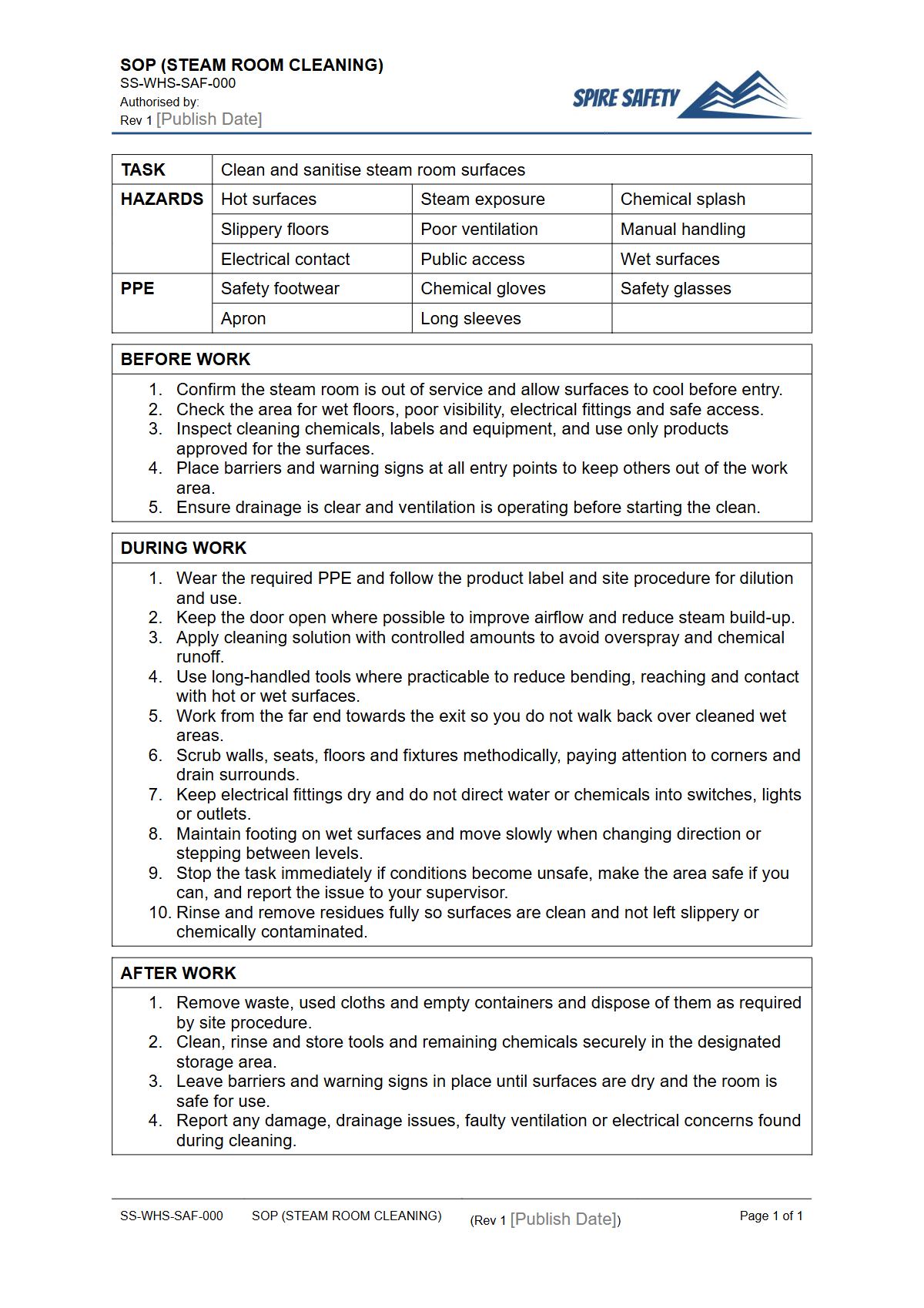
Purpose of the Free Safe Operating Procedure (Steam Room Cleaning) Template
This Safe Operating Procedure (SOP) provides a structured framework for cleaning steam rooms safely and efficiently. Using our free Safe Operating Procedure (Steam Room Cleaning) Template helps your organisation manage the significant work health and safety (WHS) risks associated with this task.
Key hazards include heat stress, exposure to hazardous chemicals, slips and trips on wet surfaces, and electrical dangers. By documenting a clear, step-by-step process, this SOP serves as a vital tool for training employees, standardising work methods, and demonstrating a commitment to a safe working environment.
It forms a crucial component of your overall safety management system, ensuring that all workers understand the required precautions before they begin work.
Key Hazards Addressed
The template guides you in documenting controls for specific hazards inherent to steam room maintenance:
- Thermal Hazards: Procedures for cooling the room before entry and managing the risk of heat stress for workers.
- Chemical Hazards: Steps for the safe handling, dilution, application, and storage of cleaning chemicals, including requirements for Personal Protective Equipment (PPE).
- Slips, Trips, and Falls: Controls such as using non-slip footwear, displaying warning signs, and ensuring adequate drainage and spill management.
- Electrical Hazards: Protocols for isolating electrical equipment (like steam generators or lighting) before introducing water and cleaning agents.
Integrating such specific procedures into your documentation ensures they are consistently applied, forming a robust part of your broader WHS management systems and daily operations.
Video walkthrough
How to Use the Free Safe Operating Procedure (Steam Room Cleaning) Template
This resource is available for immediate download in both DOCX and PDF formats. The DOCX file is fully editable, allowing you to tailor the content to the specific equipment, chemicals, and layout of your facility.
A well-drafted SOP is not a generic document; it must reflect the reality of your workplace. Similar to procedures for other specialised equipment, such as our Safe Operating Procedure for deep fryer operation, specificity is key to effectiveness.
Important Customisation Note
This template is a starting point and must be customised to your specific workplace. We are not familiar with your unique site conditions, the chemicals you use, your equipment, or the competency of your workers.
You must consult the Safety Data Sheets (SDS) for all cleaning products, review your own risk assessments, and incorporate your site-specific controls to create a meaningful and effective procedure. Generic procedures that don't match workplace practice can undermine safety efforts.
When to Use a Safe Operating Procedure
A Safe Operating Procedure for steam room cleaning should be used consistently as both a planning and operational tool. It should be reviewed and signed by workers before they undertake the task for the first time.
It is an essential reference during employee induction, refresher training, and whenever a process change is introduced. Furthermore, the SOP serves as a benchmark during safety inspections and formal assessments like WHS compliance auditing, providing clear evidence of your organisation's prescribed safe work methods.
If an incident or near-miss occurs, the SOP should be reviewed as part of the investigation to identify any gaps or areas for improvement.
Who Should Use It
This SOP should be used by all personnel involved in the cleaning and maintenance of steam rooms. This includes:
- Persons Conducting a Business or Undertaking (PCBUs): To meet their primary duty of care by providing and maintaining a safe system of work.
- Managers and Supervisors: To train workers, supervise the task, and ensure the documented procedure is followed correctly.
- Workers and Cleaning Staff: As a clear, step-by-step guide to performing their duties safely and to understand the hazards and controls involved.
- Health and Safety Representatives (HSRs): As a reference document when consulting on workplace safety matters.
Developing robust, tailored SOPs can be complex. If you need assistance adapting this template or developing other safety documentation, engaging specialist WHS consulting services can provide expert guidance. For more templates and safety guides, feel free to browse our complete free WHS resources library.
Common mistakes
Common mistakes to avoid
- Failing to allow the room to cool sufficiently before entry, leading to heat stress.
- Using incorrect or improperly diluted cleaning chemicals, causing damage to surfaces or creating toxic fumes.
- Neglecting to isolate electrical systems, creating a severe risk of electrocution.
- Not using appropriate PPE, especially chemical-resistant gloves and eye protection.
Legal references
Legal considerations
The following legal requirements may be relevant to this type of work.
- Work Health and Safety Act (Harmonised) — Provides the primary duties for protecting workers and other people from work health and safety risks.
- Work Health and Safety Regulations (Harmonised) — Sets out requirements supporting the management of workplace hazards and risks.
The following codes may be relevant to this type of work.
- Managing WHS Risks Code of Practice — Provides practical guidance on identifying hazards, assessing risks and applying effective controls.
- Work Health and Safety Consultation, Cooperation and Coordination Code of Practice — Provides practical guidance on consulting workers and coordinating with other duty holders.
- Managing the Work Environment and Facilities Code of Practice — Provides practical guidance on safe work environments, workplace facilities and related controls.
Did you know
A Hidden Hazard
Legionella bacteria, which causes Legionnaires' disease, can thrive in the warm, wet conditions of poorly maintained steam rooms and their water systems. Regular, thorough cleaning and disinfection is a critical public health control.
Slips and Trips
Slips, trips, and falls are a leading cause of workplace injury in Australia, particularly in hospitality and facility management. Using designated non-slip footwear and 'cleaning in progress' signs are simple but highly effective controls.
FAQ
Frequently asked questions
01What are the main hazards when cleaning a steam room?
02What personal protective equipment (PPE) is required for cleaning a steam room?
03Why is a Safe Operating Procedure important for this task?
04How long should a steam room cool before cleaning begins?
Share this resource
Free Safe Operating Procedure (Steam Room Cleaning) Template
Browse Categories
How To Use It
- 1Download and open in Word or PDF.
- 2Replace the placeholders with your business details.
- 3Get it reviewed by a WHS specialist before rollout.
Need it customised?
Our WHS consultants can adapt this template to your site, run a gap analysis, or audit what you already have in place.
Book a Free Consultation WHS consulting servicesor call 1300 156 382
Related templates
- Free Safe Operating Procedure (Steam Wand Cleaning) Template
- Free Safe Operating Procedure (Stick Blender) Template
- Free Safe Operating Procedure (Stillages) Template
- Free Safe Operating Procedure (Stock Picking Trolley) Template
- Free Safe Operating Procedure (Stock Replenishment) Template
- Free Safe Operating Procedure (Stock Transfer Handover) Template