
Free Safe Operating Procedure (Stock Transfer Handover) Template
Clearly define the steps for safe stock transfers between shifts, teams, or locations. Download our free Safe Operating Procedure template to get started.
Free Safe Operating Procedure (Stock Transfer Handover) Template
DOCX • 126 KB + PDF
Updated Oct 2026
No signup required
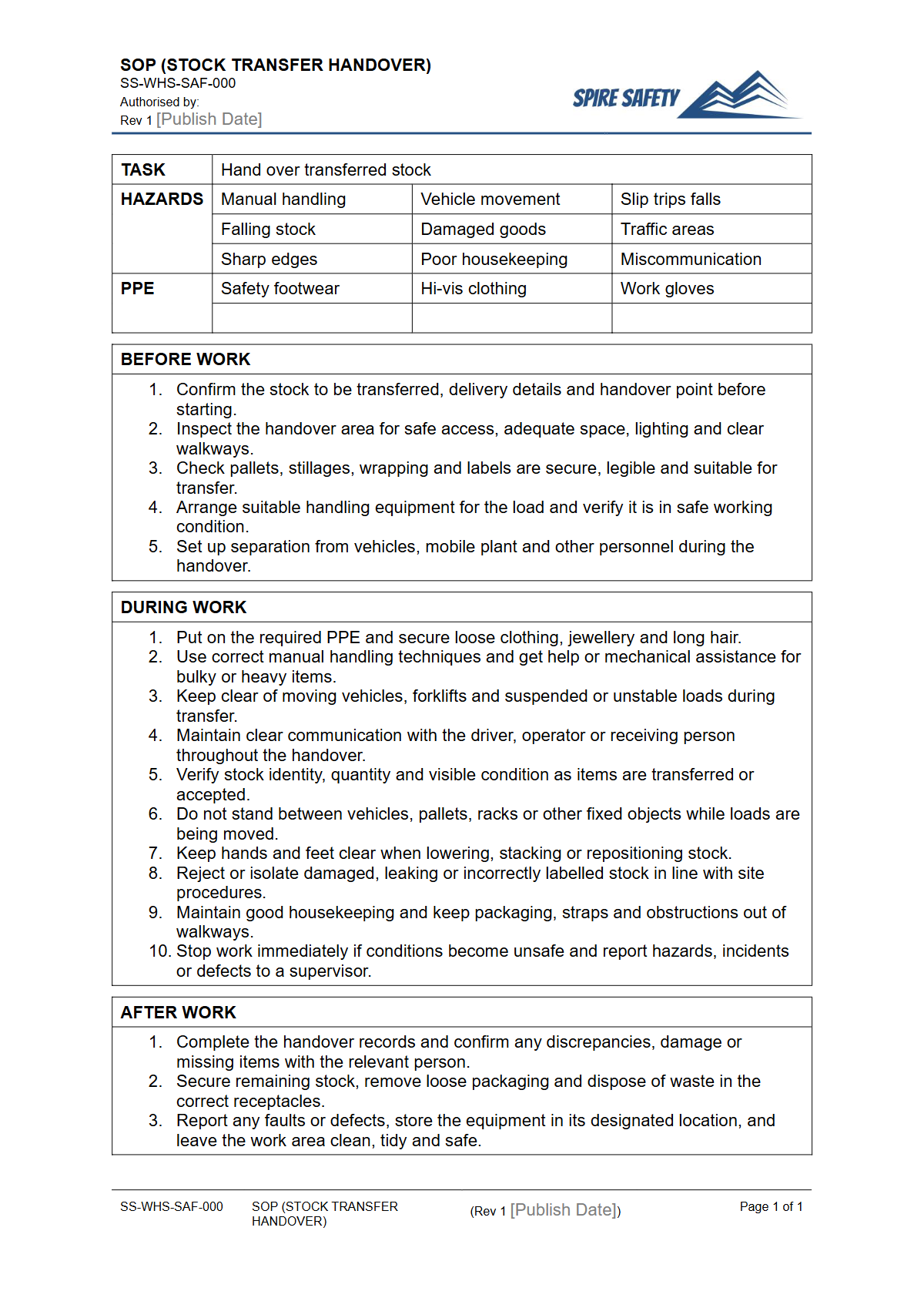
Purpose of the Free Safe Operating Procedure (Stock Transfer Handover) Template
A structured handover is critical for operational continuity and workplace safety in any environment where stock or inventory is managed. This Free Safe Operating Procedure (Stock Transfer Handover) Template provides a framework for documenting the formal process of transferring control and responsibility for goods.
Using a standardised procedure helps minimise miscommunication, prevent damage to stock, reduce errors in inventory counts, and most importantly, ensure that critical safety information is passed between teams or individuals. A clear SOP ensures everyone understands their roles and the specific steps to take, which is fundamental to preventing incidents and maintaining an efficient workflow.
Implementing a formal handover protocol can significantly reduce risks associated with manual handling and equipment use. For instance, if stock is being moved via automated systems, a detailed conveyer system SOP should be referenced within the handover notes.
This template helps formalise that communication, creating a reliable record and promoting accountability within your organisation.
Video walkthrough
How to use the Free Safe Operating Procedure (Stock Transfer Handover) Template
This Safe Operating Procedure for stock transfer handover is designed as a customisable starting point. It guides you through documenting the essential steps, safety controls, and responsibilities for your specific workplace.
To get the most value from this resource, it is crucial to adapt it to your unique operational context, equipment, and types of stock handled. It provides a structured format based on Australian WHS principles to help you build a comprehensive and effective procedure.
Follow these steps to implement the template:
- Download the DOCX file and open it on your computer.
- Consult with your team members, including warehouse operators, team leaders, and safety representatives who are involved in the stock transfer process.
- Carefully review each section and replace the placeholder text with details relevant to your site. Specify the types of stock, locations (e.g., warehouse bays, loading docks), communication methods, and documentation required.
- Detail the specific equipment used in the transfer, such as forklifts or pallet jacks. If specialised machinery is involved, you might reference its specific procedure, like a Telehandler SOP Template.
- Outline the step-by-step process, from initiating the handover to final sign-off.
- Once complete, have the SOP reviewed and approved by management.
- Provide training to all relevant personnel to ensure they understand and can follow the new procedure correctly.
Important Note: This document is a template only. We provide it as a starting point, but we cannot know the specific hazards and risks present in your workplace.
You must customise this Safe Operating Procedure by undertaking a risk assessment and consulting with your workers to ensure it is suitable for your business needs.
When to use it
A formal stock transfer handover SOP should be used whenever the responsibility for inventory changes hands. This creates a clear and auditable trail, which is essential for inventory management and WHS.
Consistent application of the procedure helps embed safe behaviours and reduces the likelihood of assumptions leading to errors or incidents. Integrating this SOP is a key part of developing robust comprehensive WHS management systems.
Common scenarios include:
- Shift Changes: When an incoming shift takes over from an outgoing shift in a warehouse or distribution centre.
- Inter-departmental Transfers: When stock is moved from receiving to storage, from storage to production, or from the warehouse to a retail floor.
- Third-Party Logistics (3PL): When handing over stock to or receiving stock from a third-party transport or storage provider.
- Project Handovers: When a project team passes leftover materials or finished goods to an inventory management team.
Who should use it
This Safe Operating Procedure is intended for use by various roles within an organisation to ensure consistency and safety. Clear designation of responsibility is a core component of the procedure itself.
Primary users include:
- Warehouse Operators & Storepersons: The frontline workers who physically handle the stock and perform the handover. They must understand the step-by-step process for counting, inspecting, and documenting the transfer.
- Team Leaders & Supervisors: Those responsible for overseeing the handover process, verifying its accuracy, resolving discrepancies, and ensuring the SOP is followed correctly.
- Warehouse & Logistics Managers: Individuals who own the overall process, are responsible for training staff, and may use the documented handovers for inventory reconciliation and performance monitoring. Periodic checks through WHS compliance auditing can confirm the SOP is being implemented effectively.
By defining procedures and roles clearly, you build a more resilient and safe operational environment. For more templates and safety guides, browse our complete free WHS resources library.
Common mistakes
Common mistakes to avoid
- Assuming the next shift or team is aware of existing issues or hazards.
- Failing to physically verify stock counts and condition against the handover documentation.
- Neglecting to communicate specific risks associated with the stock (e.g., heavy loads, unstable pallets, chemical properties).
- Writing a generic procedure that lacks specific, actionable instructions for your workplace.
Legal references
Legal considerations
The following legal requirements may be relevant to this type of work.
- Work Health and Safety Act (Harmonised) — Provides the primary duties for protecting workers and other people from work health and safety risks.
- Work Health and Safety Regulations (Harmonised) — Sets out requirements supporting the management of workplace hazards and risks.
The following codes may be relevant to this type of work.
- Managing WHS Risks Code of Practice — Provides practical guidance on identifying hazards, assessing risks and applying effective controls.
- Work Health and Safety Consultation, Cooperation and Coordination Code of Practice — Provides practical guidance on consulting workers and coordinating with other duty holders.
- Managing the Work Environment and Facilities Code of Practice — Provides practical guidance on safe work environments, workplace facilities and related controls.
Did you know
Communication Breakdown
A significant percentage of workplace incidents in logistics and warehousing can be traced back to poor communication or incomplete information during shift changes and task handovers.
The Cost of Errors
Inaccurate stock counts and misplaced inventory, often resulting from flawed handover processes, can cost businesses thousands of dollars annually in lost productivity, wasted search time, and stock write-offs.
FAQ
Frequently asked questions
01What should be included in a stock transfer handover SOP?
02Why is a formal handover process important for WHS?
03Is this stock transfer SOP template suitable for any industry?
04How often should a Safe Operating Procedure be reviewed?
Share this resource
Free Safe Operating Procedure (Stock Transfer Handover) Template
Browse Categories
How To Use It
- 1Download and open in Word or PDF.
- 2Replace the placeholders with your business details.
- 3Get it reviewed by a WHS specialist before rollout.
Need it customised?
Our WHS consultants can adapt this template to your site, run a gap analysis, or audit what you already have in place.
Book a Free Consultation WHS consulting servicesor call 1300 156 382
Related templates
- Free Safe Operating Procedure (Stock Trough Cleaning) Template
- Free Safe Operating Procedure (Stockroom Cleaning) Template
- Free Safe Operating Procedure (Stockroom Ladder Use) Template
- Free Safe Operating Procedure (Stockroom Trolley Use) Template
- Free Safe Operating Procedure (Stone Floor Cleaning) Template
- Free Safe Operating Procedure (Storage Cage Cleaning) Template