
Free Safe Operating Procedure (Suction Unit) Template
Clearly outline the steps for safely operating a suction unit in your workplace. Download our free Safe Operating Procedure template to get started today.
Free Safe Operating Procedure (Suction Unit) Template
DOCX • 126 KB + PDF
Updated Oct 2026
No signup required
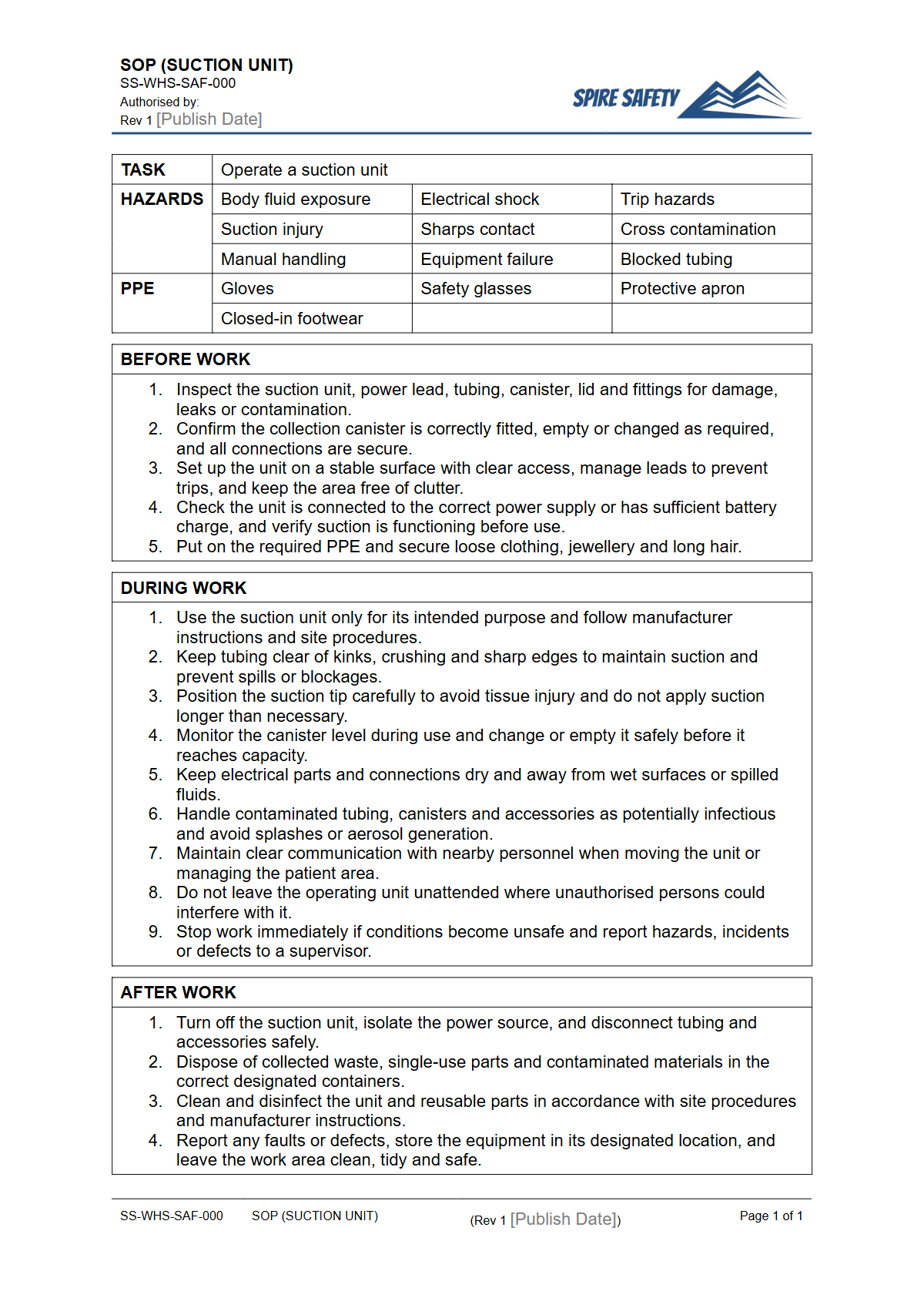
Purpose of the Free Safe Operating Procedure (Suction Unit) Template
Operating industrial suction units, whether for dust extraction, liquid recovery, or general cleaning, involves specific health and safety risks. This Free Safe Operating Procedure (Suction Unit) Template provides a structured framework for documenting the required steps to operate this equipment safely.
A well-drafted SOP helps your organisation manage hazards such as electrical shock, noise exposure, manual handling injuries from emptying, and inhalation of hazardous dust or fumes. By formalising the process, you create a vital tool for worker training, operational consistency, and demonstrating WHS due diligence.
It serves as a clear, accessible guide that standardises safe work practices across all teams.
Video walkthrough
How to use the Free Safe Operating Procedure (Suction Unit) Template
This resource is available as a DOCX file for easy editing and customisation, and a PDF for straightforward printing and distribution. To use the template effectively, you must adapt it to your specific operational context.
This includes detailing the make and model of the suction units in use, the types of materials being collected, and the specific hazards present in your work environment. A generic document is not sufficient for compliance.
Important: This is a template only. We cannot know your workplace's specific machinery, site conditions, or personnel.
You are responsible for customising this document to create a Safe Operating Procedure that is tailored to your business. This should be done in consultation with workers who operate the equipment and their supervisors.
An SOP is most effective when it forms part of larger, comprehensive WHS management systems that govern all high-risk activities.
Key Elements of a Suction Unit SOP
A robust SOP for a suction unit should be more than a simple checklist. It needs to guide the operator through the entire work cycle, from preparation to cleanup. Key sections you should include and customise are:
- Pre-Operational Checks: Instructions for inspecting the unit before use. This includes checking the power cord for damage, ensuring hoses and attachments are secure, verifying the collection bin or bag is correctly fitted, and confirming filters are clean and functional.
- Step-by-Step Operating Guide: A logical sequence for starting, using, and stopping the machine. This section should detail the correct use of attachments for specific tasks, how to manage the power cord to prevent trip hazards, and how to recognise signs of malfunction, such as unusual noises or loss of suction.
- Post-Operational Tasks: Clear procedures for safely emptying the collection bin, cleaning filters, and storing the unit and its accessories. This is critical for managing manual handling risks and preventing exposure to collected dust. The detail required is similar to what you would find in our free Air Compressor SOP template, which also covers pressurised systems and maintenance.
- Emergency Procedures: What to do in case of an electric shock, fire, or major spill. This includes shutdown procedures and emergency contact information.
When to Use This Safe Operating Procedure
The completed SOP is a versatile safety document that should be used in several situations. It is essential for inducting and training new employees who will be required to operate the suction unit.
The procedure should also be readily available in the work area as a quick reference for all operators. Furthermore, the SOP serves as a benchmark during safety observations or performance reviews.
Should an incident or near-miss occur involving a suction unit, the SOP will be a critical document in the investigation and any subsequent WHS compliance auditing activities to identify gaps in process or training.
Who Should Use This Procedure?
This SOP is intended for a range of personnel within an organisation. The primary users are the workers who directly operate the suction units as part of their daily tasks.
Supervisors and line managers must also be intimately familiar with the procedure to ensure they can effectively oversee the work and confirm it is being performed safely. WHS officers and advisors will use this template as a basis for developing site-specific documents.
When tailored correctly, it becomes a crucial tool for anyone involved in high-risk tasks that require documented safety processes, much like our free Circular Saw SOP Template is for wood or metal workers.
By implementing a clear, customised procedure, you establish a consistent safety standard that protects your workers and your business. For more templates covering a wide range of plant and equipment, browse our complete free WHS resources library.
Common mistakes
Common mistakes to avoid
- Using a domestic vacuum cleaner for industrial dust or liquids.
- Failing to check or replace filters, leading to poor performance and dust exposure.
- Operating the unit with damaged cords, hoses, or wands.
- Incorrect manual handling when emptying heavy collection bins.
Legal references
Legal considerations
The following legal requirements may be relevant to this type of work.
- Work Health and Safety Act (Harmonised) — Provides the primary duties for protecting workers and other people from work health and safety risks.
- Work Health and Safety Regulations (Harmonised) — Sets out requirements supporting the management of workplace hazards and risks.
The following codes may be relevant to this type of work.
- Managing WHS Risks Code of Practice — Provides practical guidance on identifying hazards, assessing risks and applying effective controls.
- Work Health and Safety Consultation, Cooperation and Coordination Code of Practice — Provides practical guidance on consulting workers and coordinating with other duty holders.
- Managing the Work Environment and Facilities Code of Practice — Provides practical guidance on safe work environments, workplace facilities and related controls.
Did you know
Dust Dangers
Certain types of dust, like silica from concrete or wood dust, are classified as hazardous substances. Industrial suction units with appropriate HEPA filtration are a key control measure for protecting worker respiratory health.
Consultation is Key
Under Australian WHS law, employers have a duty to consult with workers on matters affecting their health and safety. This includes developing Safe Operating Procedures for plant and equipment.
FAQ
Frequently asked questions
01What is the purpose of a Safe Operating Procedure for a suction unit?
02Do I need a separate SOP for each type of suction unit?
03How often should a suction unit SOP be reviewed?
04Who is responsible for writing a suction unit SOP?
Share this resource
Free Safe Operating Procedure (Suction Unit) Template
Browse Categories
How To Use It
- 1Download and open in Word or PDF.
- 2Replace the placeholders with your business details.
- 3Get it reviewed by a WHS specialist before rollout.
Need it customised?
Our WHS consultants can adapt this template to your site, run a gap analysis, or audit what you already have in place.
Book a Free Consultation WHS consulting servicesor call 1300 156 382
Related templates
- Free Safe Operating Procedure (Sump Pump) Template
- Free Safe Operating Procedure (Surface Degreasing) Template
- Free Safe Operating Procedure (Surface Disinfection) Template
- Free Safe Operating Procedure (Surface Etching) Template
- Free Safe Operating Procedure (Surface Grinder) Template
- Free Safe Operating Procedure (Surface Profile Gauge) Template