
Free Safe Operating Procedure (Tower Crane Access) Template
Download our free Safe Operating Procedure (SOP) for tower crane access. This template helps outline safety steps for accessing cranes.
Free Safe Operating Procedure (Tower Crane Access) Template
DOCX • 126 KB + PDF
Updated Oct 2026
No signup required
Purpose of the Free Safe Operating Procedure (Tower Crane Access) Template
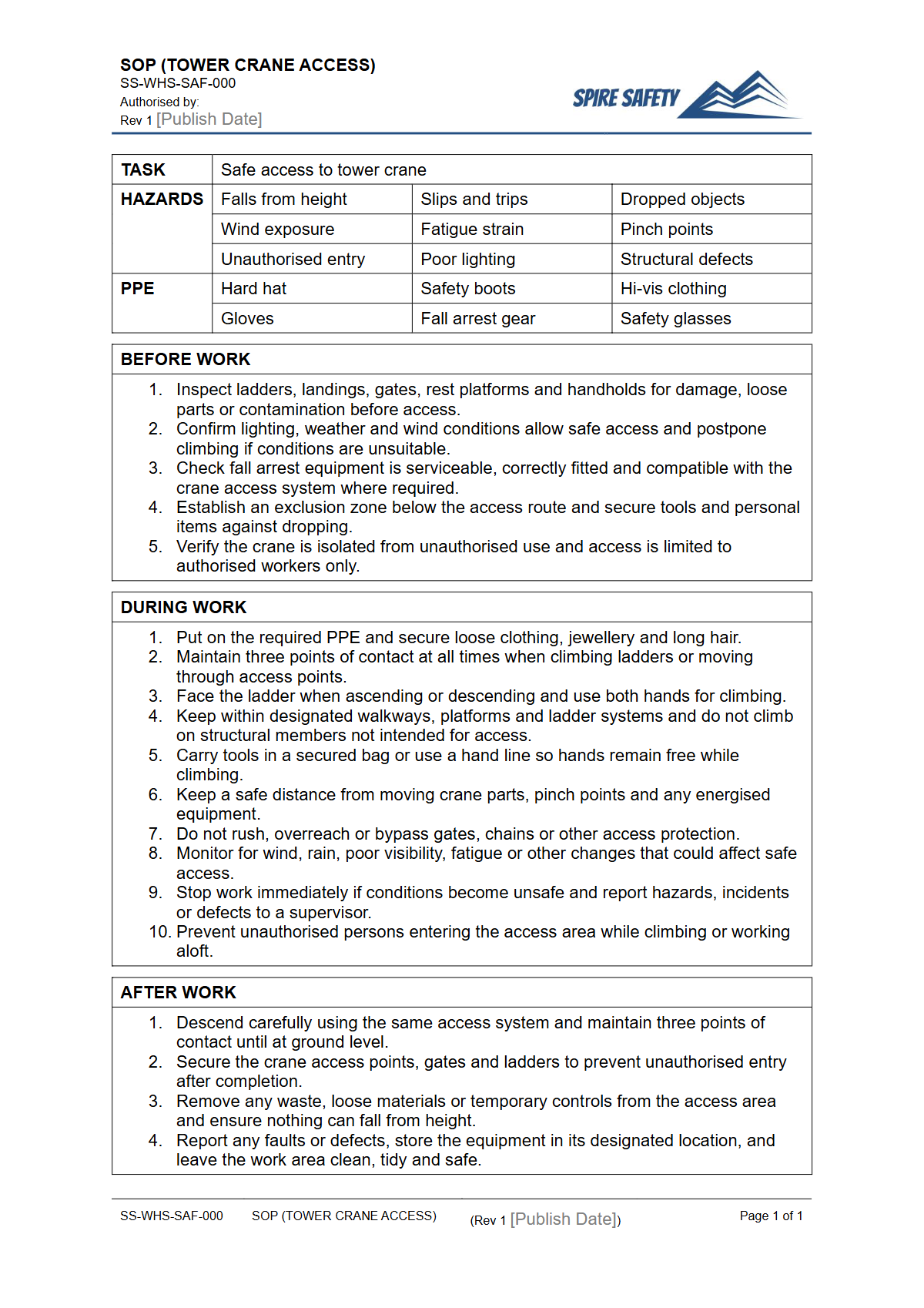
Operating and maintaining tower cranes involves significant risks, particularly when personnel need to access the structure for inspections, maintenance, or operation. This Free Safe Operating Procedure (Tower Crane Access) Template provides a structured starting point for your business to document the required safety controls for this high-risk task.
Using a standardised procedure helps ensure that all personnel follow a consistent, safe method for climbing and moving around the crane, minimising exposure to hazards like falls from height, electrical risks, and unguarded moving parts. It forms a critical component of your site's overall safety framework.
A well-developed SOP demonstrates a commitment to proactive risk management and is a key document within your broader WHS management systems. It helps your organisation meet its duty of care by clearly defining the steps for performing the task safely, the personal protective equipment (PPE) required, and the emergency procedures to follow. This template is designed to be adapted to the specific cranes and conditions found on your project.
Video walkthrough
How to Use the Free Safe Operating Procedure (Tower Crane Access) Template
This resource is available for immediate download in both DOCX and PDF formats. The DOCX version is fully editable, allowing you to add your company branding and modify the content to suit your operational needs.
Accessing a crane often involves using fixed ladders and platforms, so it's vital that procedures for their use are also clear. For related tasks, consider our FREE Step Ladder SOP (Safe Operating Procedure) Template to ensure consistency in your height safety documentation.
Important: This template provides a general framework and is not a completed document. You must customise this Safe Operating Procedure to align with the specific make and model of the tower crane in use, the unique layout of your worksite, and the relevant Australian Standards and state or territory regulations.
We strongly recommend that a competent person (such as a senior rigger, crane supervisor, or WHS professional) reviews and approves the final document before it is implemented. Regular reviews should also be scheduled to ensure the SOP remains current.
When to Use a Safe Operating Procedure
A Safe Operating Procedure for tower crane access should be developed and implemented before any work begins on site. It must be used as a primary reference and training tool for any worker required to access the crane structure.
This includes, but is not limited to, daily pre-start inspections by the operator, scheduled maintenance by technicians, repairs, and tasks performed by riggers and doggers. This SOP is also relevant during the crane erection and dismantling phases, where access procedures are critical. On many large construction sites, tower cranes work in conjunction with other specialised equipment, which also requires documented procedures, such as those covered in our FREE Boom Pump SOP (Safe Operating Procedure) Template.
Who Should Use This Safe Operating Procedure
This SOP is intended for all personnel involved with the tower crane's operation and upkeep. This includes crane operators, who may need to climb to the cabin or perform checks; maintenance fitters and electricians servicing the equipment; and riggers or doggers involved in its setup and use.
Site supervisors and project managers must also be familiar with the procedure to ensure it is being followed correctly through regular monitoring and observation. These documents are often reviewed during formal safety reviews, and our WHS compliance auditing services can help verify that your site's procedures are being implemented effectively.
Ultimately, any person who is required to climb or move about the tower crane structure must be trained in this specific procedure, understand the identified hazards, and be competent to carry out the task safely. This includes understanding the limits of their authorisation and the correct use of any fall protection equipment specified.
Managing a fleet of large plant often requires multiple SOPs, such as our FREE Telehandler SOP (Safe Operating Procedure) Template, to cover all high-risk activities on site.
Common mistakes
Common mistakes to avoid
- Failing to customise the template for the specific crane model and site conditions.
- Neglecting to provide practical, hands-on training to all personnel who will access the crane.
- Ignoring adverse weather conditions like high winds, rain, or lightning, which can make access unsafe.
- Not inspecting fall arrest systems and other personal protective equipment (PPE) before each use.
Legal references
Legal considerations
The following legal requirements may be relevant to this type of work.
- Work Health and Safety Act (Harmonised) — Provides the primary duties for protecting workers and other people from work health and safety risks.
- Work Health and Safety Regulations (Harmonised) — Sets out requirements supporting the management of workplace hazards and risks.
The following codes may be relevant to this type of work.
- Managing WHS Risks Code of Practice — Provides practical guidance on identifying hazards, assessing risks and applying effective controls.
- Work Health and Safety Consultation, Cooperation and Coordination Code of Practice — Provides practical guidance on consulting workers and coordinating with other duty holders.
- Managing the Work Environment and Facilities Code of Practice — Provides practical guidance on safe work environments, workplace facilities and related controls.
Did you know
Falls from Height
Falls from height remain a leading cause of fatalities and serious injuries in the Australian construction industry. Having robust procedures like an SOP for crane access is a critical control measure to prevent these incidents.
FAQ
Frequently asked questions
01What is a Safe Operating Procedure for tower crane access?
02Why is a specific SOP needed just for accessing a tower crane?
03Who is responsible for developing and implementing this SOP?
04Does this template cover the crane's pre-operational checks?
Share this resource
Free Safe Operating Procedure (Tower Crane Access) Template
Browse Categories
How To Use It
- 1Download and open in Word or PDF.
- 2Replace the placeholders with your business details.
- 3Get it reviewed by a WHS specialist before rollout.
Need it customised?
Our WHS consultants can adapt this template to your site, run a gap analysis, or audit what you already have in place.
Book a Free Consultation WHS consulting servicesor call 1300 156 382
Related templates
- Free Safe Operating Procedure (Track Surface Cleaning) Template
- Free Safe Operating Procedure (Traffic Cone Setup) Template
- Free Safe Operating Procedure (Trailer Door Check) Template
- Free Safe Operating Procedure (Trailer Seal Check) Template
- Free Safe Operating Procedure (Train Interior Cleaning) Template
- Free Safe Operating Procedure (Train Seat Cleaning) Template