
Free Safe Operating Procedure (Transfer Sling Storage) Template
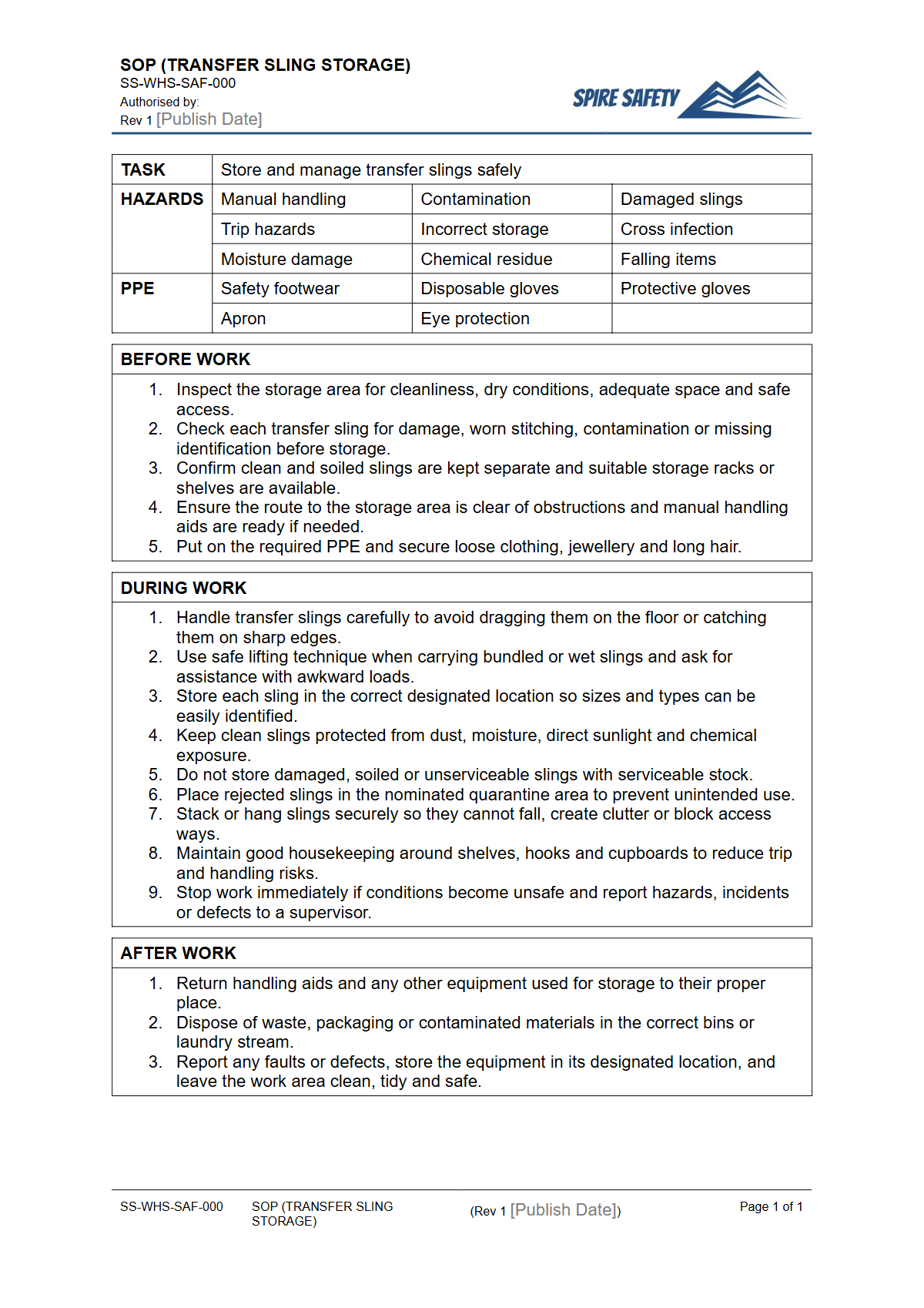
Ensure the safe and correct storage of transfer slings in your workplace with our structured template. Download your free Safe Operating Procedure today.
Free Safe Operating Procedure (Transfer Sling Storage) Template
DOCX • 126 KB + PDF
Updated Oct 2026
No signup required
Purpose of the Free Safe Operating Procedure (Transfer Sling Storage) Template
Proper storage of patient transfer slings is a critical component of safety in healthcare, aged care, and disability support settings. Incorrect storage can lead to material degradation, contamination, or damage, posing a significant risk to both patients and staff.
This Free Safe Operating Procedure (Transfer Sling Storage) Template provides a structured framework for documenting the safe, clean, and organised storage of lifting slings. By implementing a clear SOP, your organisation can standardise procedures, reduce the risk of equipment failure, and demonstrate a commitment to managing workplace hazards. It serves as a vital tool for training and consistency, forming a key part of your overall WHS management systems.
Video walkthrough
How to use the Free Safe Operating Procedure (Transfer Sling Storage) Template
This template is provided as a customisable DOCX file, with a PDF version available for easy printing and distribution. To use it effectively, you must adapt it to the specific context of your workplace.
A generic procedure is not sufficient for compliance; it needs to reflect your unique environment, the types of slings you use, and your established roles and responsibilities. The process of documenting a procedure for specialised equipment is a universal safety practice, similar to how you would outline protocols in a FREE Telehandler SOP Template for construction machinery.
Before You Begin
Before rolling out this SOP, it's essential to consult with the workers who will be using it daily. This includes nurses, carers, and maintenance staff.
Their input is invaluable for creating a practical and effective procedure. You should also conduct a risk assessment specific to sling storage in your facility, considering factors like UV exposure, moisture, chemical contaminants, and physical damage.
Regular WHS compliance audits can help verify that these documented procedures are being followed correctly in practice.
Customising the Template
Work through the document and fill in the designated sections. This includes adding your company name, site details, and the names or positions of responsible persons. Be specific about:
- The exact location(s) for sling storage (e.g., designated, labelled wall hooks in a clean, dry room).
- The process for cleaning slings before storage.
- The inspection criteria for slings before and after use.
- The procedure for quarantining and reporting damaged or expired slings.
- The regular inspection and maintenance schedule for the storage area itself.
IMPORTANT: We have no knowledge of your operational specifics. This document is a template only.
You must customise it to your workplace by conducting your own risk assessment and ensuring the final SOP reflects your specific equipment, environment, and processes.
When Should This Safe Operating Procedure Be Used?
A Safe Operating Procedure for transfer sling storage is not a one-off document; it is a live resource that should be integrated into daily operations. It should be used as a primary reference for all personnel involved in patient handling activities.
Its key applications include training new employees, providing refresher training for existing staff, and as a reference point during routine work. The SOP establishes a consistent baseline for behaviour and expectations, which is just as vital for manual handling aids as it is for complex machinery covered by our FREE Conveyer System SOP.
Who Should Use This Document?
This SOP is intended for a range of personnel within a healthcare or support facility. Each role has a different responsibility in relation to the procedure:
- Direct Care Staff (Nurses, Carers, Patient Care Assistants): As the primary users of transfer slings, they must follow the SOP for retrieving, inspecting, and returning slings to storage after cleaning.
- Supervisors and Managers: Responsible for ensuring the SOP is implemented, staff are trained, and resources (like appropriate storage hooks and cleaning supplies) are available. They also oversee incident reporting related to sling failure or damage.
- Maintenance and Equipment Officers: May be responsible for periodic formal inspections, managing the quarantine process for damaged slings, and maintaining the physical storage area.
This document is just one of many we offer. For more templates and guides, browse our complete free WHS resources library to support your safety management goals.
If you need assistance tailoring this document or developing broader safety protocols, our WHS consulting services can provide expert guidance.
Common mistakes
Common mistakes to avoid
- Storing slings on sharp hooks or nails, which can cause tears or stress points.
- Leaving slings on the hoist or in direct sunlight instead of returning them to designated storage.
- Failing to implement a clear 'out-of-service' tagging system for damaged slings, risking their accidental reuse.
- Neglecting to check and follow the specific storage and washing instructions provided by the sling's manufacturer.
Legal references
Legal considerations
The following legal requirements may be relevant to this type of work.
- Work Health and Safety Act (Harmonised) — Provides the primary duties for protecting workers and other people from work health and safety risks.
- Work Health and Safety Regulations (Harmonised) — Sets out requirements supporting the management of workplace hazards and risks.
The following codes may be relevant to this type of work.
- Managing WHS Risks Code of Practice — Provides practical guidance on identifying hazards, assessing risks and applying effective controls.
- Work Health and Safety Consultation, Cooperation and Coordination Code of Practice — Provides practical guidance on consulting workers and coordinating with other duty holders.
- Managing the Work Environment and Facilities Code of Practice — Provides practical guidance on safe work environments, workplace facilities and related controls.
Did you know
UV Degradation
Many transfer slings are made from materials like polyester or nylon, which can be weakened and degraded by prolonged exposure to direct sunlight (UV radiation), compromising their strength and safety.
Unique Identification
Best practice, as outlined in standards like AS/NZS ISO 10535, is for each sling to have a unique identifier. This allows for accurate tracking of its usage history, inspection records, and age, making it easier to know when to retire it from service.
FAQ
Frequently asked questions
01What should be included in a transfer sling storage SOP?
02How often should transfer slings be inspected?
03Who is responsible for implementing the sling storage procedure?
04Can this template be used for all types of patient lifting slings?
Share this resource
Free Safe Operating Procedure (Transfer Sling Storage) Template
Browse Categories
How To Use It
- 1Download and open in Word or PDF.
- 2Replace the placeholders with your business details.
- 3Get it reviewed by a WHS specialist before rollout.
Need it customised?
Our WHS consultants can adapt this template to your site, run a gap analysis, or audit what you already have in place.
Book a Free Consultation WHS consulting servicesor call 1300 156 382
Related templates
- Free Safe Operating Procedure (Transfer Station Clean) Template
- Free Safe Operating Procedure (Transformer Oil Sample) Template
- Free Safe Operating Procedure (Transmission Jack) Template
- Free Safe Operating Procedure (Transmission Oil Change) Template
- Free Safe Operating Procedure (Transport Yard Cleanup) Template
- Free Safe Operating Procedure (Trash Pump) Template