
Free Safe Operating Procedure (Transport Yard Cleanup) Template
Maintain a safe and organised transport yard with our free template. This document provides a clear structure for managing cleanup tasks safely. Download now.
Free Safe Operating Procedure (Transport Yard Cleanup) Template
DOCX • 126 KB + PDF
Updated Oct 2026
No signup required
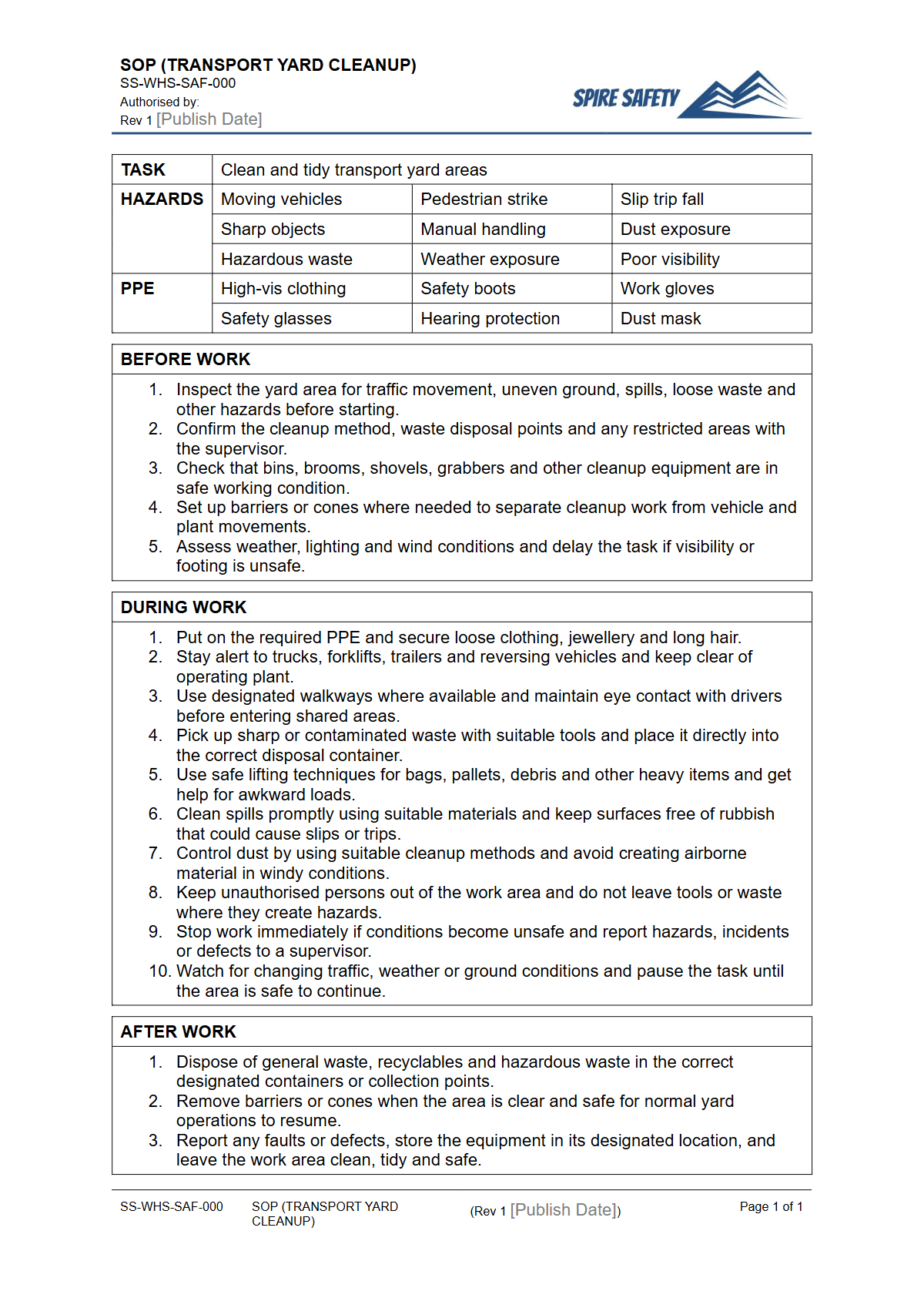
Purpose of the Free Safe Operating Procedure (Transport Yard Cleanup) Template
A transport yard is a dynamic, high-risk environment with constant interaction between heavy vehicles, mobile plant, and pedestrians. This free Safe Operating Procedure (Transport Yard Cleanup) Template provides a structured framework to manage housekeeping tasks effectively, reducing the risk of incidents.
Systematically addressing hazards like slips, trips, falls, vehicle collisions, manual handling injuries, and exposure to dust or spills is fundamental to workplace safety.
Implementing a formal SOP demonstrates a commitment to safety and helps a Person Conducting a Business or Undertaking (PCBU) fulfil their primary duty of care. Documented procedures are a critical component of robust WHS management systems, ensuring that safety processes are consistent, teachable, and auditable.
Video walkthrough
How to use the Free Safe Operating Procedure (Transport Yard Cleanup) Template
This downloadable Safe Operating Procedure for transport yard cleanup is provided in both DOCX and PDF formats. It serves as a comprehensive starting point, designed to be adapted to the unique conditions of your site.
It is crucial to review and modify the document to reflect your specific hazards, control measures, and operational requirements.
Important: This is a template only. We are not WHS consultants and this document must be customised to your specific workplace, equipment, and processes by a competent person.
It does not supports your compliance efforts.
Customisation Checklist
- Site-Specific Information: Detail the layout of your yard, including designated pedestrian walkways, vehicle exclusion zones, and locations of safety equipment like fire extinguishers and spill kits.
- Tasks and Hazards: List all cleanup tasks performed, from routine sweeping to managing waste oil. For each task, identify associated hazards and specify the control measures to be implemented.
- Equipment: List all plant and equipment used for cleanup, such as industrial sweepers, pressure washers, or compactors. You may need separate SOPs for complex machinery; for example, if your yard uses telehandlers for moving waste bins, you would supplement this procedure with a specific FREE Telehandler SOP Template.
- Personal Protective Equipment (PPE): Specify the exact PPE required for each task, such as high-visibility clothing, steel-capped boots, safety glasses, gloves, or respiratory protection.
- Emergency Procedures: Outline the steps to take in case of an emergency, including contact details for first aid officers, emergency services, and procedures for managing chemical spills.
The procedure should also cover the use of auxiliary equipment common in maintenance and cleanup activities. For instance, if compressed air is used for blowing down surfaces, its safe use should be detailed, potentially referencing a dedicated procedure like our Free Air Compressor SOP (Safe Operating Procedure) Template.
For tasks involving the removal of stubborn, caked-on materials from flooring or equipment, ensure the procedure specifies the correct manual or powered tools to be used. This could include developing specific instructions for tools like industrial scrapers, similar to what is outlined in our FREE Scraper SOP Template, to prevent musculoskeletal injuries or damage to surfaces.
When to use a Safe Operating Procedure for Yard Cleanup
A transport yard cleanup SOP should be a living document that is used consistently, not just filed away. It should be applied during:
- Routine Housekeeping: Scheduled daily or weekly cleanups to maintain a safe and organised operational state.
- Post-Spill or Incident Cleanup: As a guide for safely managing the cleanup of fuel, oil, chemical, or cargo spills.
- Seasonal Maintenance: For tasks like clearing fallen leaves in autumn to prevent slip hazards, or managing ice and snow in winter.
- Pre-Audit Preparation: To ensure the yard meets the required standards before internal or external safety inspections. A well-maintained yard and documented procedures are key indicators of a positive safety culture during WHS compliance auditing.
- Worker Training and Induction: As a training tool for new employees and a refresher for existing staff.
Who should use this Safe Operating Procedure
This SOP is intended for several key roles within a transport or logistics organisation:
- Yard Managers and Supervisors: To implement, enforce, and supervise safe cleanup procedures, ensuring all workers are competent and compliant.
- WHS/HSE Officers and Advisors: To develop, review, and integrate the SOP into the organisation's overall safety management system. For complex site challenges, seeking external advice from WHS consulting professionals can provide valuable insights.
- Workers and Operators: The end-users of the procedure. They must be trained on its contents to understand the risks and follow the prescribed steps to perform their work safely.
- Contractors: Any third-party contractors engaged for cleaning or maintenance services should be inducted on the site-specific version of this SOP.
By defining and documenting your processes with this template, you create a safer, more efficient working environment for everyone. Explore our complete free WHS resources library for more templates and tools to support your safety goals.
Common mistakes
Common mistakes to avoid
- Failing to integrate the cleanup SOP with the site's overall traffic management plan.
- Using generic PPE requirements instead of specifying PPE for each distinct cleanup task (e.g., handling chemicals vs. general sweeping).
- Neglecting to train workers on the procedure or verify their understanding before they undertake the tasks.
- Not including clear emergency procedures for foreseeable events like fuel spills, fires, or injuries.
Legal references
Legal considerations
The following legal requirements may be relevant to this type of work.
- Work Health and Safety Act (Harmonised) — Provides the primary duties for protecting workers and other people from work health and safety risks.
- Work Health and Safety Regulations (Harmonised) — Sets out requirements supporting the management of workplace hazards and risks.
The following codes may be relevant to this type of work.
- Managing WHS Risks Code of Practice — Provides practical guidance on identifying hazards, assessing risks and applying effective controls.
- Work Health and Safety Consultation, Cooperation and Coordination Code of Practice — Provides practical guidance on consulting workers and coordinating with other duty holders.
- Managing the Work Environment and Facilities Code of Practice — Provides practical guidance on safe work environments, workplace facilities and related controls.
Did you know
Slips, Trips, and Falls
According to Safe Work Australia, slips, trips, and falls are the second leading cause of serious workers' compensation claims, making good housekeeping in areas like transport yards a critical preventative measure.
Traffic Management
Poorly managed interaction between vehicles and pedestrians is a leading cause of fatalities in the transport and logistics industry. A key part of yard cleanup is ensuring clear, unobstructed, and designated walkways are maintained at all times.
FAQ
Frequently asked questions
01What key hazards should a transport yard cleanup SOP cover?
02How often should our transport yard cleanup SOP be reviewed?
03Is a Safe Operating Procedure a legal requirement for yard cleaning?
04Can I use this template for major chemical spill cleanup?
Share this resource
Free Safe Operating Procedure (Transport Yard Cleanup) Template
Browse Categories
How To Use It
- 1Download and open in Word or PDF.
- 2Replace the placeholders with your business details.
- 3Get it reviewed by a WHS specialist before rollout.
Need it customised?
Our WHS consultants can adapt this template to your site, run a gap analysis, or audit what you already have in place.
Book a Free Consultation WHS consulting servicesor call 1300 156 382
Related templates
- Free Safe Operating Procedure (Trash Pump) Template
- Free Safe Operating Procedure (Tray Clearing) Template
- Free Safe Operating Procedure (Tray Return Handling) Template
- Free Safe Operating Procedure (Tray Sealer) Template
- Free Safe Operating Procedure (Tray Washing) Template
- Free Safe Operating Procedure (Tree Basin Weeding) Template