
Free Safe Operating Procedure (Upholstery Cleaning) Template
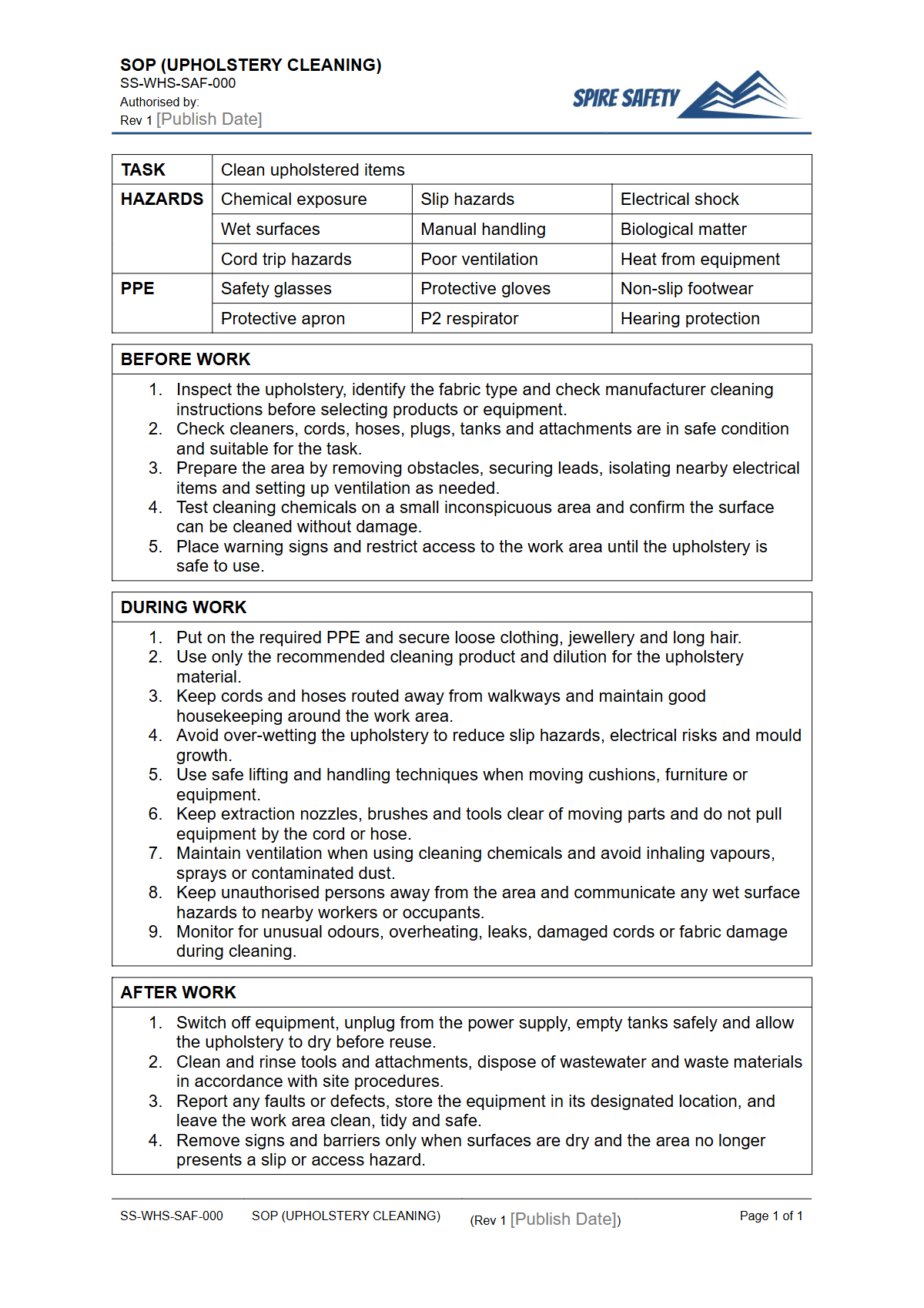
Download our free Safe Operating Procedure (Upholstery Cleaning) template to manage risks associated with cleaning fabrics.
Free Safe Operating Procedure (Upholstery Cleaning) Template
DOCX • 126 KB + PDF
Updated Oct 2026
No signup required
Purpose of the Free Safe Operating Procedure (Upholstery Cleaning) Template
This Free Safe Operating Procedure (Upholstery Cleaning) Template provides a structured framework for documenting the safest way to perform upholstery cleaning tasks. Upholstery cleaning involves a range of hazards that must be controlled to prevent injury or illness.
This includes exposure to hazardous chemicals, ergonomic risks from manual handling of furniture and equipment, electrical hazards from cleaning machines, and slip, trip, and fall risks from wet floors and leads.
A documented SOP ensures that all workers follow a consistent, pre-approved method that addresses these risks. It serves as a vital training tool for new employees and a reference for experienced staff, promoting a proactive safety culture within your organisation.
Using a clear SOP helps meet your legal obligations as a Person Conducting a Business or Undertaking (PCBU) to provide and maintain a safe system of work.
Video walkthrough
How to use the Free Safe Operating Procedure (Upholstery Cleaning) Template
To get started, simply download the template in your preferred format (DOCX for easy editing or PDF). This document is a comprehensive starting point, not a finished product.
You must customise it to reflect the specific circumstances of your workplace. This involves detailing the exact types of equipment used (e.g., portable extractors, steam cleaners), the specific chemicals you handle, the different environments you work in (e.g., residential homes, commercial offices), and your organisation's emergency procedures.
Important: We have designed this template based on the model WHS framework, but every workplace is unique. You must conduct your own risk assessment and adapt this SOP to suit your specific needs.
Integrating this SOP into your broader WHS management systems ensures a consistent approach to safety across all business operations. For a wider selection of safety documents, you can browse our entire free WHS resources library.
When to use this Safe Operating Procedure
An SOP for upholstery cleaning should be used as a primary reference document for the task. It is essential during the induction and training of new workers to ensure they understand the approved process from day one.
It should also be readily available in the work area for all staff to consult as needed. The SOP is a critical component of task-specific risk assessments and should be reviewed and updated whenever a new chemical, piece of equipment, or work method is introduced.
Regular reviews of your SOPs should be part of your safety process, which can be verified through a WHS compliance audit to identify any gaps.
Who should use this Safe Operating Procedure
This SOP is intended for use by anyone involved in upholstery cleaning operations. This includes commercial cleaning companies, facilities management teams, hotel and accommodation providers, and vehicle detailers.
Business owners and managers are responsible for ensuring SOPs are developed, implemented, and reviewed. Supervisors and team leaders use them to train and oversee workers, while the workers themselves use the SOP to understand how to perform their tasks safely and correctly.
When detailing the equipment used, you may need procedures for related machinery, such as that covered in our free Air Compressor SOP template. This ensures all parts of the job are covered by a safe work method. If you require assistance in tailoring this template or developing a complete safety framework, our WHS consulting services can provide expert, practical support.
This SOP helps form part of the operational planning and control requirements under recognised safety standards. This is a core component that our ISO 45001 consulting team can assist with, helping you build a certified safety management system.
Common mistakes
Common mistakes to avoid
- Using incorrect or improperly diluted cleaning chemicals, risking fabric damage or creating chemical hazards.
- Failing to ensure adequate ventilation when working with solvents or strong cleaning agents.
- Not inspecting electrical equipment like extractors and steamers for damage before use.
- Forgetting to test cleaning solutions on an inconspicuous area of the upholstery first.
Legal references
Legal considerations
The following legal requirements may be relevant to this type of work.
- Work Health and Safety Act (Harmonised) — Provides the primary duties for protecting workers and other people from work health and safety risks.
- Work Health and Safety Regulations (Harmonised) — Sets out requirements supporting the management of workplace hazards and risks.
The following codes may be relevant to this type of work.
- Managing WHS Risks Code of Practice — Provides practical guidance on identifying hazards, assessing risks and applying effective controls.
- Work Health and Safety Consultation, Cooperation and Coordination Code of Practice — Provides practical guidance on consulting workers and coordinating with other duty holders.
- Managing the Work Environment and Facilities Code of Practice — Provides practical guidance on safe work environments, workplace facilities and related controls.
Did you know
Chemical Safety
Many common cleaning agents can cause occupational dermatitis or respiratory issues. The model WHS Regulations mandate that PCBUs must manage the risks associated with using, handling, and storing hazardous chemicals in the workplace.
Ergonomic Risks
Awkward postures and forceful exertions while cleaning furniture are leading causes of musculoskeletal injuries in the cleaning industry. A thorough risk assessment should always consider the ergonomic demands of the task.
FAQ
Frequently asked questions
01What is a Safe Operating Procedure for upholstery cleaning?
02Do I need an SOP for every cleaning chemical I use?
03Is this upholstery cleaning SOP template enough for WHS compliance?
04How often should I review my Upholstery Cleaning SOP?
Share this resource
Free Safe Operating Procedure (Upholstery Cleaning) Template
Browse Categories
How To Use It
- 1Download and open in Word or PDF.
- 2Replace the placeholders with your business details.
- 3Get it reviewed by a WHS specialist before rollout.
Need it customised?
Our WHS consultants can adapt this template to your site, run a gap analysis, or audit what you already have in place.
Book a Free Consultation WHS consulting servicesor call 1300 156 382
Related templates
- Free Safe Operating Procedure (UPS Battery Change) Template
- Free Safe Operating Procedure (Urinal Bottle Cleaning) Template
- Free Safe Operating Procedure (Urinal Descaling) Template
- Free Safe Operating Procedure (Used Oil Dropoff Intake) Template
- Free Safe Operating Procedure (Vacant Unit Cleaning) Template
- Free Safe Operating Procedure (Vacuum Excavation) Template