
Free Safe Operating Procedure (Venue Seating Setup) Template
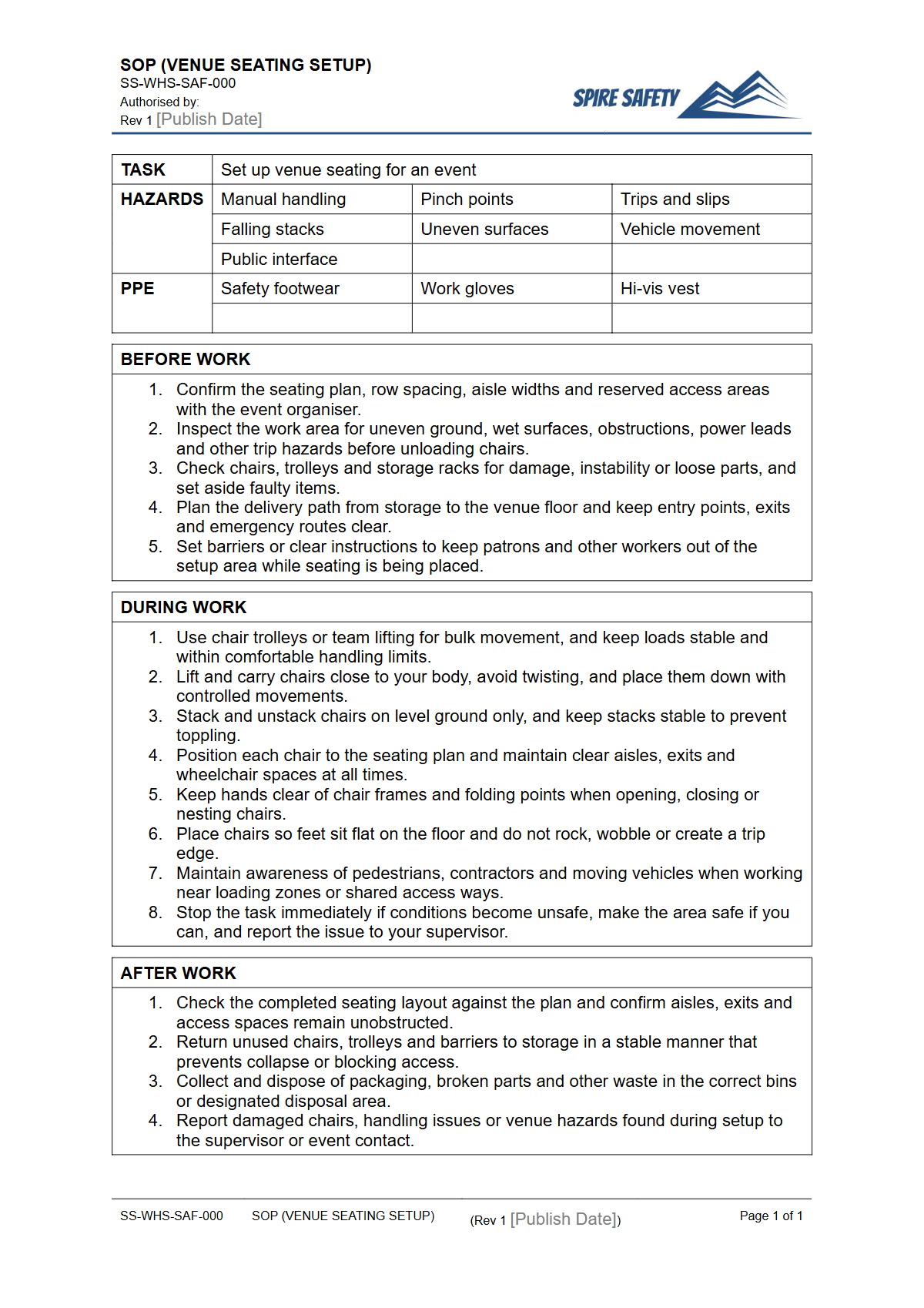
Download our free Safe Operating Procedure for venue seating setup. This template provides a structured starting point for managing manual handling risks.
Free Safe Operating Procedure (Venue Seating Setup) Template
DOCX • 126 KB + PDF
Updated Oct 2026
No signup required
Purpose of the Free Safe Operating Procedure (Venue Seating Setup) Template
The primary purpose of this Safe Operating Procedure is to provide a clear, step-by-step guide for workers tasked with arranging venue seating. It formalises the process to ensure tasks are performed safely and consistently, minimising the risk of injury.
By implementing this SOP, you can systematically identify hazards such as musculoskeletal injuries from lifting and moving chairs, trip hazards from equipment, and risks associated with crowd management and emergency egress. It encourages a proactive approach to safety, ensuring all control measures are documented and communicated effectively.
This process is similar to documenting safety for other specific tasks, such as our SOP for deep fryer operation, where task-specific risks must be clearly addressed.
Key Hazards and Controls
When customising your Safe Operating Procedure for venue seating setup, pay close attention to these common hazards:
- Manual Handling: Repetitive lifting, carrying, and stacking of chairs and tables can lead to sprains, strains, and other musculoskeletal disorders. Controls include using mechanical aids like chair trolleys or dollies, implementing team lifts for heavy or awkward items, providing comprehensive manual handling training, and ensuring workers take regular breaks.
- Trip and Slip Hazards: Trailing electrical cords for lighting or AV equipment, stacks of chairs or tables, and uneven flooring create significant trip risks. Controls involve maintaining good housekeeping, using cable covers or routing cables overhead, designating clear storage areas, and ensuring adequate lighting in all setup zones.
- Layout and Egress: Incorrect seating placement can obstruct emergency exits, fire-fighting equipment, and essential pathways, posing a serious risk in an emergency. Controls require strict adherence to the venue's approved floor plan, which should be designed in accordance with the Building Code of Australia's requirements for egress. Regular checks must ensure walkways remain clear at all times.
Documenting these site-specific hazards and controls is not just a procedural step; it forms part of the evidence reviewed during a WHS compliance audit, showing how your organisation actively manages risk.
Video walkthrough
How to use the Free Safe Operating Procedure (Venue Seating Setup) Template
To effectively use this template, begin by downloading it in your preferred format (DOCX for easy editing or PDF). The next critical step is customisation.
Please note: This is a template, not a finished document. We cannot guarantee it will be suitable for your specific business needs without customisation. You must consult with your workers and other relevant persons to tailor the content to your workplace. This involves conducting a thorough risk assessment of your venue and the specific seating equipment used.
Fill in the procedural steps, required Personal Protective Equipment (PPE) such as gloves and safety footwear, pre-start checks, and emergency procedures relevant to your site. If you need assistance adapting this template, seeking guidance from a WHS consulting professional can ensure it is fit-for-purpose.
When to use it
This SOP should be used as a core training and operational document for all venue seating activities. It is essential during the induction and training of new staff who will be involved in setup or pack-down tasks.
The procedure should be readily available at the worksite as a quick reference for supervisors and workers before commencing the job. Furthermore, the SOP should be reviewed and used for refresher training annually, or more frequently if there is a change in equipment, venue layout, or work processes.
It also serves as a critical document for review following any incident or near-miss to identify and implement safety improvements.
Who should use it
This procedure is intended for use by a range of personnel within an organisation. Event Managers and Venue Coordinators should use it to plan and oversee safe work practices.
Supervisors and Team Leaders are responsible for ensuring their teams understand and follow the documented steps correctly. The workers who physically perform the seating setup and dismantling are the primary end-users and must be trained on its contents.
WHS Managers and Safety Officers can integrate it into the organisation's overall safety framework. Formalising procedures like this is a cornerstone of an effective WHS management system, demonstrating due diligence in managing workplace hazards.
By systematically addressing these elements, this template helps you create a comprehensive and practical safety document. For more templates and safety guides covering a wide range of tasks and equipment, you can browse our full free WHS resources library.
Common mistakes
Common mistakes to avoid
- Forgetting to inspect chairs and tables for defects like cracks or sharp edges before placement.
- Blocking or partially obstructing fire exits, extinguishers, or emergency routes with seating or equipment.
- Failing to account for and manage trip hazards from electrical cords, bags, or uneven surfaces.
- Not providing adequate manual handling training or mechanical aids (e.g., trolleys) to staff.
Legal references
Legal considerations
The following legal requirements may be relevant to this type of work.
- Work Health and Safety Act (Harmonised) — Provides the primary duties for protecting workers and other people from work health and safety risks.
- Work Health and Safety Regulations (Harmonised) — Sets out requirements supporting the management of workplace hazards and risks.
The following codes may be relevant to this type of work.
- Managing WHS Risks Code of Practice — Provides practical guidance on identifying hazards, assessing risks and applying effective controls.
- Work Health and Safety Consultation, Cooperation and Coordination Code of Practice — Provides practical guidance on consulting workers and coordinating with other duty holders.
- Managing the Work Environment and Facilities Code of Practice — Provides practical guidance on safe work environments, workplace facilities and related controls.
Did you know
Manual Handling Impact
In Australia, injuries resulting from lifting, pushing, pulling, or bending are the most common mechanism of serious workers' compensation claims, making documented procedures for tasks like seating setup critically important.
Clear Egress Paths
The National Construction Code (NCC) specifies minimum unobstructed widths for exit paths in public buildings, which directly impacts seating layouts. Failure to maintain these paths can be a serious breach of both WHS and building regulations.
FAQ
Frequently asked questions
01What is a Safe Operating Procedure for venue seating setup?
02Why is a specific SOP needed for setting up chairs and tables?
03How often should this venue seating SOP be reviewed?
04Does this template cover tiered seating or grandstands?
Share this resource
Free Safe Operating Procedure (Venue Seating Setup) Template
Browse Categories
How To Use It
- 1Download and open in Word or PDF.
- 2Replace the placeholders with your business details.
- 3Get it reviewed by a WHS specialist before rollout.
Need it customised?
Our WHS consultants can adapt this template to your site, run a gap analysis, or audit what you already have in place.
Book a Free Consultation WHS consulting servicesor call 1300 156 382
Related templates
- Free Safe Operating Procedure (Vertical Lifeline) Template
- Free Safe Operating Procedure (Vet Animal Bedding) Template
- Free Safe Operating Procedure (Vet Animal Transfer) Template
- Free Safe Operating Procedure (Vet Cage Cleaning) Template
- Free Safe Operating Procedure (Vet Cage Waste Cleanup) Template
- Free Safe Operating Procedure (Vet Kennel Cleaning) Template