
Free Safe Operating Procedure (Vet Cage Cleaning) Template
Ensure consistent and safe cleaning of animal enclosures with our structured template. Download your free Safe Operating Procedure for vet cage cleaning today.
Free Safe Operating Procedure (Vet Cage Cleaning) Template
DOCX • 126 KB + PDF
Updated Oct 2026
No signup required
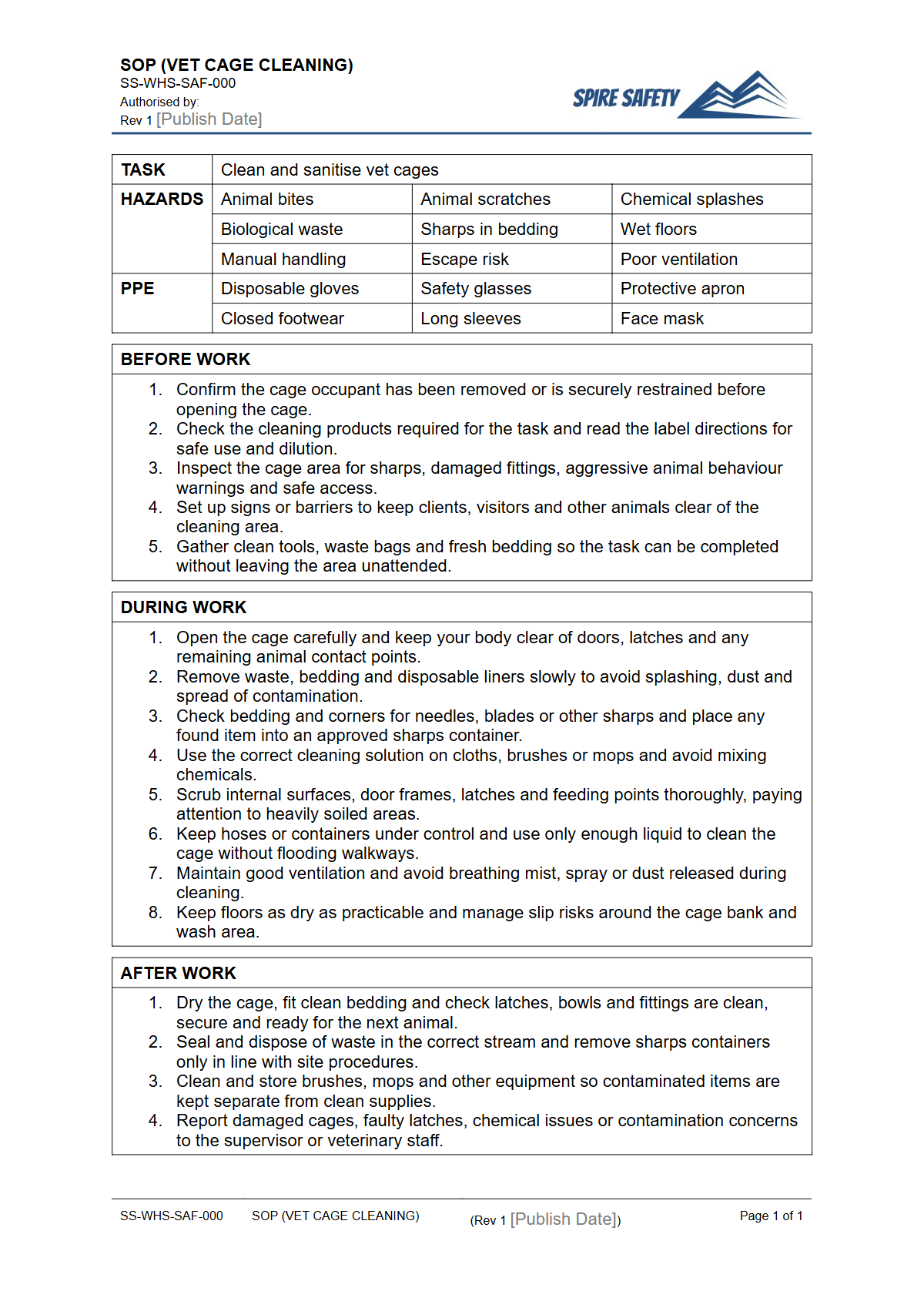
Purpose of the Free Safe Operating Procedure (Vet Cage Cleaning) Template
Maintaining a hygienic environment is critical in any veterinary practice, animal shelter, or boarding facility. This free Safe Operating Procedure (Vet Cage Cleaning) Template provides a structured framework for documenting the required steps to clean and disinfect animal cages safely and effectively.
A documented procedure helps standardise practices across all staff, minimise the risk of cross-contamination, and control hazards associated with the task. Key risks addressed include exposure to cleaning chemicals, zoonotic diseases, ergonomic injuries from manual tasks, and potential bites or scratches from anxious animals.
Implementing a clear Safe Operating Procedure (SOP) is a fundamental part of providing a safe system of work. It serves as an essential training tool for new employees and a reference for experienced staff.
This document is a key component in a robust safety framework, demonstrating an organisation's commitment to worker health and animal welfare. Properly implemented SOPs are also a core element within broader WHS management systems, helping to ensure systematic risk management and continuous improvement in your safety practices.
Video walkthrough
How to use the Free Safe Operating Procedure (Vet Cage Cleaning) Template
This template is provided in both DOCX and PDF formats to suit your needs. The DOCX file is fully editable, allowing you to tailor the procedure to the specific context of your workplace.
To use it effectively, download the document and customise it with your site-specific details. This includes identifying the exact cleaning and disinfectant products used, required dilutions, contact times, and referencing their corresponding Safety Data Sheets (SDS).
You should also detail the types of Personal Protective Equipment (PPE) required, emergency procedures, and waste disposal methods unique to your facility.
Important: This document is a template, not a finished procedure. To be effective, you must adapt it to reflect the specific equipment, chemicals, and processes used at your workplace.
We strongly recommend consulting with your team, including veterinary nurses and animal handlers, to ensure the procedure is practical and comprehensive. Once finalised, the SOP should be used to train all relevant personnel, and records of this training should be maintained.
For organisations seeking a formalised approach to OHS, these operational controls are a cornerstone of ISO 45001 consulting and certification.
When to use a Safe Operating Procedure
A Safe Operating Procedure for vet cage cleaning should be a living document integrated into your daily operations. It is essential during the induction and training of new staff to ensure they understand the correct, safe method from day one.
It should also be used for regular refresher training to prevent procedural drift and reinforce safe work habits. Furthermore, the SOP must be reviewed and potentially updated following any incident or near-miss, when new cleaning chemicals or equipment are introduced, or if regulations change.
From complex tasks like operating a telehandler to routine but critical jobs like this, a documented procedure is vital for consistency and safety.
Who should use this document
This SOP is designed for use by any person responsible for cleaning and maintaining animal enclosures. This typically includes:
- Veterinary Nurses
- Animal Attendants and Handlers
- Kennel Hands
- Clinic and Shelter Managers
- Work Health and Safety (WHS) Representatives
Managers and supervisors are responsible for ensuring the SOP is implemented, understood, and followed by all relevant staff. Conducting periodic checks or including SOP adherence as part of a formal audit process can confirm its effectiveness.
For guidance on structuring such evaluations, consider engaging professional WHS compliance auditing services. The principles of creating clear, task-specific instructions are universal, applying to everything from animal care to using equipment detailed in a deep fryer SOP. If your business requires expert assistance in developing tailored safety documentation, Spire's WHS consulting team can provide practical support.
You can also explore our complete free WHS resources library for more templates and guides.
Common mistakes
Common mistakes to avoid
- Using the generic template without adding site-specific chemicals, PPE, and emergency details.
- Failing to provide practical training and competency checks on the finalised SOP.
- Not making Safety Data Sheets (SDS) for all cleaning chemicals readily accessible to staff.
- Neglecting to review and update the procedure after an incident or when processes change.
Legal references
Legal considerations
The following legal requirements may be relevant to this type of work.
- Work Health and Safety Act (Harmonised) — Provides the primary duties for protecting workers and other people from work health and safety risks.
- Work Health and Safety Regulations (Harmonised) — Sets out requirements supporting the management of workplace hazards and risks.
The following codes may be relevant to this type of work.
- Managing WHS Risks Code of Practice — Provides practical guidance on identifying hazards, assessing risks and applying effective controls.
- Work Health and Safety Consultation, Cooperation and Coordination Code of Practice — Provides practical guidance on consulting workers and coordinating with other duty holders.
- Managing the Work Environment and Facilities Code of Practice — Provides practical guidance on safe work environments, workplace facilities and related controls.
Did you know
Zoonotic Disease Risk
According to health authorities, more than 6 out of every 10 known infectious diseases in people can be spread from animals. Rigorous cleaning and disinfection protocols are a first line of defence.
Chemical Safety Data
Your Safe Operating Procedure should always reference the Safety Data Sheet (SDS) for each chemical used. The SDS provides critical information on handling, storage, first aid, and emergency measures.
FAQ
Frequently asked questions
01What are the main hazards when cleaning vet cages?
02How often should an SOP for cage cleaning be reviewed?
03Is this SOP template sufficient for WHS compliance?
04What Personal Protective Equipment (PPE) is typically needed for vet cage cleaning?
Share this resource
Free Safe Operating Procedure (Vet Cage Cleaning) Template
Browse Categories
How To Use It
- 1Download and open in Word or PDF.
- 2Replace the placeholders with your business details.
- 3Get it reviewed by a WHS specialist before rollout.
Need it customised?
Our WHS consultants can adapt this template to your site, run a gap analysis, or audit what you already have in place.
Book a Free Consultation WHS consulting servicesor call 1300 156 382
Related templates
- Free Safe Operating Procedure (Vet Cage Waste Cleanup) Template
- Free Safe Operating Procedure (Vet Kennel Cleaning) Template
- Free Safe Operating Procedure (Vet Laundry Handling) Template
- Free Safe Operating Procedure (Vet Room Cleaning) Template
- Free Safe Operating Procedure (Vet Waiting Room Clean) Template
- Free Safe Operating Procedure (Vet Waste Handling) Template