
Free Safe Operating Procedure (Wall Sander) Template
Establish a clear process for using wall sanders with our structured Safe Operating Procedure template. Download the free DOCX and PDF to get started.
Free Safe Operating Procedure (Wall Sander) Template
DOCX • 126 KB + PDF
Updated Oct 2026
No signup required
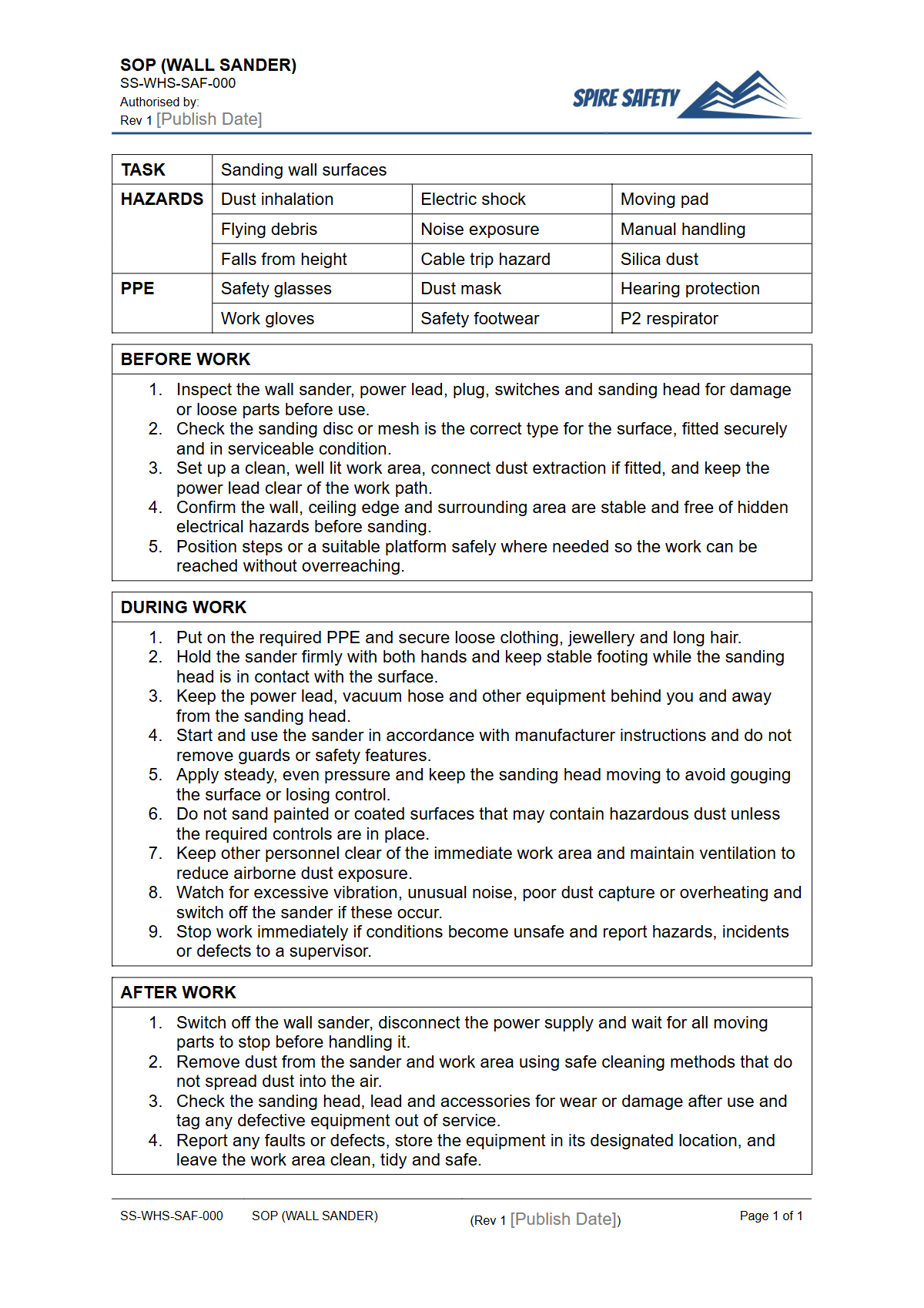
Purpose of the Free Safe Operating Procedure (Wall Sander) Template
Using a wall sander, often called a drywall sander or giraffe sander, significantly speeds up the process of finishing plasterboard surfaces. However, it also introduces serious workplace hazards, including electrical risks, ergonomic strain, and exposure to hazardous dust.
This Free Safe Operating Procedure (Wall Sander) Template provides a structured framework for documenting the required controls to manage these risks effectively. It guides you in outlining step-by-step instructions for pre-start checks, operation, and shutdown, ensuring tasks are performed safely and consistently.
The primary goal of this SOP is to minimise the risk of injury and illness. It prompts you to specify controls for major hazards such as respirable dust (which may contain silica), electric shock, and musculoskeletal injuries from awkward postures or vibration.
Formalising your process helps meet your duty of care under Australian WHS laws and provides a clear training document for workers. Implementing robust SOPs is a cornerstone of effective WHS management systems, demonstrating a commitment to a safe working environment.
Video walkthrough
How to use the Free Safe Operating Procedure (Wall Sander) Template
This document is a comprehensive starting point, not a final solution. To make it effective, you must adapt its contents to your specific operational context.
Start by downloading the template in your preferred format (DOCX for easy editing or PDF). Then, conduct a thorough risk assessment for the wall sanding tasks performed at your workplace, involving the workers who actually use the equipment.
Update the template with the specific make and model of your wall sander, the types of surfaces being worked on, and the unique environmental conditions of your site. Detail your organisation's exact procedures for dust control, PPE selection, and emergency response.
This customisation is critical for ensuring the procedure is practical and relevant. The same principles of task-specific adaptation apply to the safe use of other power tools, such as the process outlined in our free Circular Saw SOP template.
Please note: This document is a template and must be customised to the specific equipment, environment, and risks present in your workplace. Spire Safety is not responsible for the implementation or compliance of the final document.
When to use it
A Safe Operating Procedure for a wall sander should be an active part of your daily safety processes. It is not a document to be filed away and forgotten.
It should be used during worker induction and onboarding to ensure new team members understand the established safe work method from day one. It also serves as the primary reference document for specific job planning, especially for tasks in new or unfamiliar environments.
The SOP should be readily accessible in the work area for quick reference. It is also an essential tool for refresher training, toolbox talks, and for investigating any incidents or near misses involving the equipment.
Regular reviews and worksite inspections, sometimes supported by a formal WHS compliance audit, are essential to verify that the procedures outlined in the SOP are being followed correctly.
Who should use it
This SOP is designed for use by a range of personnel within an organisation. Workers, including painters, plasterers, and construction labourers, must be trained on the SOP and follow its instructions to ensure their own safety and that of others.
They are the primary end-users of the procedure during their daily tasks.
Supervisors and team leaders have a responsibility to enforce the SOP, ensuring that workers are equipped with the right tools, PPE, and training. They use the document to monitor work practices and provide guidance.
WHS managers and business owners (PCBUs) use the SOP as a key part of their overall safety framework, using it to demonstrate that they have identified hazards and implemented effective controls. This is a vital component of managing risk across all site equipment, including support machinery detailed in documents like an Air Compressor SOP.
This template is just one of many available. You can explore our full free WHS resources library for more templates covering a wide range of plant and equipment.
Common mistakes
Common mistakes to avoid
- Using a standard shop vac instead of a certified M-class or H-class dust extractor.
- Neglecting to inspect power cords and electrical connections for damage before each use.
- Sanding overhead for extended periods without taking breaks, leading to muscular strain.
- Failing to wear appropriate respiratory protection, even for 'quick' jobs.
Legal references
Legal considerations
The following legal requirements may be relevant to this type of work.
- Work Health and Safety Act (Harmonised) — Provides the primary duties for protecting workers and other people from work health and safety risks.
- Work Health and Safety Regulations (Harmonised) — Sets out requirements supporting the management of workplace hazards and risks.
The following codes may be relevant to this type of work.
- Managing WHS Risks Code of Practice — Provides practical guidance on identifying hazards, assessing risks and applying effective controls.
- Work Health and Safety Consultation, Cooperation and Coordination Code of Practice — Provides practical guidance on consulting workers and coordinating with other duty holders.
- Managing the Work Environment and Facilities Code of Practice — Provides practical guidance on safe work environments, workplace facilities and related controls.
Did you know
Dust Dangers
Many common plaster and joint compounds contain respirable crystalline silica. Inhaling this fine dust can lead to silicosis, a serious and incurable lung disease.
Vibration Risks
Prolonged use of power tools like wall sanders can lead to Hand-Arm Vibration Syndrome (HAVS), causing pain, numbness, and nerve damage. Regular breaks and anti-vibration gloves are crucial controls.
FAQ
Frequently asked questions
01What PPE is required when using a wall sander?
02How can I control dust from a wall sander?
03Does this wall sander SOP cover silica dust?
04How often should a Safe Operating Procedure for a wall sander be reviewed?
Share this resource
Free Safe Operating Procedure (Wall Sander) Template
Browse Categories
How To Use It
- 1Download and open in Word or PDF.
- 2Replace the placeholders with your business details.
- 3Get it reviewed by a WHS specialist before rollout.
Need it customised?
Our WHS consultants can adapt this template to your site, run a gap analysis, or audit what you already have in place.
Book a Free Consultation WHS consulting servicesor call 1300 156 382
Related templates
- Free Safe Operating Procedure (Wall Scanner) Template
- Free Safe Operating Procedure (Wall Washing) Template
- Free Safe Operating Procedure (Ward Waste Collection) Template
- Free Safe Operating Procedure (Warping Machine) Template
- Free Safe Operating Procedure (Wash Bay Sump Clean) Template
- Free Safe Operating Procedure (Wash Plant) Template