
Free Safe Operating Procedure (Wet Floor Cleaning) Template
Establish clear, safe work practices for manual floor washing with our customisable template. Download your free Safe Operating Procedure to get started.
Free Safe Operating Procedure (Wet Floor Cleaning) Template
DOCX • 126 KB + PDF
Updated Oct 2026
No signup required
Purpose of the Free Safe Operating Procedure (Wet Floor Cleaning) Template
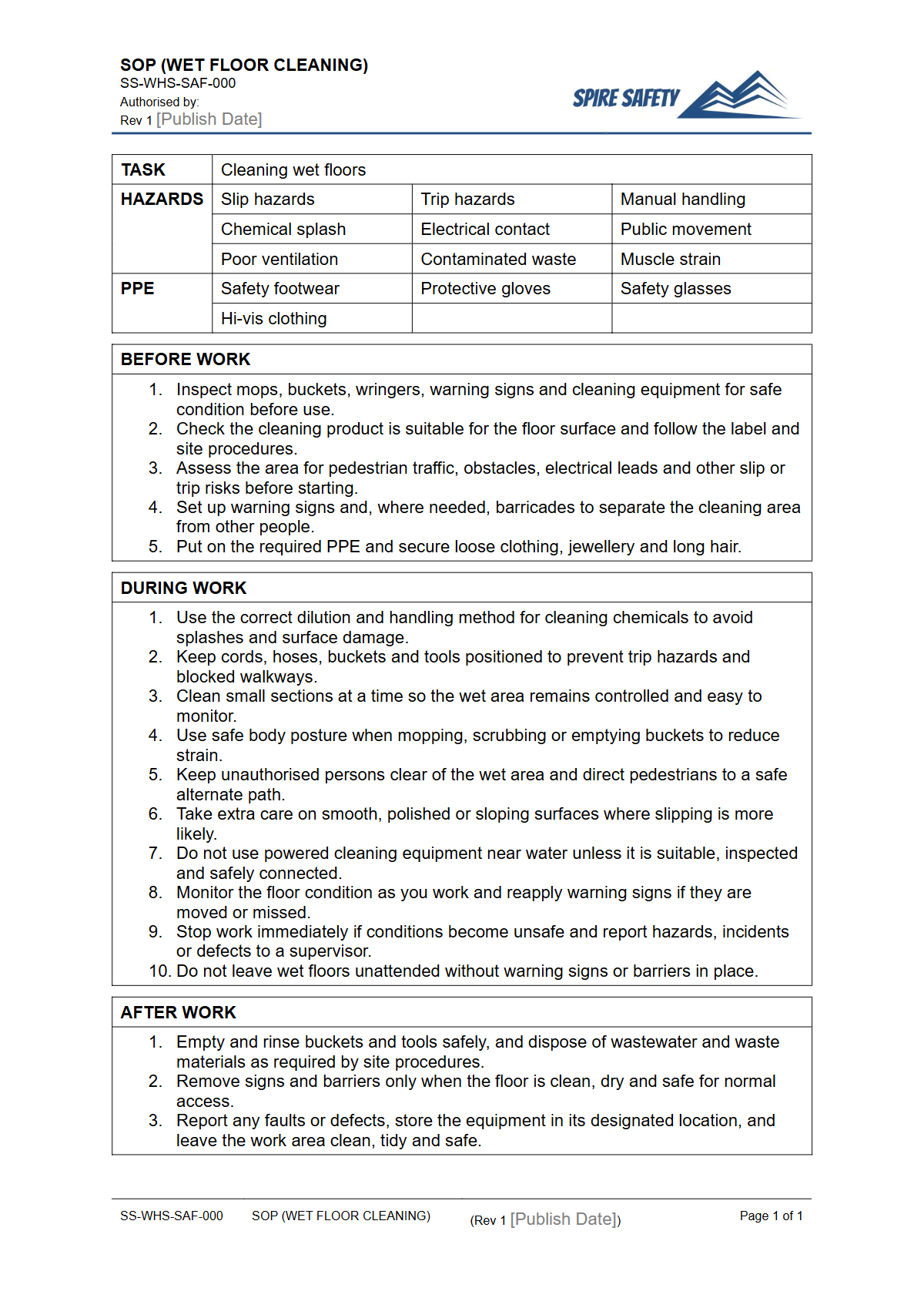
This Free Safe Operating Procedure (Wet Floor Cleaning) Template provides a comprehensive starting point for organisations to manage the risks associated with manual floor cleaning. Properly documenting this common but hazardous task is essential for preventing slips, trips, and falls—one of the most frequent causes of workplace injury.
Effective risk management for common tasks is a cornerstone of workplace safety, a process our WHS consulting team can help you embed.
A Safe Operating Procedure (SOP), also known as a Safe Work Procedure (SWP), formalises a task to ensure it is performed safely and consistently every time. This template is designed to help your business document the step-by-step process for manual wet floor cleaning. It guides you in outlining key WHS information, including:
- Required Personal Protective Equipment (PPE) such as non-slip footwear and gloves.
- Pre-operational checks, like inspecting equipment and the work area.
- The sequential steps for completing the cleaning task safely.
- Potential hazards and their corresponding control measures (e.g., slip hazards, chemical exposure).
- Required safety signage and barricading.
- Waste disposal and clean-up procedures.
By implementing a clear SOP, you standardise safe work practices, assist in training new employees, and demonstrate due diligence in managing workplace risks as required by Australian WHS legislation.
Video walkthrough
How to use the Free Safe Operating Procedure (Wet Floor Cleaning) Template
This document is provided in both DOCX for easy editing and PDF for straightforward printing and distribution. To use it effectively, follow these steps:
- Download the template in your preferred format.
- Carefully review each section and customise the content to match your specific operational context.
- Insert details relevant to your workplace, such as the exact cleaning chemicals used, the types of flooring, and the specific equipment available to your team.
- Consult with workers who perform the task to ensure the procedure is practical and reflects how the work is actually done.
It's crucial to remember that this is a template, not a finished document. We've provided a solid framework, but you must adapt it to reflect the specific chemicals, equipment, floor surfaces, and environmental factors unique to your site.
For larger areas or different cleaning methods, you may need additional procedures. For example, our Free Safe Operating Procedure for Floor Scrubber Operation is ideal for tasks involving powered machinery.
When to use this Safe Operating Procedure
This SOP should be the go-to reference document for all non-mechanical wet floor cleaning activities. It should be readily accessible to workers and actively used in various situations, including:
- Routine daily, weekly, or monthly cleaning schedules.
- Responding to and cleaning up spills of liquids like water, oil, or food.
- End-of-shift cleaning routines in workshops, kitchens, or manufacturing areas.
- As a core training document for new and existing employees.
Integrating this SOP into your broader WHS management systems ensures its consistent application and helps build a proactive safety culture. It serves as a practical tool that translates your organisation's safety policies into actionable steps for frontline workers.
Who should use it
This SOP is intended for a range of personnel within an organisation. The primary users are the workers who directly perform the cleaning tasks.
It provides them with clear, unambiguous instructions to follow to keep themselves and others safe.
Additionally, supervisors and managers should use the SOP to:
- Induct and train employees on the correct procedure.
- Conduct workplace inspections and observations to verify compliance.
- Investigate incidents or near misses related to floor cleaning.
WHS managers and safety committees can also use the document as a baseline for risk assessments and continuous improvement initiatives. Regularly reviewing and updating your SOPs is a key part of maintaining safety standards, often verified during a WHS compliance auditing process.
By establishing a documented and well-understood procedure, you significantly reduce the likelihood of preventable injuries. Browse our full free WHS resources library to find more templates and tools to support your safety management efforts.
Common mistakes
Common mistakes to avoid
- Using the wrong cleaning chemical for the floor type, causing damage or creating a more slippery surface.
- Failing to erect 'wet floor' signs or removing them before the floor is completely dry.
- Not wearing appropriate personal protective equipment (PPE), such as non-slip footwear and gloves.
- Leaving equipment like buckets or mops in walkways, creating a secondary trip hazard.
Legal references
Legal considerations
The following legal requirements may be relevant to this type of work.
- Work Health and Safety Act (Harmonised) — Provides the primary duties for protecting workers and other people from work health and safety risks.
- Work Health and Safety Regulations (Harmonised) — Sets out requirements supporting the management of workplace hazards and risks.
The following codes may be relevant to this type of work.
- Managing WHS Risks Code of Practice — Provides practical guidance on identifying hazards, assessing risks and applying effective controls.
- Work Health and Safety Consultation, Cooperation and Coordination Code of Practice — Provides practical guidance on consulting workers and coordinating with other duty holders.
- Managing the Work Environment and Facilities Code of Practice — Provides practical guidance on safe work environments, workplace facilities and related controls.
Did you know
Slips, Trips, and Falls
Slips, trips, and falls are a leading cause of workplace injuries in Australia, with wet or slippery floors being a major contributing factor. They account for a significant portion of serious workers' compensation claims each year.
FAQ
Frequently asked questions
01What is a Safe Operating Procedure for wet floor cleaning?
02Why are 'wet floor' signs so important?
03How often should an SOP for cleaning be reviewed?
04Does this SOP cover chemical safety?
Share this resource
Free Safe Operating Procedure (Wet Floor Cleaning) Template
Browse Categories
How To Use It
- 1Download and open in Word or PDF.
- 2Replace the placeholders with your business details.
- 3Get it reviewed by a WHS specialist before rollout.
Need it customised?
Our WHS consultants can adapt this template to your site, run a gap analysis, or audit what you already have in place.
Book a Free Consultation WHS consulting servicesor call 1300 156 382
Related templates
- Free Safe Operating Procedure (Wet Sanding) Template
- Free Safe Operating Procedure (Wet Vacuum) Template
- Free Safe Operating Procedure (Wetland Cleanup) Template
- Free Safe Operating Procedure (Wheel Balancer) Template
- Free Safe Operating Procedure (Wheel Nut Torquing) Template
- Free Safe Operating Procedure (Wheel Removal) Template