
Free Safe Operating Procedure (Wetland Cleanup) Template
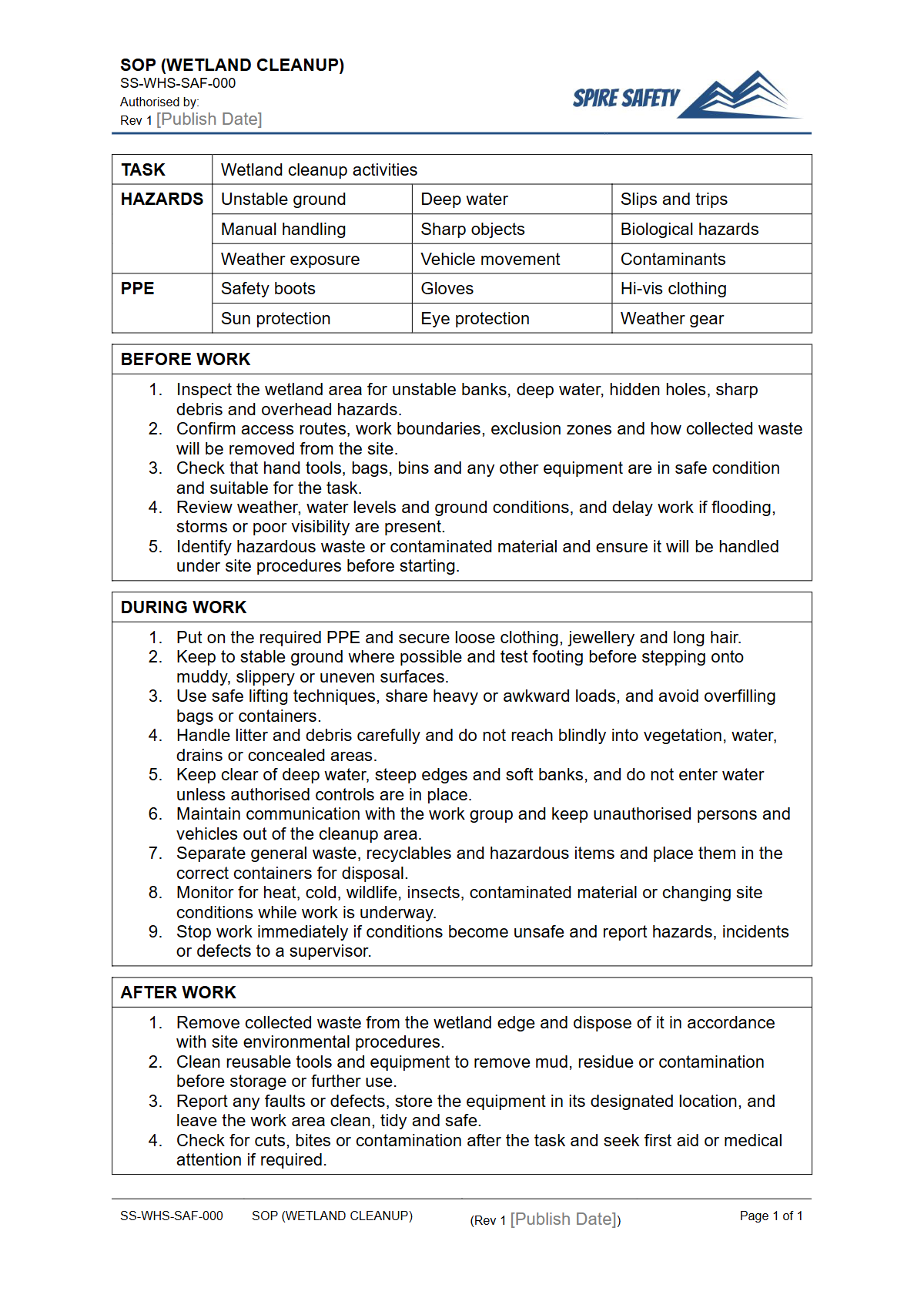
Download our Free Safe Operating Procedure for Wetland Cleanup. This template helps you outline the hazards and controls for environmental restoration tasks.
Free Safe Operating Procedure (Wetland Cleanup) Template
DOCX • 126 KB + PDF
Updated Oct 2026
No signup required
Purpose of the Free Safe Operating Procedure (Wetland Cleanup) Template
A Safe Operating Procedure (SOP) provides a documented, step-by-step guide to performing a task safely. This free template is specifically designed for wetland cleanup operations, a task that involves a unique combination of environmental, biological, chemical, and physical hazards.
The primary purpose is to help organisations identify these risks—such as drowning, exposure to contaminated water, bites from venomous fauna, and musculoskeletal injuries from manual tasks—and implement effective control measures. A well-developed SOP is a cornerstone of a proactive safety culture, ensuring that environmental restoration activities do not compromise worker health and safety.
It formalises expectations, aids in training, and provides a clear reference for all personnel involved in the project.
Integrating task-specific SOPs like this one into your safety framework is a critical step in building robust WHS management systems. It demonstrates a commitment to managing risks systematically, moving beyond basic compliance to create a genuinely safe working environment for everyone on site.
Video walkthrough
How to use the Free Safe Operating Procedure (Wetland Cleanup) Template
This document is a comprehensive starting point, not a finished product. To use it effectively, you must adapt it to the specific conditions of your workplace and project.
Begin by conducting a thorough, site-specific risk assessment in consultation with the workers who will be performing the cleanup. This process should identify all foreseeable hazards related to the location, the tasks involved, the specific contaminants present, and the equipment being used. For example, if heavy machinery is required for access or debris removal, you may need to integrate procedures from a FREE Telehandler SOP Template.
Populate the template with detailed information gathered from your risk assessment. This includes defining clear roles and responsibilities, listing required Personal Protective Equipment (PPE), outlining emergency and first aid procedures, and specifying safe work methods for each stage of the cleanup process.
If the project involves earthmoving to create access paths or remove contaminated sediment, you will need to reference procedures from documents like our FREE Scraper SOP Template. The final document should be a practical tool that reflects the reality of your operations.
Important Note on Customisation
Remember, this is a template we have provided as a starting point. We cannot know the specific hazards of your worksite, such as unstable ground, local wildlife, or water-borne pathogens.
You must customise this document to reflect your unique operational environment, the equipment in use, and your legal obligations under relevant WHS and environmental legislation.
When to use this Safe Operating Procedure
This SOP should be developed and finalised during the planning phase of any wetland cleanup or environmental remediation project, well before any work commences on site. It serves as a critical training document for new worker inductions and for refresher training for existing team members.
It is a live document that should be readily accessible and referred to by supervisors and workers throughout the project. The SOP must be reviewed and, if necessary, updated following any incident or near-miss, when new hazards are identified, or when there are changes to equipment, procedures, or environmental conditions.
Regular reviews are essential to ensure the procedure remains relevant and effective. Organisations often incorporate SOP reviews into their scheduled WHS compliance auditing program to verify that documented processes align with actual work practices and current legislative requirements.
Who should use this document
This Safe Operating Procedure is intended for use by a range of personnel within an organisation to ensure a shared understanding of safety requirements. This includes:
- WHS Managers and Advisors: To develop, implement, and review risk controls as part of the broader safety system.
- Project Managers and Environmental Officers: To plan and manage the cleanup operations safely and effectively, ensuring compliance with both safety and environmental standards.
- Site Supervisors and Team Leaders: To induct, train, and directly supervise workers, ensuring the procedures are followed correctly on a day-to-day basis.
- Workers and Contractors: As a clear guide on how to perform their tasks safely, understand the risks, and respond correctly in an emergency.
If your team lacks the internal expertise to adapt this template for complex or high-risk wetland environments, seeking guidance from external WHS consulting professionals can provide the necessary support to ensure your procedures are robust and practical. For other operational needs, you can explore our complete free WHS resources library.
Common mistakes
Common mistakes to avoid
- Failing to conduct a site-specific risk assessment before starting work.
- Using a generic SOP without customising it for the specific location, tasks, and equipment.
- Neglecting to check weather forecasts and water levels, which can create unexpected flooding risks.
- Inadequate communication procedures for workers in remote or isolated areas of the wetland.
Legal references
Legal considerations
The following legal requirements may be relevant to this type of work.
- Work Health and Safety Act (Harmonised) — Provides the primary duties for protecting workers and other people from work health and safety risks.
- Work Health and Safety Regulations (Harmonised) — Sets out requirements supporting the management of workplace hazards and risks.
The following codes may be relevant to this type of work.
- Managing WHS Risks Code of Practice — Provides practical guidance on identifying hazards, assessing risks and applying effective controls.
- Work Health and Safety Consultation, Cooperation and Coordination Code of Practice — Provides practical guidance on consulting workers and coordinating with other duty holders.
- Managing the Work Environment and Facilities Code of Practice — Provides practical guidance on safe work environments, workplace facilities and related controls.
Did you know
Hidden Dangers
Wetlands can harbour pathogenic microorganisms like Leptospira and Giardia. Exposure through skin contact with contaminated water or soil can lead to serious illness.
Biodiversity Hotspots
Australian wetlands are critical habitats for countless species. Safe cleanup practices are essential for protecting both workers and these sensitive ecosystems from further harm.
FAQ
Frequently asked questions
01What specific hazards are involved in wetland cleanup?
02Is using this Safe Operating Procedure template enough to be compliant?
03How often should a Wetland Cleanup SOP be reviewed?
04What Personal Protective Equipment (PPE) is needed for wetland cleanup?
Share this resource
Free Safe Operating Procedure (Wetland Cleanup) Template
Browse Categories
How To Use It
- 1Download and open in Word or PDF.
- 2Replace the placeholders with your business details.
- 3Get it reviewed by a WHS specialist before rollout.
Need it customised?
Our WHS consultants can adapt this template to your site, run a gap analysis, or audit what you already have in place.
Book a Free Consultation WHS consulting servicesor call 1300 156 382
Related templates
- Free Safe Operating Procedure (Wheel Balancer) Template
- Free Safe Operating Procedure (Wheel Nut Torquing) Template
- Free Safe Operating Procedure (Wheel Removal) Template
- Free Safe Operating Procedure (Wheel Stud Replacement) Template
- Free Safe Operating Procedure (Wheelchair Brake Check) Template
- Free Safe Operating Procedure (Wheelchair Charging) Template