
Free Safe Operating Procedure (Wheelchair Cushion Clean) Template
Document the safe cleaning of wheelchair cushions with our free SOP template. This structured guide helps you manage hygiene and chemical risks effectively.
Free Safe Operating Procedure (Wheelchair Cushion Clean) Template
DOCX • 126 KB + PDF
Updated Oct 2026
No signup required
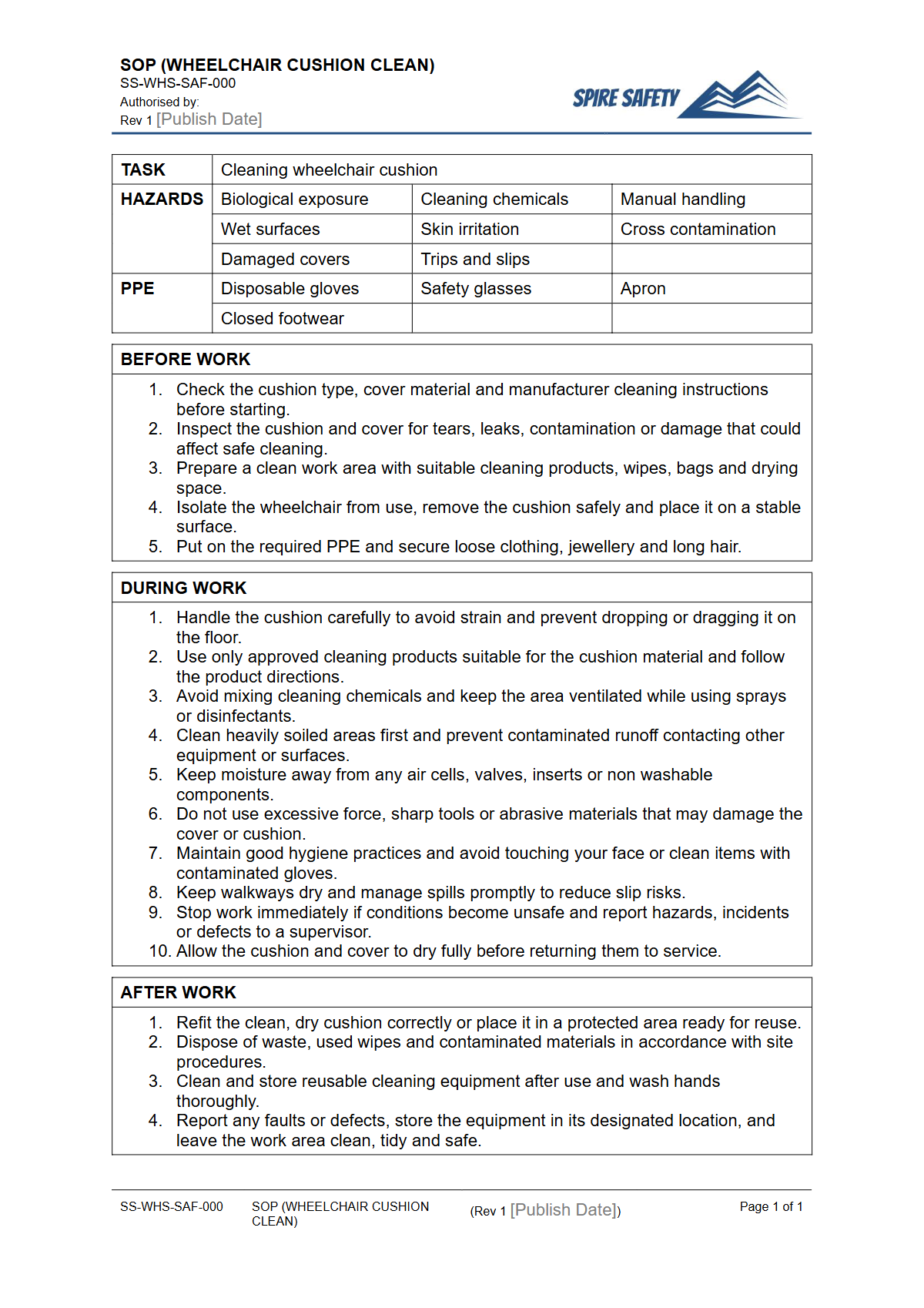
Purpose of the Free Safe Operating Procedure (Wheelchair Cushion Clean) Template
The primary purpose of this Safe Operating Procedure (SOP) is to provide a clear, step-by-step guide for cleaning and disinfecting wheelchair cushions safely and effectively. It aims to standardise the cleaning process across your organisation, which is crucial for maintaining hygiene standards, preventing cross-contamination, and ensuring the longevity of the equipment.
By documenting the required steps, personal protective equipment (PPE), and hazard controls, this template helps organisations meet their duty of care under Australian WHS laws.
Implementing a formal SOP for this task addresses several key risks, including exposure to hazardous cleaning chemicals, biological hazards from soiled materials, and ergonomic risks associated with manual handling. It forms a critical part of broader WHS management systems, demonstrating a commitment to proactive risk management.
A well-defined procedure ensures that every worker, regardless of experience, follows a consistent and safe method, reducing the likelihood of incidents and improving overall workplace safety in healthcare, aged care, and disability support environments.
Video walkthrough
How to use the Free Safe Operating Procedure (Wheelchair Cushion Clean) Template
This template is provided as a starting point and must be adapted to your specific workplace. Download the DOCX file and customise it to reflect the unique context of your operations.
You will need to insert site-specific details, including the exact types of wheelchair cushions in use, the approved cleaning and disinfectant products (referencing their Safety Data Sheets), and the designated cleaning areas. It is also important to specify the emergency procedures relevant to your site, such as for chemical spills or skin contact.
Important: We have developed this document to be a useful starting point, but it is not a substitute for professional advice. You must customise this template to suit the specific equipment, chemicals, and processes in your workplace.
A generic procedure is not sufficient for compliance; it must be made relevant to your actual operational risks. If you need assistance with this process, engaging professional WHS consulting services can ensure your final document is robust and fit-for-purpose.
The template guides you through documenting:
- Required PPE (e.g., gloves, safety glasses).
- Pre-cleaning checks and preparation.
- Step-by-step cleaning and disinfection instructions.
- Post-cleaning procedures, including drying and storage.
- Waste disposal requirements.
- Associated hazards and control measures.
When to use this Safe Operating Procedure
This SOP should be used as the primary reference document whenever a wheelchair cushion requires cleaning. This includes routine scheduled cleaning to maintain hygiene, as well as responsive cleaning following spills or soiling incidents.
It is a vital tool for inducting and training new employees, ensuring they understand the established safe method from day one. The procedure also serves as a benchmark for refresher training for existing staff, promoting a consistent standard of work.
Furthermore, the SOP is a key document during safety audits and inspections. It provides clear evidence of a formalised process for managing the risks associated with the task.
Regular reviews of the SOP are recommended, particularly when new cleaning products are introduced, new types of cushions are acquired, or an incident occurs. Verifying that the documented procedure is being followed correctly in practice is a key part of the safety assurance cycle, often confirmed through WHS compliance auditing.
Who should use this document
This Safe Operating Procedure is designed for use by a range of personnel in settings where wheelchairs are common. This includes direct care workers in aged care facilities, disability support workers, hospital orderlies, and specialised cleaning or maintenance staff.
It provides them with the practical guidance needed to perform their duties safely and efficiently.
Work Health and Safety (WHS) managers, facility managers, and team leaders should also use this template to establish and enforce safety standards within their teams. They are responsible for ensuring the document is correctly customised, workers are trained in its use, and that it is readily accessible at the point of work.
While this procedure focuses on a healthcare-related task, the structured approach is applicable across industries, much like how a kitchen might use a Free Safe Operating Procedure (Deep Fryer - Standard Operation) template to manage its specific equipment risks. You can find more templates for various tasks in our free WHS resources library.
Common mistakes
Common mistakes to avoid
- Using incorrect cleaning chemicals that damage the cushion material or cover.
- Failing to allow the cushion to dry completely before use, which can promote mould growth.
- Not wearing appropriate Personal Protective Equipment (PPE) like gloves or eye protection.
- Neglecting to follow the specific cushion manufacturer's cleaning and care instructions.
Legal references
Legal considerations
The following legal requirements may be relevant to this type of work.
- Work Health and Safety Act (Harmonised) — Provides the primary duties for protecting workers and other people from work health and safety risks.
- Work Health and Safety Regulations (Harmonised) — Sets out requirements supporting the management of workplace hazards and risks.
The following codes may be relevant to this type of work.
- Managing WHS Risks Code of Practice — Provides practical guidance on identifying hazards, assessing risks and applying effective controls.
- Work Health and Safety Consultation, Cooperation and Coordination Code of Practice — Provides practical guidance on consulting workers and coordinating with other duty holders.
- Managing the Work Environment and Facilities Code of Practice — Provides practical guidance on safe work environments, workplace facilities and related controls.
Did you know
Infection Control
Regular and correct cleaning of high-touch surfaces and personal equipment like wheelchair cushions is a critical component of infection prevention and control strategies in healthcare and aged care settings.
Chemical Safety
Many commercial cleaning agents contain chemicals that can cause skin irritation or respiratory issues if not handled correctly. This highlights the need for clear procedures, adequate ventilation, and correct PPE use.
FAQ
Frequently asked questions
01Is cleaning a wheelchair cushion considered a hazardous task?
02What PPE is typically needed for cleaning wheelchair cushions?
03How often should a wheelchair cushion be cleaned?
04Can I use this template for other types of medical equipment?
Share this resource
Free Safe Operating Procedure (Wheelchair Cushion Clean) Template
Browse Categories
How To Use It
- 1Download and open in Word or PDF.
- 2Replace the placeholders with your business details.
- 3Get it reviewed by a WHS specialist before rollout.
Need it customised?
Our WHS consultants can adapt this template to your site, run a gap analysis, or audit what you already have in place.
Book a Free Consultation WHS consulting servicesor call 1300 156 382
Related templates
- Free Safe Operating Procedure (Wheelchair Footrest) Template
- Free Safe Operating Procedure (Wheelchair Handling) Template
- Free Safe Operating Procedure (Wheelchair Lap Belt) Template
- Free Safe Operating Procedure (Wheelchair Lift Use) Template
- Free Safe Operating Procedure (Wheelchair Ramp Setup) Template
- Free Safe Operating Procedure (Wheelchair Ramp Use) Template