
Free WHS Inspection (Dairy Plant) Template
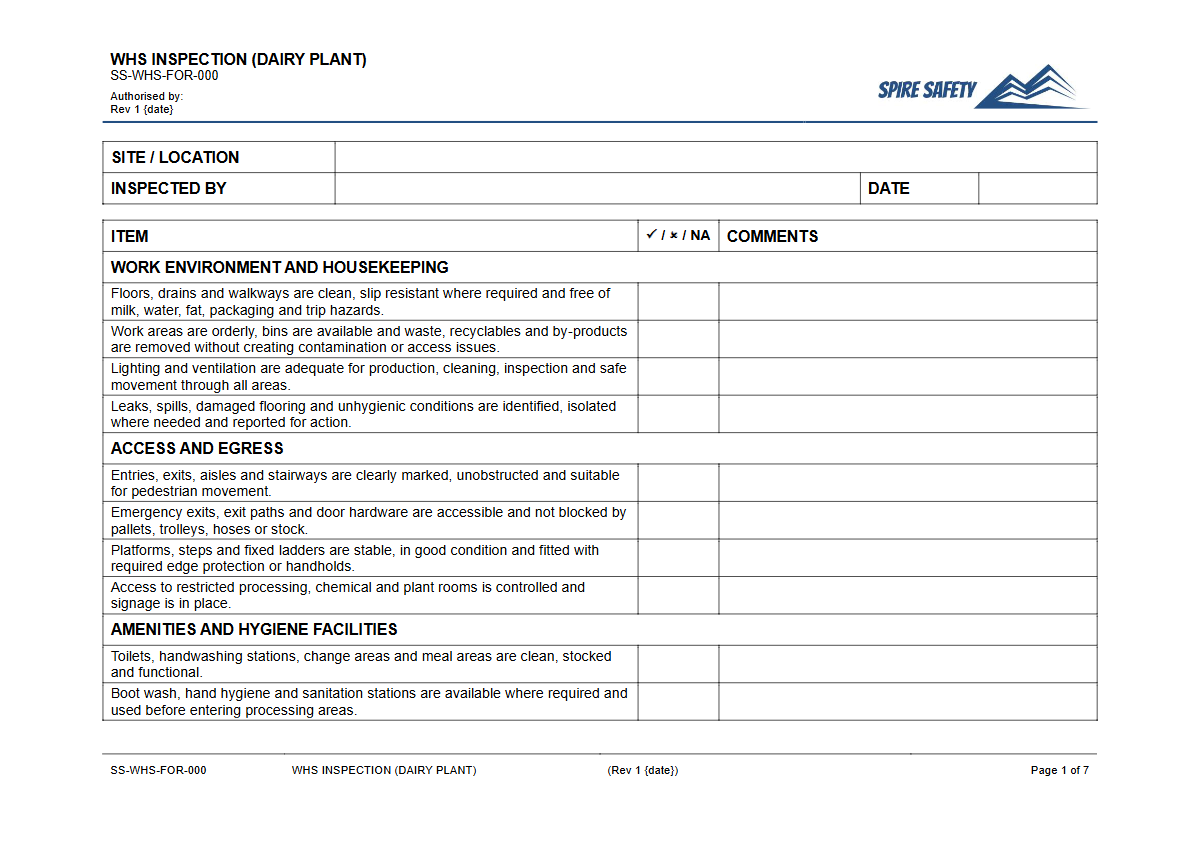
Proactively manage safety in your dairy facility with our Free WHS Inspection Template. This checklist covers machinery, hygiene, and chemical risks.
Free WHS Inspection (Dairy Plant) Template
DOCX • 128 KB + PDF
Updated Oct 2026
No signup required
Purpose of the Free WHS Inspection (Dairy Plant) Template
Dairy processing plants are complex environments with a unique combination of machinery, wet processes, chemical use, and biological considerations. A systematic approach to safety is essential.
This Free WHS Inspection (Dairy Plant) Template provides a structured starting point for organisations to conduct regular, thorough safety checks. It is designed to help you proactively identify, assess, and control hazards before they cause injury or illness, supporting a safer workplace for everyone.
The inspection template prompts users to examine a broad range of site-specific risks common in dairy manufacturing. This includes mechanical hazards from equipment like pasteurisers, homogenisers, separators, and packaging lines; electrical risks in wet environments; and dangers associated with confined spaces such as milk silos and tanks.
It also covers slip, trip, and fall hazards on perennially wet floors, an issue that requires diligent management. For a focused discussion on this topic, consider our Spill Prevention and Response Toolbox Talk Template.
Furthermore, the checklist addresses risks from temperature extremes, a constant factor in dairy plants. Regular checks on cool rooms, blast freezers, and hot processing areas are vital for both worker safety and process integrity.
To supplement this, you can use our Free Pre-Start Checklist (Freezer) Template for daily equipment checks.
Video walkthrough
How to use the Free WHS Inspection (Dairy Plant) Template
Using this template effectively involves more than just filling out a form. It’s a key part of your safety management cycle.
Start by downloading the DOCX file and adapting it to your facility. Add or remove sections to align with your specific plant, equipment, and standard operating procedures.
The use of specialised equipment like industrial blenders or mixers requires specific checks, which can be detailed using resources like our Free Pre-Start Checklist (Blender) Template as a guide.
Important: This document is a template, not a finished safety document. We have designed it as a comprehensive starting point aligned with Australian WHS principles.
You must customise it to reflect the specific hazards, machinery, chemicals, and work processes present in your workplace.
Once customised, schedule regular inspections and assign them to competent personnel. During the inspection, the user should physically walk through the designated area, observe work practices, talk to workers, and document any identified hazards or non-conformances.
All findings should be recorded, with clear corrective actions assigned to a responsible person and given a due date. This process should be integrated into your overall WHS management systems to ensure findings are tracked to completion.
When to use it
The frequency of dairy plant inspections should be determined by a risk assessment. High-risk areas, such as chemical storage, wet processing zones, or high-traffic forklift areas, may require weekly or even daily checks.
A comprehensive, plant-wide inspection is typically conducted on a monthly or quarterly basis.
Inspections should also be triggered by specific events. These include after a workplace incident or near miss, before the introduction of new machinery or substances, when work processes change, or if workers raise a specific concern.
Regular inspections help maintain a consistent standard of safety and demonstrate an ongoing commitment to a safe work environment.
Who should use it
Workplace inspections should be conducted by individuals with the knowledge and training to recognise potential hazards in a dairy plant. This typically includes site supervisors, WHS managers, and team leaders.
Encouraging participation from experienced operators and elected Health and Safety Representatives (HSRs) can also provide valuable insights, as they have direct, hands-on knowledge of the tasks and risks involved.
The information gathered during these inspections is critical for management review and may inform the scope of more formal assessments. In complex situations, the findings can act as a valuable brief for external WHS compliance auditing to verify the effectiveness of your controls.
Common mistakes
Common mistakes to avoid
- Failing to customise the template for site-specific machinery and processes.
- Treating the inspection as a "tick-and-flick" exercise without genuine investigation.
- Not following up on identified hazards with documented corrective actions.
- Using personnel who are not adequately trained to recognise the specific hazards of a dairy plant.
Legal references
Legal considerations
The following legal requirements may be relevant to this type of work.
- Work Health and Safety Act (Harmonised) — Provides the primary duties for protecting workers and other people from work health and safety risks.
- Work Health and Safety Regulations (Harmonised) — Sets out requirements supporting the management of workplace hazards and risks.
The following codes may be relevant to this type of work.
- Managing WHS Risks Code of Practice — Provides practical guidance on identifying hazards, assessing risks and applying effective controls.
- Work Health and Safety Consultation, Cooperation and Coordination Code of Practice — Provides practical guidance on consulting workers and coordinating with other duty holders.
- Managing the Work Environment and Facilities Code of Practice — Provides practical guidance on safe work environments, workplace facilities and related controls.
Did you know
Slips, Trips, and Falls
According to Safe Work Australia, slips, trips, and falls are a leading cause of serious injury claims in the food manufacturing industry, with wet and contaminated floors being a primary contributing factor.
CIP Systems
"Clean-in-Place" (CIP) systems, while efficient, introduce significant risks related to hazardous chemicals, high temperatures, and pressurised lines that require careful management and routine inspection.
FAQ
Frequently asked questions
01What specific hazards should a dairy plant inspection cover?
02How often should we inspect our dairy plant?
03Is this template suitable for small dairies and large processors?
04What's the difference between a pre-start check and a workplace inspection?
Share this resource
Free WHS Inspection (Dairy Plant) Template
Browse Categories
How To Use It
- 1Download and open in Word or PDF.
- 2Replace the placeholders with your business details.
- 3Get it reviewed by a WHS specialist before rollout.
Need it customised?
Our WHS consultants can adapt this template to your site, run a gap analysis, or audit what you already have in place.
Book a Free Consultation WHS consulting servicesor call 1300 156 382