
Free WHS Inspection (Demolition Site) Template
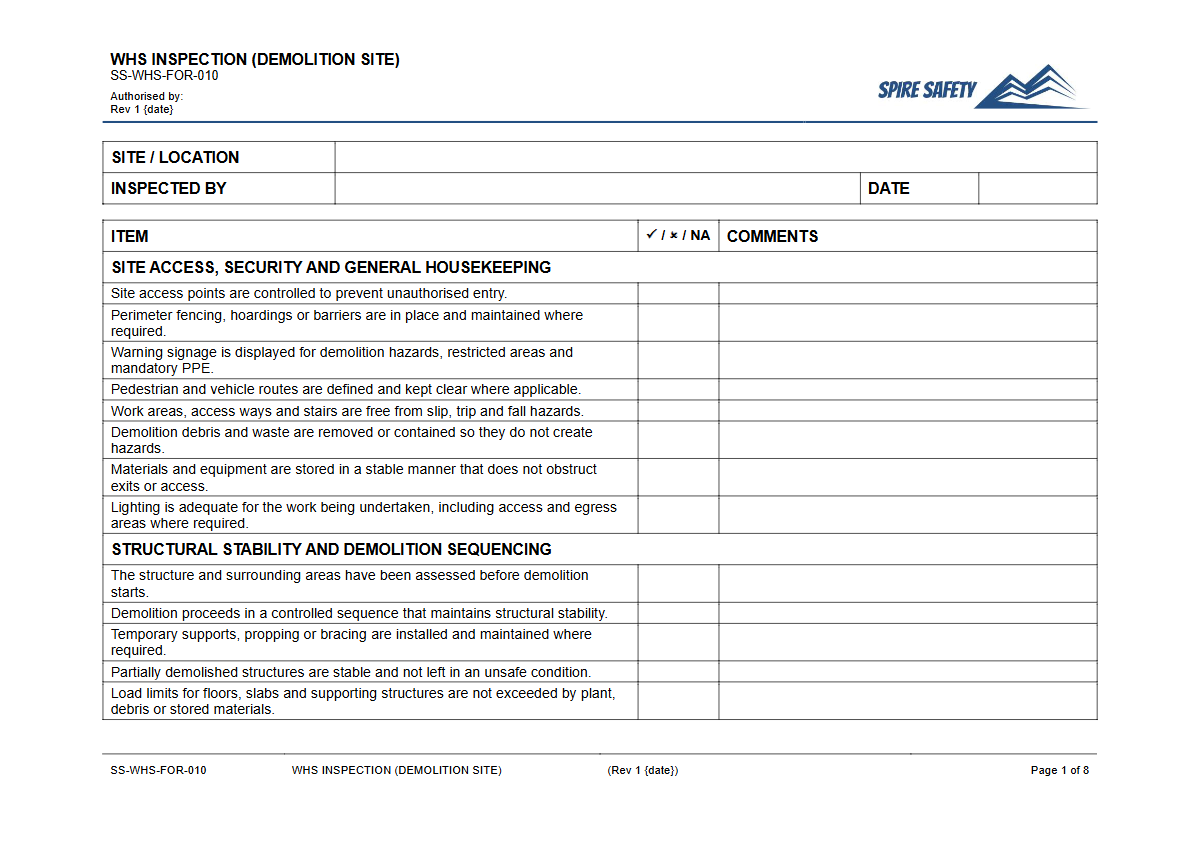
Download our Free WHS Inspection (Demolition Site) Template (DOCX/PDF). This structured starting point helps formalise your demolition site safety checks.
Free WHS Inspection (Demolition Site) Template
DOCX • 129 KB + PDF
Updated Oct 2026
No signup required
Purpose of the Free WHS Inspection (Demolition Site) Template
Demolition sites are dynamic and high-risk environments where conditions can change rapidly. Conducting regular, thorough safety inspections is a cornerstone of managing these risks effectively.
This Free WHS Inspection (Demolition Site) Template provides a structured starting point for your site safety checks, helping you systematically identify hazards and document control measures. It is designed to align with Australian WHS principles and the model Code of Practice for demolition work, encouraging a proactive approach to safety management on your project.
The primary purpose of this Inspection template is to provide a systematic framework for identifying, assessing, and controlling hazards specific to demolition activities. Demolition is classified as 'high-risk construction work' under Australian WHS regulations, involving significant risks such as unplanned structural collapse, falls from height, exposure to hazardous materials like asbestos, and interaction with heavy machinery.
Using a formal checklist ensures that key safety elements are not overlooked during routine site walks or pre-task assessments. It helps document due diligence and forms a critical part of your overall safety management plan. This also includes managing environmental risks, which you can support with resources like our Stormwater and Waterway Protection Toolbox Talk template.
Video walkthrough
How to use the Free WHS Inspection (Demolition Site) Template
This resource is provided in both DOCX and PDF formats for your convenience. Download the template and integrate it into your site's safety procedures.
The checklist format is designed for ease of use by supervisors, safety officers, or other competent personnel on site.
IMPORTANT: This template provides a general framework and is not exhaustive. It is essential that you customise this document to reflect the specific hazards, equipment, methodologies, and work procedures of your particular demolition site.
We are not liable for any incidents that may occur from the use of this template. For a holistic approach, this inspection document should be a component of your broader WHS management systems.
What this Inspection covers
A comprehensive demolition site inspection should cover a wide range of areas. Your customised checklist should include, but not be limited to:
- Site Security: Fencing, signage, and controls to prevent unauthorised entry.
- Hazardous Materials: Confirmation that asbestos, lead paint, PCBs, and other substances have been identified and removed or controlled.
- Structural Integrity: Assessment of the structure's stability, including any temporary supports or bracing.
- Fall Prevention: Checks for edge protection, scaffolding integrity, and safe work platforms.
- Plant and Equipment: Pre-start checks, maintenance records, and operator competency for machinery like excavators and cranes. You can formalise these checks with documents such as a free Pre-Start Checklist for an Electric Hoist for lifting equipment.
- Public Safety: Exclusion zones, overhead protection, and traffic management to protect the public.
- Emergency Preparedness: Accessibility of first aid kits, fire extinguishers, and clear emergency evacuation routes.
When to use it
Regular inspections are vital for maintaining a safe demolition site. This inspection template should be used at various key stages:
- Daily: At the start of each shift to ensure the site is safe for work to begin.
- Before High-Risk Tasks: Prior to commencing specific activities like inducing a collapse or lifting heavy structural members.
- Weekly: A more thorough review of the entire site and safety systems.
- After an Incident: To identify contributing factors and prevent recurrence.
- Following Weather Events: After heavy rain or high winds that could affect site stability or environmental controls.
Consistent inspections also help maintain site security by regularly checking perimeter fencing and access points, a topic covered in our Site Security and Unauthorised Access Toolbox Talk.
Who should use it
This inspection template is intended for use by personnel with the authority and competence to identify hazards and direct corrective actions. This typically includes:
- Site Supervisors and Foremen
- Project Managers
- Work Health and Safety (WHS) Officers or Advisors
- Principal Contractors or their representatives
The person conducting the inspection must be familiar with demolition processes and relevant WHS legislation. The findings from these inspections are valuable inputs for management reviews and can be used to demonstrate compliance during a formal WHS compliance auditing process. If you need more templates and checklists, you can explore our entire free WHS resources library.
Common mistakes
Common mistakes to avoid
- Failing to identify and manage hazardous materials like asbestos before starting.
- Inadequate assessment of structural stability, leading to unplanned collapse.
- Neglecting to secure the site from unauthorised public access.
- Using a generic inspection template without customising it for site-specific risks.
Legal references
Legal considerations
The following legal requirements may be relevant to this type of work.
- Work Health and Safety Act (Harmonised) — Provides the primary duties for protecting workers and other people from work health and safety risks.
- Work Health and Safety Regulations (Harmonised) — Sets out requirements supporting the management of workplace hazards and risks.
The following codes may be relevant to this type of work.
- Managing WHS Risks Code of Practice — Provides practical guidance on identifying hazards, assessing risks and applying effective controls.
- Work Health and Safety Consultation, Cooperation and Coordination Code of Practice — Provides practical guidance on consulting workers and coordinating with other duty holders.
- Managing the Work Environment and Facilities Code of Practice — Provides practical guidance on safe work environments, workplace facilities and related controls.
Did you know
High-Risk Work
Demolition work is legally defined as 'high-risk construction work' in Australia, which triggers specific WHS duties, including the need for a Safe Work Method Statement (SWMS).
Asbestos Risk
Many Australian buildings constructed before 1990 contain asbestos. A key part of pre-demolition planning is ensuring an asbestos register or survey has been completed and all identified materials are managed correctly.
FAQ
Frequently asked questions
01Is a Safe Work Method Statement (SWMS) required for demolition?
02What are the main hazards on a demolition site?
03How often should a demolition site be inspected?
04Can I use this template for a small residential demolition?
Share this resource
Free WHS Inspection (Demolition Site) Template
Browse Categories
How To Use It
- 1Download and open in Word or PDF.
- 2Replace the placeholders with your business details.
- 3Get it reviewed by a WHS specialist before rollout.
Need it customised?
Our WHS consultants can adapt this template to your site, run a gap analysis, or audit what you already have in place.
Book a Free Consultation WHS consulting servicesor call 1300 156 382