
Free WHS Inspection (HVAC Workshop) Template
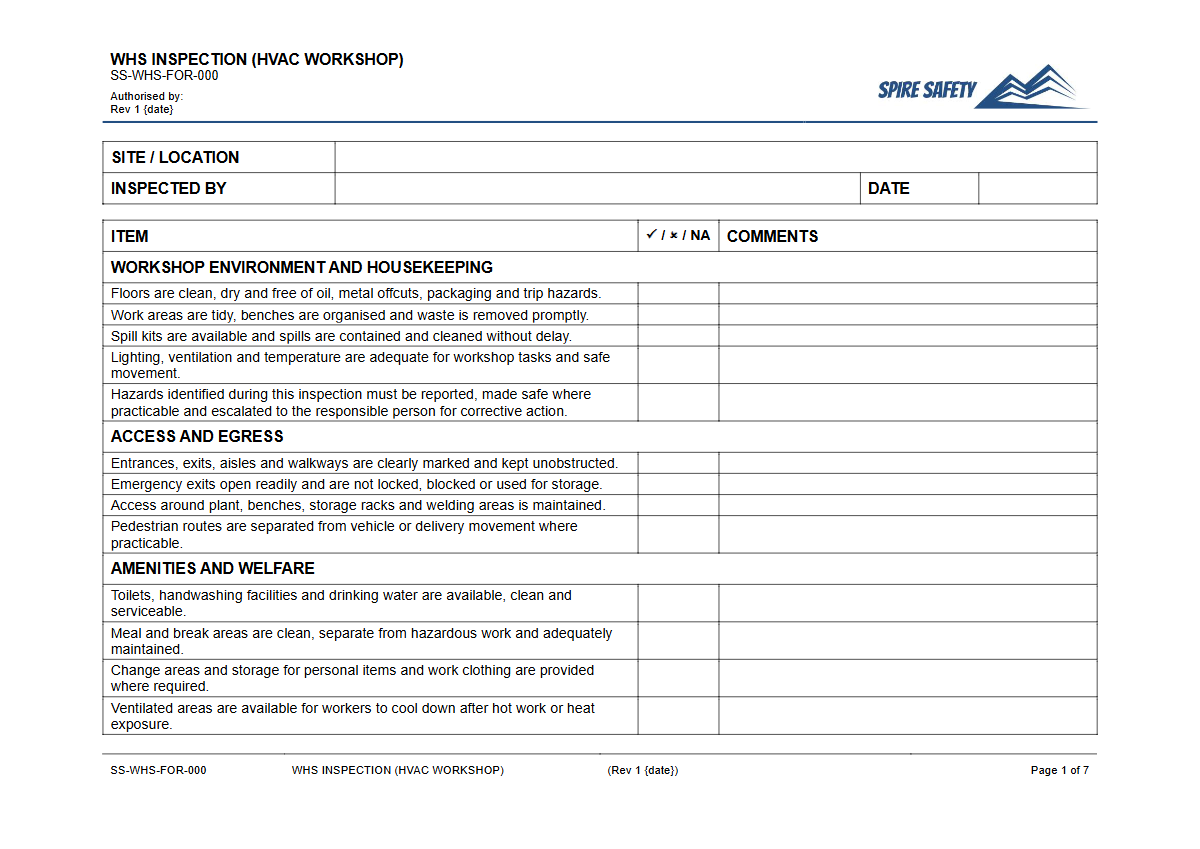
Download our Free WHS Inspection Template for HVAC workshops. This DOCX & PDF resource provides a structured starting point for your safety audits.
Free WHS Inspection (HVAC Workshop) Template
DOCX • 128 KB + PDF
Updated Oct 2026
No signup required
Purpose of the Free WHS Inspection (HVAC Workshop) Template
HVAC workshops present a unique combination of workplace hazards, from electrical risks and hazardous substances like refrigerants to manual handling and noise. A systematic approach to safety is essential.
This Free WHS Inspection (HVAC Workshop) Template provides a structured starting point for formalising your safety audits, helping you proactively identify, assess, and control risks.
Regular, documented inspections are a cornerstone of effective safety management. They help your organisation demonstrate due diligence and create a historical record of safety performance.
Using this template can help integrate safety checks into your routine operations, forming a critical component of your broader WHS management systems and fostering a stronger safety culture among your team.
Video walkthrough
How to use the Free WHS Inspection (HVAC Workshop) Template
Using this template effectively involves more than just filling in the blanks. Follow these steps to integrate it into your safety processes:
- Download and Customise: Download the template in your preferred format (DOCX or PDF). The DOCX version is fully editable. It is crucial that you customise the document to reflect the specific equipment, processes, and layout of your workshop. We cannot know your specific circumstances, so you must add, remove, or modify checklist items to make it relevant to your site.
- Train Personnel: Ensure the individuals conducting the inspection (e.g., managers, supervisors, HSRs) are competent to do so. They must understand the hazards specific to HVAC work and be familiar with the customised checklist.
- Schedule and Conduct: Implement a schedule for regular inspections. During the inspection, walk through the workshop methodically, observing conditions, talking to workers, and documenting any identified hazards, non-conformances, or areas for improvement.
- Document and Action: Record all findings clearly on the template. For each identified issue, assign a corrective action, a responsible person, and a due date. This creates an auditable trail of your risk management process.
- Review and Improve: Periodically review completed inspection reports to identify recurring issues or trends. This data is invaluable for refining your safety procedures and making informed decisions about resource allocation for WHS improvements. For complex environments, you may consider engaging a professional for WHS compliance auditing to verify your processes.
Inspecting Workshop Equipment
Your customised inspection should cover all plant and equipment. This includes core HVAC tools like vacuum pumps, refrigerant recovery units, and brazing equipment, as well as general workshop machinery such as bench grinders, drill presses, and fixed lifting aids. It's also important to consider inspecting specific items like refrigerant recovery units, welding equipment, and even adjacent cold storage areas using a dedicated Free Pre-Start Checklist (Freezer) Template.
When to use this Inspection
A comprehensive workshop inspection should be conducted at regular, planned intervals, such as monthly or quarterly. The frequency may depend on the size and complexity of your operations, the types of hazards present, and any specific state or territory regulatory requirements. In addition to scheduled inspections, this template should be used:
- After a workplace incident, accident, or near miss.
- When new equipment or machinery is introduced.
- When work processes or chemicals are changed.
- In response to concerns raised by workers or HSRs.
While this template is for periodic, in-depth audits, daily pre-start checks on specific pieces of equipment are also vital. For example, technicians should still perform daily checks on lifting equipment, a process detailed in resources like our Free Pre-Start Checklist (Electric Hoist) Template.
Who should use it
This template is designed for use by personnel with responsibility for workplace safety and operational management. This typically includes:
- Workshop Managers and Supervisors: They hold primary responsibility for ensuring a safe working environment for their teams.
- Health and Safety Representatives (HSRs): As representatives of the workforce, HSRs can use this tool to participate in formalised safety audits.
- WHS Officers/Advisors: Safety professionals can use this as a foundation for their internal audit program.
- Business Owners (PCBU): For smaller operations, the Person Conducting a Business or Undertaking may conduct the inspection to fulfil their due diligence obligations.
Spire Safety offers a wide range of documents to help manage your WHS obligations. You can browse our complete free WHS resources library for more templates and checklists.
Common mistakes
Common mistakes to avoid
- Failing to customise the template to the specific tools, chemicals, and layout of the workshop.
- Completing the checklist without physically verifying the condition of items ('pencil-whipping').
- Neglecting to assign and track corrective actions for identified hazards.
- Poor record-keeping, making it difficult to demonstrate due diligence or track safety trends over time.
Legal references
Legal considerations
The following legal requirements may be relevant to this type of work.
- Work Health and Safety Act (Harmonised) — Provides the primary duties for protecting workers and other people from work health and safety risks.
- Work Health and Safety Regulations (Harmonised) — Sets out requirements supporting the management of workplace hazards and risks.
The following codes may be relevant to this type of work.
- Managing WHS Risks Code of Practice — Provides practical guidance on identifying hazards, assessing risks and applying effective controls.
- Work Health and Safety Consultation, Cooperation and Coordination Code of Practice — Provides practical guidance on consulting workers and coordinating with other duty holders.
- Managing the Work Environment and Facilities Code of Practice — Provides practical guidance on safe work environments, workplace facilities and related controls.
Did you know
Hierarchy of Control
When addressing hazards found during an inspection, the most effective control measure is elimination. Relying on Personal Protective Equipment (PPE) is considered the least effective control and should always be the last resort.
Technician and Tradeworker Injuries
According to Safe Work Australia, technicians and trades workers have one of the highest rates of serious workers' compensation claims, highlighting the critical need for systematic inspections and risk management.
FAQ
Frequently asked questions
01What is the difference between a workshop inspection and a pre-start check?
02How often should I inspect my HVAC workshop?
03Is this template suitable for mobile HVAC technicians?
04Who is responsible for fixing the hazards found during an inspection?
Share this resource
Free WHS Inspection (HVAC Workshop) Template
Browse Categories
How To Use It
- 1Download and open in Word or PDF.
- 2Replace the placeholders with your business details.
- 3Get it reviewed by a WHS specialist before rollout.
Need it customised?
Our WHS consultants can adapt this template to your site, run a gap analysis, or audit what you already have in place.
Book a Free Consultation WHS consulting servicesor call 1300 156 382