
Free Pre-Start Checklist (Air Winch) Template
Download our free Pre-Start Checklist for Air Winches.
Free Pre-Start Checklist (Air Winch) Template
DOCX • 125 KB + PDF
Updated Oct 2026
No signup required
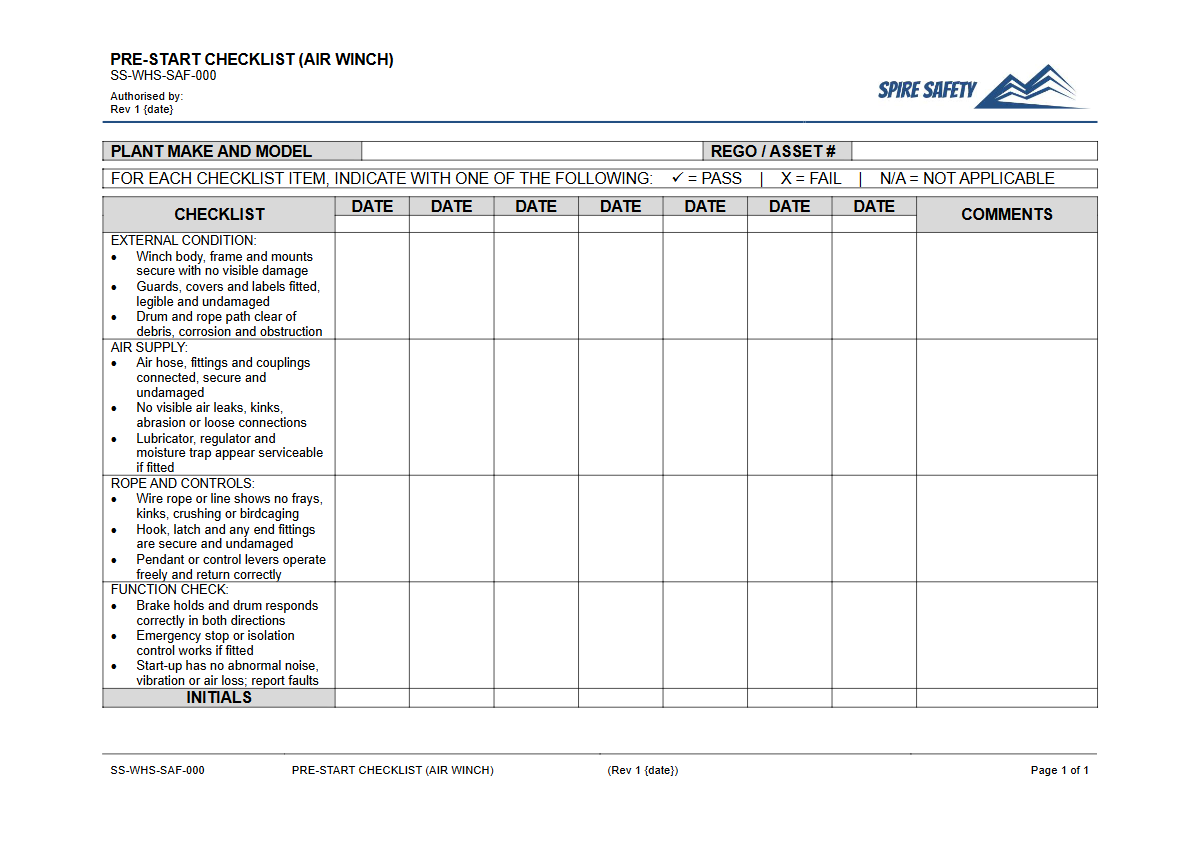
Purpose of the Free Pre-Start Checklist (Air Winch) Template
An air winch is powerful lifting and pulling equipment used across mining, construction, and marine industries. Ensuring its operational safety is non-negotiable.
This Free Pre-Start Checklist (Air Winch) Template provides a structured framework for operators to conduct thorough, consistent inspections before each use. Implementing this process helps identify potential faults, prevent equipment failure, and reduce the risk of incidents that could lead to serious injury or property damage.
Systematically documenting these checks is a key component of managing WHS risks associated with plant and demonstrates due diligence.
Regular, documented inspections are a fundamental part of all robust WHS management systems. They create a record of compliance and a culture of proactive safety, ensuring that equipment is consistently assessed against a known standard. This audit trail is invaluable for demonstrating that all reasonably practicable steps have been taken to ensure safety.
Video walkthrough
How to use the Free Pre-Start Checklist (Air Winch) Template
This resource is available in both DOCX and PDF formats for your convenience. The DOCX file is fully editable, allowing you to tailor it to your specific operational needs.
While the checklist is aligned with Australian WHS principles, it is a template, not a finished document. For it to be effective, you must adapt it to your specific context.
Important: It's crucial to remember that this template is a starting point. We recommend you customise it to reflect the specific make and model of your air winch, your site conditions, your organisation's safe work procedures, and any unique hazards present in your workplace.
This may involve adding your company logo, refining checklist items, or including emergency contact details. If you require assistance in tailoring safety documents to your specific operational risks, consider engaging specialist WHS consulting services.
Key Inspection Areas for an Air Winch
A thorough pre-start inspection covers all critical components of the winch. While our template provides a comprehensive list, key areas for focus include:
Equipment & Surroundings
- General Area: Ensure the operating area is clear of obstructions, personnel, and slip or trip hazards.
- Mounting: Check that the winch is securely bolted or anchored to its foundation or structure. Verify bolts are tight and the structure shows no signs of stress or damage.
Components & Controls
- Air Supply: Inspect air hoses for cracks, bulges, or leaks. Ensure couplings are secure and functioning correctly. Check the filter, regulator, and lubricator (FRL) unit for correct oil levels and pressure settings.
- Wire Rope & Drum: Examine the wire rope for any signs of fraying, kinks, broken strands, or corrosion. Ensure the rope is spooled correctly on the drum and that the rope clamp is secure. Similar principles apply when creating a pre-start checklist for a bench grinder, where inspecting the grinding wheel for cracks is a critical step.
- Braking System: Test the primary brake to ensure it holds the rated load without slipping. If applicable, check the secondary or emergency braking system.
- Controls: Verify that control levers or pendants operate smoothly, return to neutral when released, and are clearly labelled.
- Guards & Safeties: Ensure all guards, such as drum guards, are in place and secure. Check that any safety devices, like limit switches, are functional.
When to use the Pre-Start Checklist
This Pre-Start Checklist should be completed by the operator before the first use of the air winch on every shift. It should also be used after any maintenance or repair work, or if the winch has been idle for an extended period.
The brief time it takes to complete the check is a small investment compared to the potential consequences of operating faulty equipment. This proactive approach to safety is also essential for other types of heavy machinery, as seen in our checklist for forestry forwarders.
Who should use the Pre-Start Checklist
The checklist must be used by a person who is trained, competent, and authorised to operate the specific air winch. Competency involves more than just knowing how to operate the controls; it includes understanding the winch's capacity, limitations, and the specific hazards associated with its use.
Using checklists for lifting equipment is a common requirement across many industries, including healthcare where similar processes are used for pre-start checks for patient hoists. Records of completed checklists should be maintained as part of your workplace's safety documentation, which can be reviewed during any WHS compliance auditing activities.
By integrating this checklist into your daily routine, you help foster a safety-first mindset and contribute to a safer work environment for everyone. For more templates and safety guides, you can browse our free WHS resources library.
Common mistakes
Common mistakes to avoid
- Ignoring minor air leaks, which can lead to reduced performance and eventual failure.
- Failing to inspect the full working length of the wire rope for damage, not just the visible portion.
- Not verifying that the winch's mounting bolts are tight and the foundation is sound.
- Treating the checklist as a 'tick-and-flick' exercise without physically verifying each item.
Legal references
Legal considerations
The following legal requirements may be relevant to this type of work.
- Work Health and Safety Act (Harmonised) — Provides the primary duties for protecting workers and other people from work health and safety risks.
- Work Health and Safety Regulations (Harmonised) — Sets out requirements supporting the management of workplace hazards and risks.
The following codes may be relevant to this type of work.
- Managing WHS Risks Code of Practice — Provides practical guidance on identifying hazards, assessing risks and applying effective controls.
- Work Health and Safety Consultation, Cooperation and Coordination Code of Practice — Provides practical guidance on consulting workers and coordinating with other duty holders.
- Managing the Work Environment and Facilities Code of Practice — Provides practical guidance on safe work environments, workplace facilities and related controls.
Did you know
Pneumatic Power
Air winches are often preferred in hazardous environments, such as on oil rigs or in underground mines, because they don't use electricity. This eliminates the risk of an electric spark igniting flammable gases or dust.
Rope Spooling
Improper spooling of the wire rope on the drum can crush the rope and drastically reduce its lifespan and lifting capacity. The first layer must always be wound neatly and under tension.
FAQ
Frequently asked questions
01What is an air winch pre-start checklist?
02Why is it important to check the wire rope before every use?
03How often should an air winch be professionally inspected?
04Can I use a digital version of this checklist?
Share this resource
Free Pre-Start Checklist (Air Winch) Template
Browse Categories
How To Use It
- 1Download and open in Word or PDF.
- 2Replace the placeholders with your business details.
- 3Get it reviewed by a WHS specialist before rollout.
Need it customised?
Our WHS consultants can adapt this template to your site, run a gap analysis, or audit what you already have in place.
Book a Free Consultation WHS consulting servicesor call 1300 156 382