
Free Pre-Start Checklist (Bucket Attachment) Template
Formalise daily equipment inspections for earthmoving attachments with our Free Pre-Start Checklist (Bucket Attachment) Template. Download your DOCX & PDF.
Free Pre-Start Checklist (Bucket Attachment) Template
DOCX • 125 KB + PDF
Updated Oct 2026
No signup required
Purpose of the Free Pre-Start Checklist (Bucket Attachment) Template
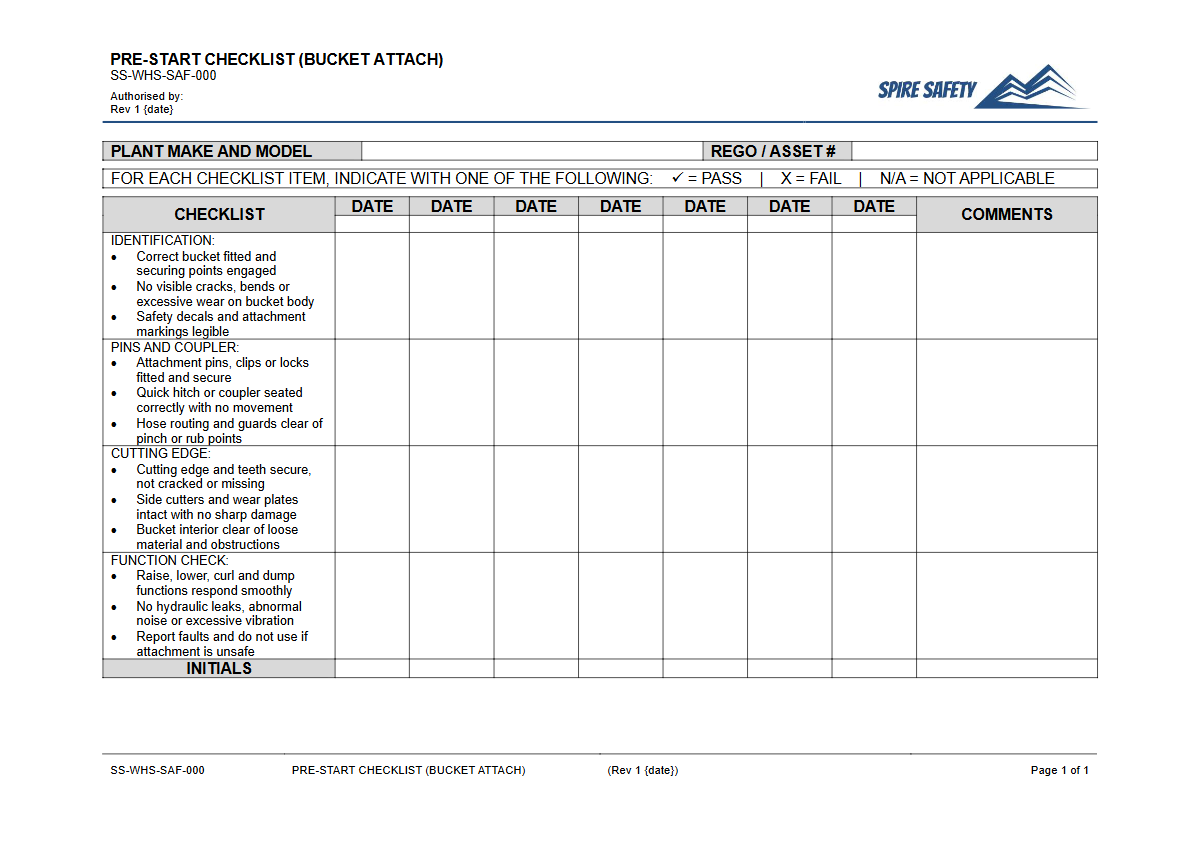
Using a bucket attachment on mobile plant like excavators, loaders, or skid steers introduces specific risks that must be managed. This Free Pre-Start Checklist (Bucket Attachment) Template provides a structured format to formalise daily inspections, helping operators identify potential faults before they lead to incidents.
Regular, documented checks are a cornerstone of proactive safety management, helping to prevent catastrophic failures related to worn components, hydraulic issues, or insecure locking mechanisms. By integrating this checklist into your daily operations, you create a reliable record of equipment condition, which is a vital component of effective WHS management systems and demonstrates due diligence in maintaining plant safety.
What a Bucket Attachment Pre-Start Should Cover
A thorough inspection goes beyond a quick glance. Key areas to focus on include:
- Structural Integrity: Checking for cracks in welds, stress fractures on the body, or significant dents that could compromise the bucket's strength.
- Wear Components: Inspecting ground-engaging tools like teeth, cutting edges, and side cutters for excessive wear, damage, or looseness. Worn components reduce efficiency and can be a safety hazard if they detach during operation.
- Attachment Points: Verifying the condition of pins, bosses, and bushings. This is crucial for ensuring the bucket connects securely to the host machine. Pay close attention to the quick hitch or coupler locking system to ensure it is fully engaged and free from damage.
- Hydraulic Components: For attachments like tilting or grab buckets, check hydraulic hoses for leaks, abrasion, or cracking, and ensure couplers are clean and connect securely.
Our template provides dedicated sections for these critical checks, ensuring operators don't miss important safety items. For other specialised attachments, you might review our Free Pre-Start Checklist (Crusher Bucket) Template.
Video walkthrough
How to use the Free Pre-Start Checklist (Bucket Attachment) Template
This document is designed for immediate, practical use. After downloading the DOCX or PDF, the first step is to review and adapt it to your specific workplace.
Different machine types, bucket models (e.g., general purpose, rock, sieve), and quick hitch systems have unique features and failure points. We have designed this template as a starting point; it is critical that you customise it to ensure all relevant hazards at your site are addressed.
Once customised, train all relevant operators on how to complete the checklist thoroughly, what each item means, and the procedure for reporting any identified faults. Store completed checklists as part of your equipment maintenance and safety records. These records can be invaluable during safety investigations or a WHS compliance audit.
When to use it
A pre-start checklist for a bucket attachment should be completed by the operator before each shift or before the attachment is used for the first time on any given day. If an attachment is swapped mid-shift, a check should be performed to ensure it has been connected correctly and is safe to use.
Making this check a non-negotiable part of the daily routine helps build a strong safety culture where equipment condition is always verified before work commences. This process is standard for all types of heavy equipment, as shown in resources like the Free Pre-Start Checklist (Forwarder) Template.
Who should use it
This checklist is primarily for use by competent plant operators who are tasked with using the equipment. They are the first line of defence in identifying issues.
Supervisors and site managers should also be familiar with the checklist to verify that inspections are being completed correctly and to action any reported defects promptly. Maintenance personnel will use the information from completed checklists to schedule repairs and preventative maintenance, ensuring the attachment remains in safe working order.
It can also be a useful reference for other machinery checks, such as when using a pre-start checklist for a floor saw. This document is one of many tools available in our free WHS resources library designed to support Australian businesses.
Common mistakes
Common mistakes to avoid
- Assuming a bucket used yesterday is still safe today without a new check.
- Conducting a 'tick and flick' inspection without physically verifying each item.
- Failing to remove a faulty attachment from service immediately after identifying a defect.
- Using a generic checklist that doesn't cover the specific model or type of bucket and locking system.
Legal references
Legal considerations
The following legal requirements may be relevant to this type of work.
- Work Health and Safety Act (Harmonised) — Provides the primary duties for protecting workers and other people from work health and safety risks.
- Work Health and Safety Regulations (Harmonised) — Sets out requirements supporting the management of workplace hazards and risks.
The following codes may be relevant to this type of work.
- Managing WHS Risks Code of Practice — Provides practical guidance on identifying hazards, assessing risks and applying effective controls.
- Work Health and Safety Consultation, Cooperation and Coordination Code of Practice — Provides practical guidance on consulting workers and coordinating with other duty holders.
- Managing the Work Environment and Facilities Code of Practice — Provides practical guidance on safe work environments, workplace facilities and related controls.
Did you know
Attachment Failure
A significant number of mobile plant incidents are caused by the failure or incorrect attachment of implements like buckets, often due to worn or improperly engaged locking pins.
FAQ
Frequently asked questions
01What should be checked on a bucket attachment before use?
02How often should a pre-start check be done on a bucket attachment?
03Is this checklist a substitute for a Safe Work Method Statement (SWMS)?
04Why is customisation of the checklist important?
Share this resource
Free Pre-Start Checklist (Bucket Attachment) Template
Browse Categories
How To Use It
- 1Download and open in Word or PDF.
- 2Replace the placeholders with your business details.
- 3Get it reviewed by a WHS specialist before rollout.
Need it customised?
Our WHS consultants can adapt this template to your site, run a gap analysis, or audit what you already have in place.
Book a Free Consultation WHS consulting servicesor call 1300 156 382