
Free Pre-Start Checklist (Compressor) Template
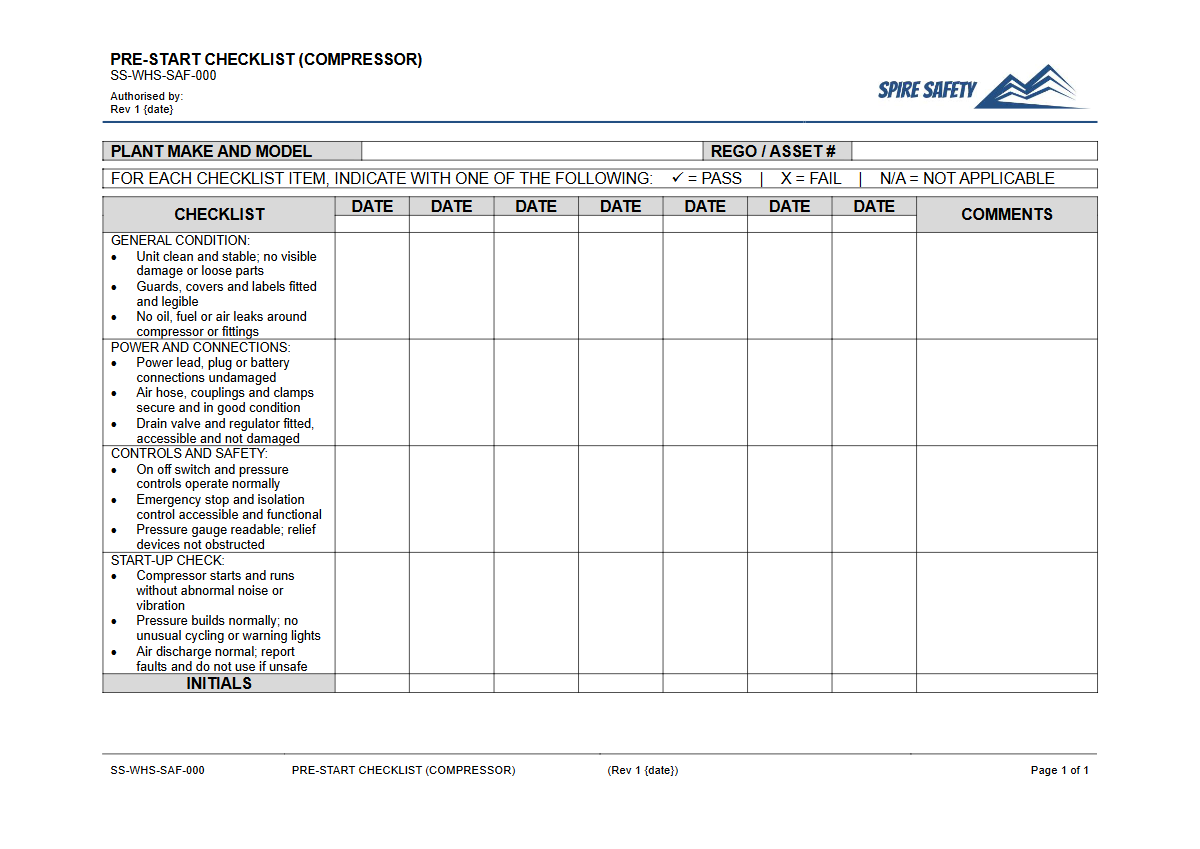
Download our free Pre-Start Checklist (Compressor) Template. This structured DOCX & PDF resource helps formalise daily safety checks for compressors.
Free Pre-Start Checklist (Compressor) Template
DOCX • 125 KB + PDF
Updated Oct 2026
No signup required
Purpose of the Free Pre-Start Checklist (Compressor) Template
Operating an air compressor without performing safety checks exposes workers to significant risks, including mechanical failure, air line rupture, and electrical hazards. This Free Pre-Start Checklist (Compressor) Template provides a structured format for operators to verify that a compressor is safe to use before they switch it on.
Using this checklist consistently helps your organisation identify potential faults early, prevent accidents, minimise equipment downtime, and demonstrate a proactive approach to workplace health and safety.
A pre-start checklist is a practical tool that forms a critical part of a broader framework for effective WHS management systems. It creates a documented record of inspection, which is essential for maintenance scheduling and incident investigations. Formalising these checks helps embed a safety-first culture and ensures everyone follows a consistent, safe procedure for operating machinery.
Video walkthrough
How to use the Free Pre-Start Checklist (Compressor) Template
This document is provided as a downloadable DOCX file that you can easily edit and adapt to your specific needs, as well as a print-ready PDF. To implement it effectively, follow these steps:
- Customise the Checklist: You must review and modify the template to align with the specific make, model, and configuration of the compressors used in your workplace. Add or remove items to ensure it covers all relevant safety features and potential hazards.
- Train Your Workers: Ensure all operators are trained not only on how to use the compressor safely but also on the importance of the pre-start checklist and how to complete it correctly. They must know what to do if they find a fault, including who to report it to and the process for isolating the equipment.
- Integrate into Daily Operations: Make the checklist a mandatory step before every shift. Store the completed records in a designated location for review by supervisors and safety personnel. This consistent use and review process is a key activity that can be verified through periodic WHS compliance auditing.
Note: We've created this template as a starting point. It is your responsibility to ensure it is customised to suit your specific equipment, operational context, and workplace risks.
For other high-risk plant, you may also need specific documents like our Free Pre-Start Checklist (Floor Saw) Template to ensure comprehensive safety coverage.
Key Inspection Points
The template guides operators to inspect critical components before starting the machine. Key areas covered include:
- Fluid Levels: Checking engine oil and compressor oil levels to prevent seizure and overheating.
- Guards and Covers: Ensuring all belt guards and protective covers are securely in place.
- Hoses and Fittings: Inspecting for cracks, leaks, or wear in air hoses and connections.
- Pressure Gauges and Safety Valves: Verifying gauges are functional and that the pressure relief valve is unobstructed.
- Electrical Safety: Checking for damaged cords, plugs, and ensuring emergency stop buttons are functional.
- General Condition: A visual inspection for signs of damage, leaks, or loose parts.
When to use it
The Pre-Start Checklist for a Compressor should be completed by the operator before the equipment is used for the first time on any given day or shift. This routine ensures that any damage or faults that may have occurred since its last use are identified before the machine is put under load. It should not replace scheduled preventative maintenance but rather supplement it as a daily safety measure, similar to the checks you would perform using our free Pre-Start Checklist for a Bench Grinder.
Who should use it
This checklist is designed for use by trained and competent personnel who are authorised to operate air compressors. This includes machine operators, tradespeople, and maintenance staff.
Supervisors should also be familiar with the checklist to review completed forms and ensure the process is being followed correctly. If you are unsure about what constitutes 'competent' or need assistance developing training programs, these are areas that may require specialist guidance from a WHS consulting firm.
By implementing this checklist, you provide your team with the tools they need to take ownership of their safety and the condition of the equipment they use. You can find more templates and tools to support your safety processes in our comprehensive free WHS resources library.
Common mistakes
Common mistakes to avoid
- Assuming a 'quick glance' is enough without physically checking components.
- Failing to drain condensation from the air receiver tank daily.
- Ignoring small oil or air leaks, which can indicate a larger developing problem.
- Using the compressor despite a failed check item under a 'she'll be right' attitude.
Legal references
Legal considerations
The following legal requirements may be relevant to this type of work.
- Work Health and Safety Act (Harmonised) — Provides the primary duties for protecting workers and other people from work health and safety risks.
- Work Health and Safety Regulations (Harmonised) — Sets out requirements supporting the management of workplace hazards and risks.
The following codes may be relevant to this type of work.
- Managing WHS Risks Code of Practice — Provides practical guidance on identifying hazards, assessing risks and applying effective controls.
- Work Health and Safety Consultation, Cooperation and Coordination Code of Practice — Provides practical guidance on consulting workers and coordinating with other duty holders.
- Managing the Work Environment and Facilities Code of Practice — Provides practical guidance on safe work environments, workplace facilities and related controls.
Did you know
Pressure Vessel Risks
The air receiver tank on a compressor is a pressure vessel. If not properly maintained and inspected, internal corrosion can lead to a risk of explosive rupture.
Noise Hazards
Many industrial compressors operate at noise levels well above the 85 dB(A) exposure standard, requiring hearing protection and other noise control measures to protect workers.
FAQ
Frequently asked questions
01Why is a pre-start check for a compressor important?
02How often should a compressor pre-start check be done?
03Is this template suitable for all types of compressors?
04Who is responsible for completing the compressor pre-start checklist?
Share this resource
Free Pre-Start Checklist (Compressor) Template
Browse Categories
How To Use It
- 1Download and open in Word or PDF.
- 2Replace the placeholders with your business details.
- 3Get it reviewed by a WHS specialist before rollout.
Need it customised?
Our WHS consultants can adapt this template to your site, run a gap analysis, or audit what you already have in place.
Book a Free Consultation WHS consulting servicesor call 1300 156 382