
Free Pre-Start Checklist (Heat Gun) Template
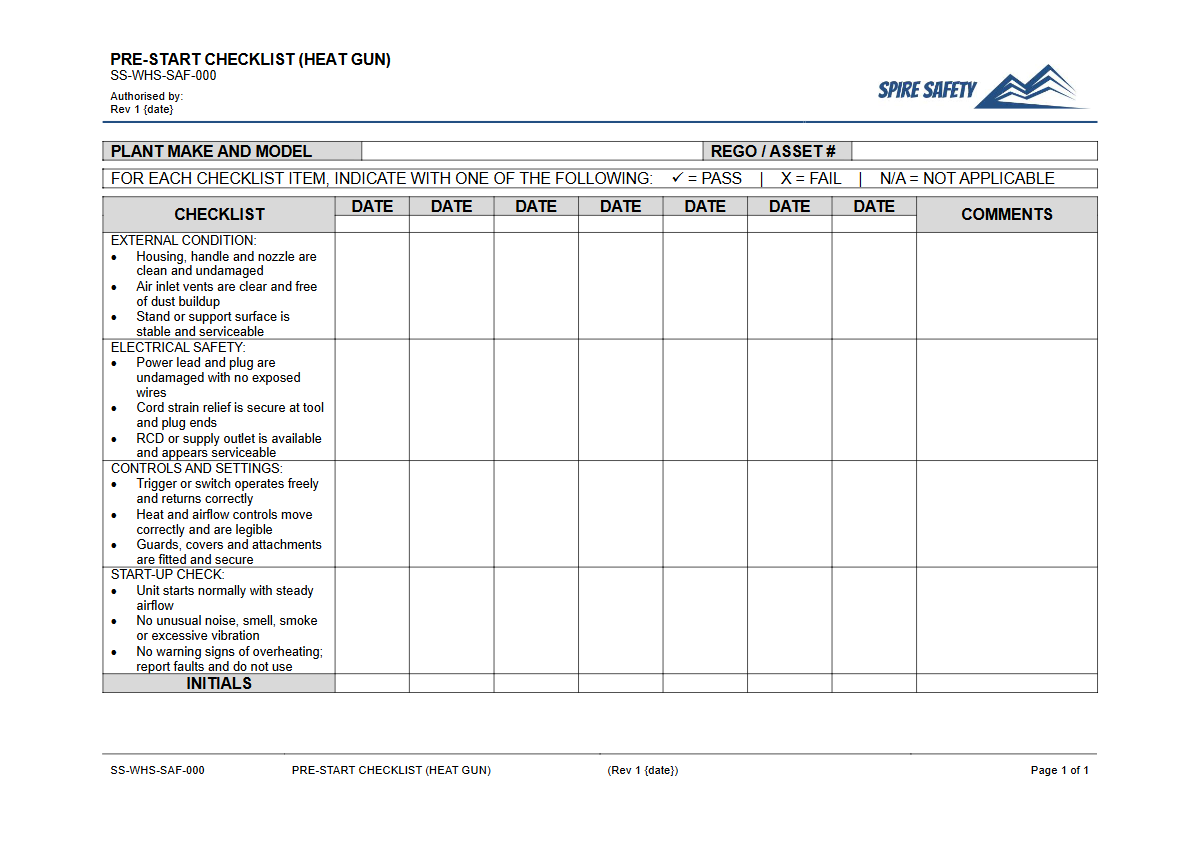
Download our free Pre-Start Checklist (Heat Gun) Template. This structured DOCX & PDF document helps formalise daily safety checks for heat guns.
Free Pre-Start Checklist (Heat Gun) Template
DOCX • 125 KB + PDF
Updated Oct 2026
No signup required
Purpose of the Free Pre-Start Checklist (Heat Gun) Template
Heat guns are versatile and powerful tools, but they introduce significant workplace hazards, including severe thermal burns, electrical shock, and fire. Using our Free Pre-Start Checklist (Heat Gun) Template helps formalise the inspection process, ensuring every operator systematically checks the tool for defects before use.
A consistent pre-start check is a critical control measure that helps identify potential faults like damaged power cords, blocked air vents, or malfunctioning switches before they can cause an incident.
By documenting these checks, your organisation creates a clear record of its proactive safety efforts. This not only protects workers but also demonstrates due diligence in managing plant and equipment risks.
Just as a pre-start checklist for a bench grinder confirms guards are in place, this heat gun checklist verifies crucial electrical and thermal safety features are intact, creating a safer work environment for everyone.
Video walkthrough
How to use the Free Pre-Start Checklist (Heat Gun) Template
Integrating this checklist into your daily operations is straightforward. The process involves downloading the template, adapting it to your specific needs, and training your team on its implementation.
This structured approach ensures consistency and accountability in your equipment safety procedures.
Implementation Steps:
- Download: Get the template in your preferred format (DOCX for easy editing or PDF for printing).
- Customise: It is crucial to remember that this template is a starting point. We strongly recommend you customise it to reflect the specific heat gun models, tasks, and unique environmental risks present in your workplace. Add or remove items to align with manufacturer instructions and site-specific hazards.
- Train: Ensure all operators are trained on how to properly conduct the pre-start check, what each item means, and the procedure for reporting faults.
- Implement: Make the checklist a mandatory step before any heat gun is used. Store completed checklists in a designated location for review.
- Review: Periodically review the process and the completed checklists to identify recurring faults or areas for improvement in your safety procedures.
By embedding this process into your daily workflow, you strengthen your risk management framework. For a more holistic approach, consider integrating this checklist and other safety documentation into your organisation's broader WHS management systems.
When to use it
A pre-start checklist for a heat gun should be completed before each use or, at a minimum, at the beginning of each shift where the tool is expected to be used. Damage can occur during storage, transport, or by a previous user, and a quick inspection is the most effective way to catch these issues.
This frequency ensures that the tool's condition is verified immediately before it is energised, minimising the window for an incident to occur.
If the work involves heating materials that could release vapours, ensure adequate ventilation is in place. In some settings, this might involve using specific extraction equipment, which should also be subject to inspection, similar to how one might use a fume cabinet pre-start checklist to confirm its functionality.
Who should use it
The primary user of this pre-start checklist is the operator—the person who will be physically using the heat gun. They are in the best position to inspect the tool and identify any abnormalities.
However, responsibility extends beyond the operator. Supervisors and managers should ensure the checks are being completed correctly and review the completed forms to identify trends, such as recurring equipment failures that may signal a need for replacement or a change in suppliers.
Ultimately, the Person Conducting a Business or Undertaking (PCBU) holds the primary duty of care to ensure the provision and maintenance of safe plant. Regular verification of completed checklists can be a key activity during internal and external WHS compliance auditing, providing tangible evidence of a functioning safety process.
Key Inspection Points for a Heat Gun
While your customised checklist will be more detailed, key areas of focus for any heat gun inspection should include:
- Casing and Handle: Check for cracks, breaks, or other signs of physical damage that could expose internal components.
- Power Cord and Plug: Inspect the entire length of the cord for cuts, abrasions, or exposed wires. Check the plug for bent pins or damage. Similar to the checks performed on heavy-duty equipment like those on a floor saw pre-start checklist, the integrity of the power supply is non-negotiable.
- Air Vents: Ensure intake and exhaust vents are clear of dust and debris to prevent overheating.
- Nozzle: Confirm the correct nozzle is fitted securely for the task and is free from damage or blockage.
- Switches and Controls: Test that the power switch and any temperature or fan speed controls are functioning correctly.
This checklist is one of many tools designed to support your safety programs. For more templates and guides covering a wide range of equipment and tasks, explore our complete free WHS resources library.
Common mistakes
Common mistakes to avoid
- Using the wrong nozzle or an incorrect temperature setting for the specific material being worked on.
- Failing to thoroughly check the full length of the power cord and plug for damage before use.
- Working in poorly ventilated areas, leading to the inhalation of fumes from heated coatings or plastics.
- Leaving a hot gun unattended or placing it on a flammable surface before it has completely cooled down.
Legal references
Legal considerations
The following legal requirements may be relevant to this type of work.
- Work Health and Safety Act (Harmonised) — Provides the primary duties for protecting workers and other people from work health and safety risks.
- Work Health and Safety Regulations (Harmonised) — Sets out requirements supporting the management of workplace hazards and risks.
The following codes may be relevant to this type of work.
- Managing WHS Risks Code of Practice — Provides practical guidance on identifying hazards, assessing risks and applying effective controls.
- Work Health and Safety Consultation, Cooperation and Coordination Code of Practice — Provides practical guidance on consulting workers and coordinating with other duty holders.
- Managing the Work Environment and Facilities Code of Practice — Provides practical guidance on safe work environments, workplace facilities and related controls.
Did you know
Extreme Temperatures
Industrial heat guns can generate air temperatures ranging from 100°C to over 750°C, which is hot enough to melt soft metals like lead and tin.
Not Just for Stripping Paint
Beyond paint removal, heat guns are used for shrinking electrical tubing, thawing frozen pipes, bending plastics, and even roasting coffee beans in some DIY setups.
FAQ
Frequently asked questions
01What are the main hazards associated with using a heat gun?
02How often should a heat gun pre-start check be performed?
03Is this heat gun checklist a legal document?
04What should an operator do if they find a fault during the pre-start check?
Share this resource
Free Pre-Start Checklist (Heat Gun) Template
Browse Categories
How To Use It
- 1Download and open in Word or PDF.
- 2Replace the placeholders with your business details.
- 3Get it reviewed by a WHS specialist before rollout.
Need it customised?
Our WHS consultants can adapt this template to your site, run a gap analysis, or audit what you already have in place.
Book a Free Consultation WHS consulting servicesor call 1300 156 382