
Free Pre-Start Checklist (Industrial Vac) Template
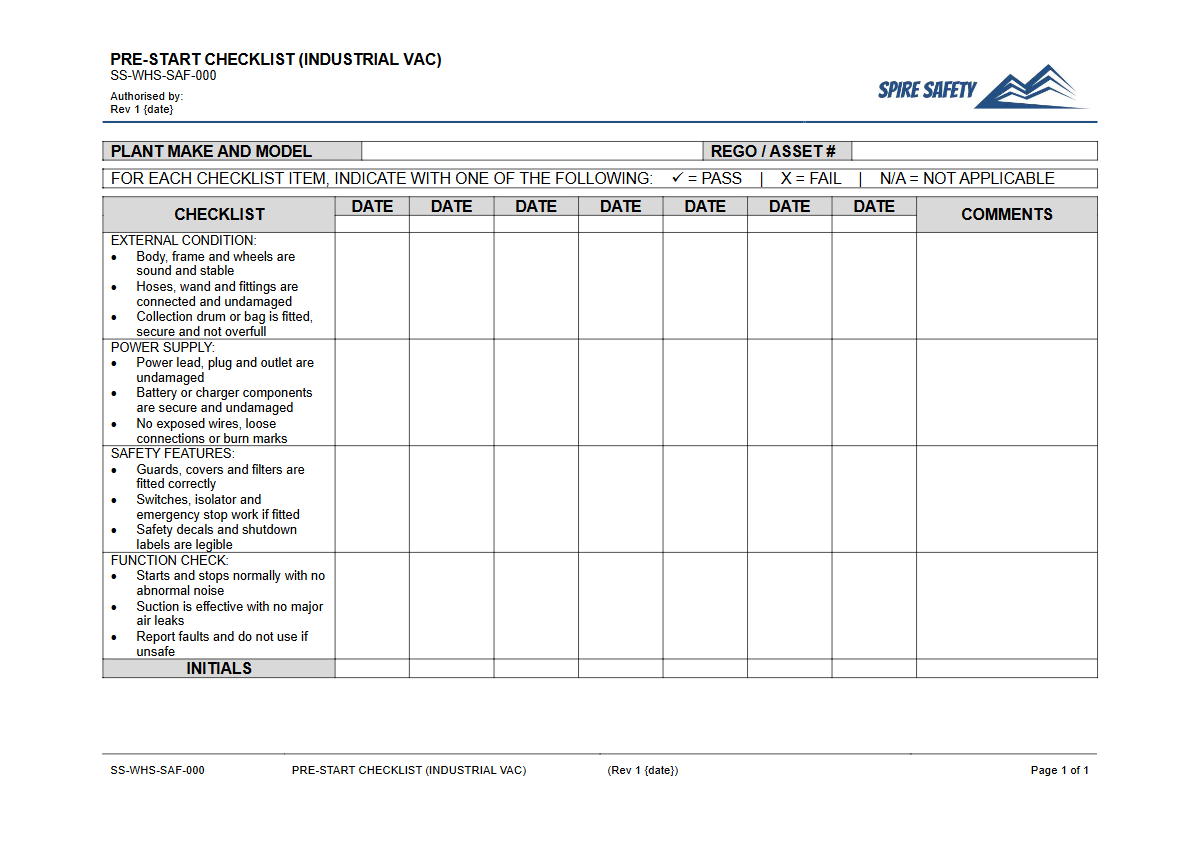
Formalise safety checks for your industrial vacuums. Our free Pre-Start Checklist (Industrial Vac) Template is a great starting point for Australian workplaces.
Free Pre-Start Checklist (Industrial Vac) Template
DOCX • 125 KB + PDF
Updated Oct 2026
No signup required
Purpose of the Free Pre-Start Checklist (Industrial Vac) Template
An industrial vacuum is a powerful piece of equipment, essential for maintaining cleanliness and controlling dust in many workplaces. However, like any machinery, it can pose significant risks if not properly maintained.
This free Pre-Start Checklist (Industrial Vac) Template provides a structured framework for operators to conduct consistent, thorough checks before each use. Using this checklist helps identify potential faults, such as damaged hoses, blocked filters, or faulty electrical components, before they lead to incidents, equipment failure, or ineffective dust control.
It's a practical tool for managing WHS obligations related to plant and equipment.
Regular pre-start inspections are crucial for managing airborne hazards like silica dust, which is often generated by tasks requiring a pre-start checklist for floor saws. A properly functioning vacuum is the first line of defence in capturing these dangerous particles at the source. Documenting these checks also serves as evidence of your organisation's commitment to safety, providing a clear record of equipment condition and operator diligence over time.
Video walkthrough
How to use the Free Pre-Start Checklist (Industrial Vac) Template
To effectively implement this Pre-Start Checklist, follow these steps:
- Download: Get the template in your preferred format (DOCX or PDF).
- Customise: This is the most critical step. Review the checklist and add, remove, or modify items to reflect the specific make, model, and application of the industrial vacuums used in your workplace. This resource is a starting point, and we cannot guarantee it covers every hazard unique to your site. You must adapt it to your specific operational risks.
- Train: Ensure all operators are trained on how to properly inspect the equipment using the customised checklist. They must understand what each checkpoint means and what constitutes a 'pass' or 'fail'.
- Implement:s Make the checklist readily available near the equipment's storage area. Establish a clear process for what operators should do if a fault is found, including who to report it to and how to tag the equipment as 'out of service'.
By integrating these checks into your daily operations, you are strengthening your overall safety framework. A robust checklist system is a key component of effective WHS management systems, helping to formalise and standardise safe work practices across your team.
When to use it
The Pre-Start Checklist should be completed by the operator before every use, or at the beginning of each shift where the industrial vacuum will be used. This frequency ensures that the equipment's condition is verified before it is energised and put to work, catching any damage that may have occurred during previous use, transport, or storage.
It is a preventative tool designed to catch minor issues before they escalate into major failures or safety incidents. This routine check is distinct from scheduled preventative maintenance, which is more in-depth and performed by competent maintenance personnel at longer intervals.
Who should use it
The primary user of this checklist is the equipment operator—the person who will be using the industrial vacuum. They have the most immediate control over the safe operation of the plant.
Supervisors and managers should also be familiar with the checklist to conduct spot-checks, verify completion, and ensure that any reported defects are being addressed promptly. Maintenance personnel will use the information from completed checklists to diagnose recurring problems and schedule necessary repairs, ensuring the long-term reliability and safety of the equipment.
Using task-specific checklists for all workshop equipment, such as a pre-start checklist for a bench grinder, helps build a consistent safety culture.
Key Inspection Points for Industrial Vacuums
While your customised checklist will be more detailed, key areas for inspection on any industrial vacuum typically include:
- Hoses & Attachments: Check for cracks, splits, blockages, or insecure connections that could reduce suction or create trip hazards.
- Filters: Inspect the primary and any secondary (e.g., HEPA) filters for damage, blockages, or signs they are due for cleaning or replacement according to manufacturer specifications. Clogged filters dramatically reduce effectiveness.
- Power Cord & Plug: Look for any cuts, abrasions, exposed wires, or damage to the plug. Ensure the cord's strain relief is intact.
- Casing & Wheels: Check the main body for cracks or damage and ensure the wheels or castors move freely and are securely attached.
- Switches & Controls: Test that all controls, including the on/off switch, function correctly and are not damaged.
- Collection Bin/Bag: Ensure the bin or bag is correctly fitted, sealed, and not overflowing. For hazardous dust, procedures for safe disposal are critical.
The principle of checking equipment that manages airborne contaminants is universal, whether it's a vacuum for dust or a dedicated pre-start checklist for a fume cabinet used in a laboratory setting. Regular verification is key.
Integrating Checks into Your Safety System
A checklist is only effective if it's used correctly and consistently. To embed this practice into your workplace culture, ensure leaders visibly support the process and hold workers accountable. Incorporate checklist completion into job procedures and use the records as a valuable input for safety meetings and maintenance planning. Regular reviews and updates are essential to keep your safety documents relevant and effective. For a broader look at what makes a safety system successful, consider the principles of WHS compliance auditing to identify strengths and weaknesses in your program. You can also explore our full free WHS resources library for more templates and tools to support your safety initiatives.
Common mistakes
Common mistakes to avoid
- Using a generic checklist that doesn't match the specific vacuum model or task.
- 'Pencil-whipping' the checklist without physically inspecting the items.
- Failing to remove faulty equipment from service immediately after a defect is found.
- Not training operators on how to safely empty and clean the vacuum, especially when dealing with hazardous dust.
Legal references
Legal considerations
The following legal requirements may be relevant to this type of work.
- Work Health and Safety Act (Harmonised) — Provides the primary duties for protecting workers and other people from work health and safety risks.
- Work Health and Safety Regulations (Harmonised) — Sets out requirements supporting the management of workplace hazards and risks.
The following codes may be relevant to this type of work.
- Managing WHS Risks Code of Practice — Provides practical guidance on identifying hazards, assessing risks and applying effective controls.
- Work Health and Safety Consultation, Cooperation and Coordination Code of Practice — Provides practical guidance on consulting workers and coordinating with other duty holders.
- Managing the Work Environment and Facilities Code of Practice — Provides practical guidance on safe work environments, workplace facilities and related controls.
Did you know
Filter Velocity
The effectiveness of an industrial vacuum's filter is not just about the filter material, but also the 'air-to-cloth' ratio. If the airflow is too high for the filter's surface area, dust particles can become embedded in the filter or pass straight through, rendering it ineffective.
Hazardous Dust
Some industrial vacuums are specifically rated (e.g., L-Class, M-Class, H-Class) for collecting hazardous dusts like asbestos, lead, or respirable crystalline silica. Using the wrong type of vacuum for these substances can actually increase worker exposure by exhausting fine particles back into the air.
FAQ
Frequently asked questions
01Is a pre-start check legally required for an industrial vacuum in Australia?
02What should an operator do if they find a fault during a pre-start check?
03How often should industrial vacuum filters be cleaned or replaced?
04What's the difference between an industrial vacuum and a household vacuum?
Share this resource
Free Pre-Start Checklist (Industrial Vac) Template
Browse Categories
How To Use It
- 1Download and open in Word or PDF.
- 2Replace the placeholders with your business details.
- 3Get it reviewed by a WHS specialist before rollout.
Need it customised?
Our WHS consultants can adapt this template to your site, run a gap analysis, or audit what you already have in place.
Book a Free Consultation WHS consulting servicesor call 1300 156 382