
Free Pre-Start Checklist (Milk Machine) Template
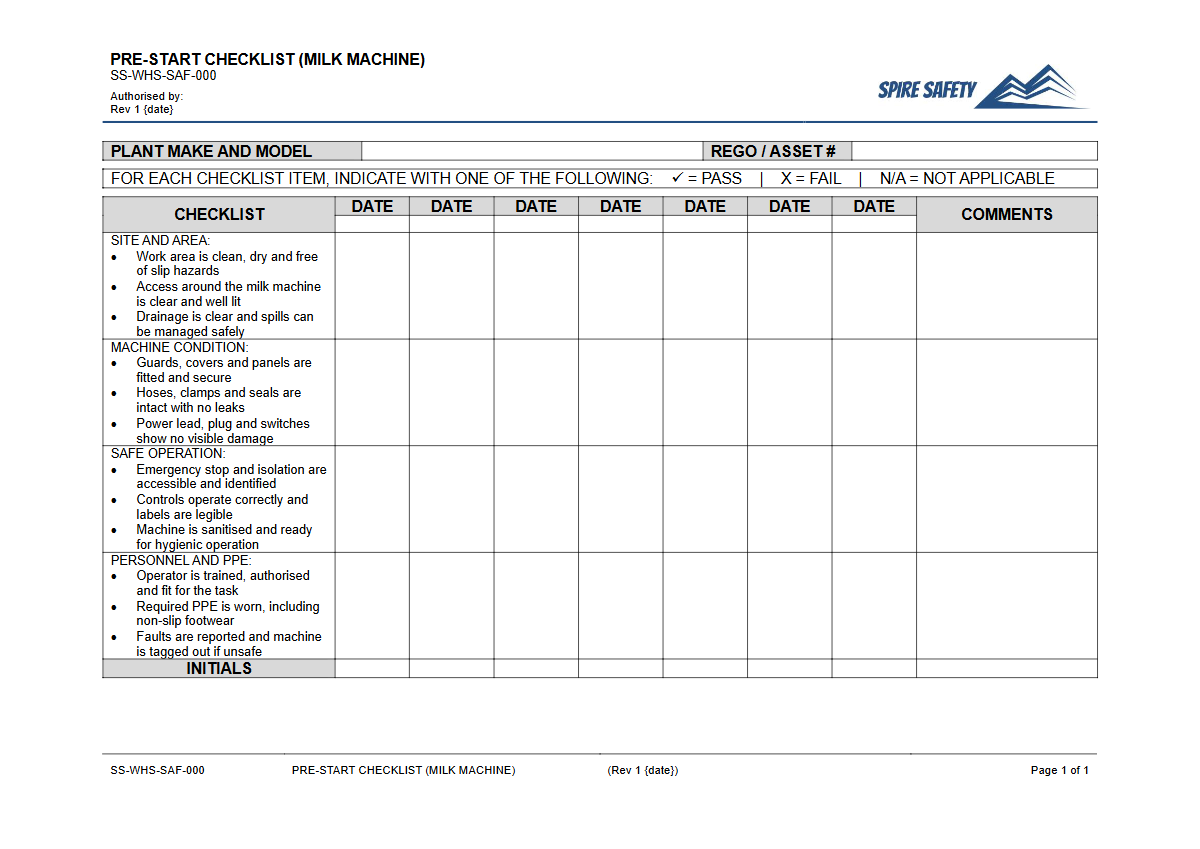
Download our free Pre-Start Checklist for Milk Machines.
Free Pre-Start Checklist (Milk Machine) Template
DOCX • 125 KB + PDF
Updated Oct 2026
No signup required
Purpose of the Free Pre-Start Checklist (Milk Machine) Template
Operating machinery in a café, restaurant, or aged care facility, including commercial milk machines, involves health and safety risks. This free Pre-Start Checklist (Milk Machine) Template provides a structured starting point for formalising your daily equipment inspections.
Using a checklist ensures that key safety components are consistently checked before operation, helping to identify potential hazards such as electrical faults, pressure system failures, or hygiene issues before they can cause injury or illness.
A documented pre-start process demonstrates a commitment to proactive safety management and helps a Person Conducting a Business or Undertaking (PCBU) meet their primary duty of care. Reinforcing the importance of these checks is crucial, and you can facilitate this through regular safety discussions using a Pre-Start Checks and Plant Maintenance Toolbox Talk.
Video walkthrough
How to use the Free Pre-Start Checklist (Milk Machine) Template
Download this template in the fully editable DOCX format or as a ready-to-print PDF. It is designed as a foundational document that must be adapted to your specific workplace and equipment.
A generic checklist cannot account for the unique risks of every machine model or environment.
IMPORTANT: This document is a template and must be customised to suit your specific workplace. We cannot guarantee that it will cover all hazards associated with your particular model of milk machine.
You must consult with operators, maintenance staff, and supervisors to add, remove, or modify checks to ensure the final document is comprehensive and fit for purpose.
A pre-start checklist is most effective when it is an integral part of a comprehensive safety framework. The information gathered from daily checks should inform your maintenance schedule, training programs, and risk assessments.
Building robust WHS management systems ensures that data from tools like this checklist is used effectively to continuously improve safety outcomes across your organisation.
Key Inspection Points to Consider
When customising your checklist, consider including checks for:
- Electrical Safety: Inspect cords, plugs, and connections for damage, fraying, or exposure.
- Pressure Systems: Check that pressure gauges are functioning and within the safe operating range. Inspect steam wands and valves for leaks or blockages.
- Hygiene and Sanitation: Ensure milk lines, containers, and nozzles are clean and free from residue to prevent bacterial growth.
- Structural Integrity: Check for any cracks, loose parts, or damage to the machine's housing.
- Controls and Switches: Verify that all buttons, switches, and emergency stops are functioning correctly.
- Drip Trays and Drainage: Ensure drip trays are in place and drainage lines are clear to prevent spills and slips.
When to use it
The Pre-Start Checklist for the milk machine should be completed by the operator before the first use on every shift. This simple routine helps establish a consistent safety habit and ensures the equipment's condition is verified before it is put into service.
Keeping completed checklists provides a valuable auditable record for maintenance planning, incident investigations, and demonstrating due diligence during a WHS compliance auditing process.
Who should use it
The primary user of this checklist is the trained and competent operator of the milk machine, such as a barista, kitchen hand, or food service worker. These individuals have the most hands-on experience and are best placed to notice subtle changes in performance or condition.
Supervisors should also be trained to periodically review completed checklists and ensure any reported defects are actioned in a timely manner. The fundamental principles of pre-start inspections apply to a wide range of plant and equipment, as seen in our Free Pre-Start Checklist (Agitator) Template.
Holding brief team meetings before a shift is an excellent forum for discussing any issues found during pre-start checks. This practice ensures all team members are aware of equipment status and any temporary controls that may be in place.
You can formalise this communication using a Free Pre-Start Meeting Template to document attendees and topics discussed.
By implementing a customised pre-start checklist for your milk machine, you are taking a practical step towards protecting your workers and fulfilling your WHS obligations. For more tools to support your safety management efforts, explore our complete free WHS resources library.
Common mistakes
Common mistakes to avoid
- Using a generic checklist without customising it for the specific milk machine model.
- Operators 'pencil-whipping' the form without physically performing the inspections.
- Failing to remove a faulty machine from service and report the defect immediately.
- Not providing adequate training to operators on how to properly conduct each check.
Legal references
Legal considerations
The following legal requirements may be relevant to this type of work.
- Work Health and Safety Act (Harmonised) — Provides the primary duties for protecting workers and other people from work health and safety risks.
- Work Health and Safety Regulations (Harmonised) — Sets out requirements supporting the management of workplace hazards and risks.
The following codes may be relevant to this type of work.
- Managing WHS Risks Code of Practice — Provides practical guidance on identifying hazards, assessing risks and applying effective controls.
- Work Health and Safety Consultation, Cooperation and Coordination Code of Practice — Provides practical guidance on consulting workers and coordinating with other duty holders.
- Managing the Work Environment and Facilities Code of Practice — Provides practical guidance on safe work environments, workplace facilities and related controls.
Did you know
Scald Hazard
The steam wand on a commercial espresso or milk machine can reach temperatures well over 100°C, posing a significant risk of serious burns if not handled correctly or if equipment malfunctions.
Bacterial Growth
Milk residue left in steam wands and lines is a prime breeding ground for bacteria like Listeria. Daily cleaning and sanitation, verified by a checklist, are critical for food safety.
FAQ
Frequently asked questions
01Why is a pre-start check necessary for a commercial milk machine?
02Can I use this template for any brand of commercial coffee or milk machine?
03How often should milk machine pre-start checks be completed?
04What should an operator do if a fault is found during a pre-start check?
Share this resource
Free Pre-Start Checklist (Milk Machine) Template
Browse Categories
How To Use It
- 1Download and open in Word or PDF.
- 2Replace the placeholders with your business details.
- 3Get it reviewed by a WHS specialist before rollout.
Need it customised?
Our WHS consultants can adapt this template to your site, run a gap analysis, or audit what you already have in place.
Book a Free Consultation WHS consulting servicesor call 1300 156 382