
Free Pre-Start Checklist (Paver) Template
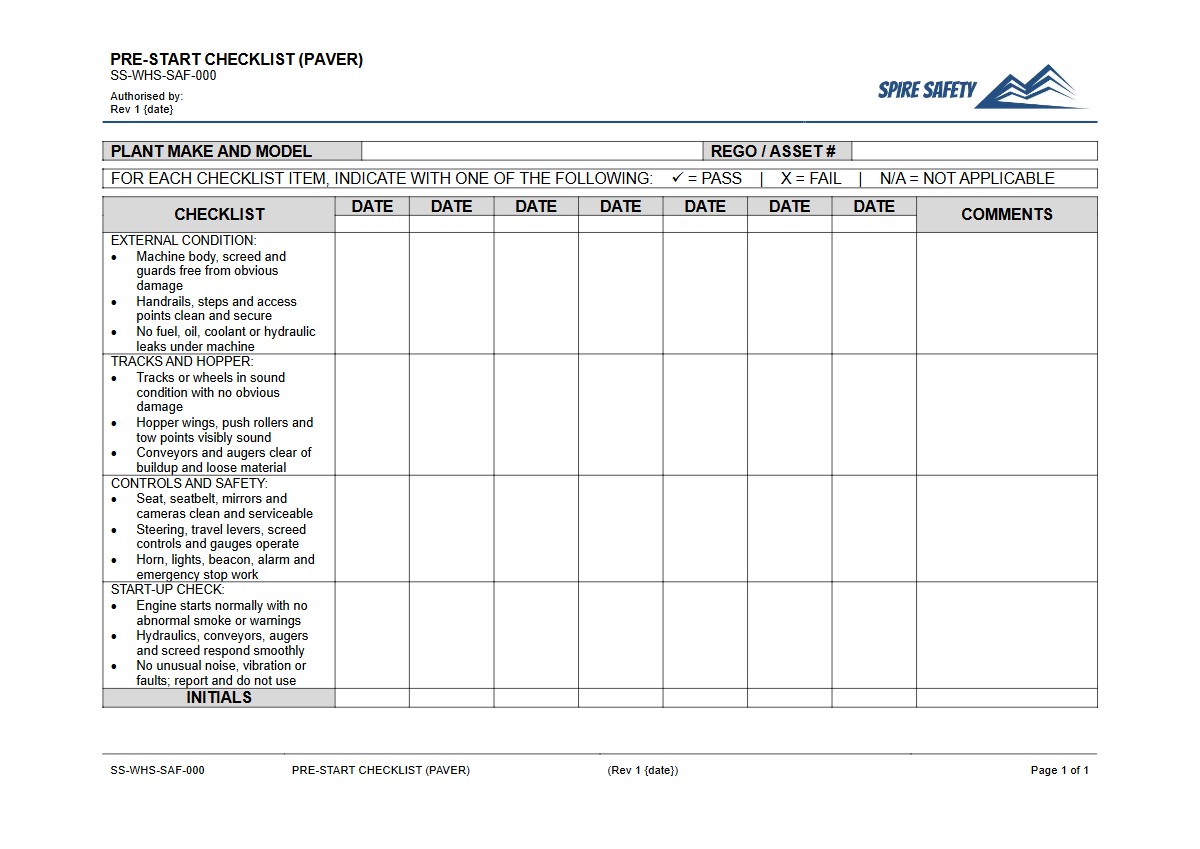
Download our Free Pre-Start Checklist for Pavers. This structured template (DOCX & PDF) helps formalise daily equipment checks and manage WHS risks.
Free Pre-Start Checklist (Paver) Template
DOCX • 125 KB + PDF
Updated Oct 2026
No signup required
Purpose of the Free Pre-Start Checklist (Paver) Template
Operating a paver involves significant risks, from mechanical failure and hydraulic system issues to operator blind spots and exposure to vibration. A systematic pre-start inspection is a fundamental safety measure to identify and control these hazards before they cause an incident.
This Free Pre-Start Checklist (Paver) Template provides a structured format for operators to conduct thorough daily checks, ensuring the equipment is safe and ready for operation.
Using this checklist helps your organisation demonstrate due diligence in managing plant safety. It creates a documented record that the equipment's condition was verified before use, which is a key component of effective WHS management systems. Regular checks help identify minor faults before they become major, costly breakdowns, contributing to improved reliability and a safer work environment for everyone on site.
Video walkthrough
How to use the Free Pre-Start Checklist (Paver) Template
Our template is designed to be a practical tool for your daily safety procedures. It covers key components of a typical paving machine, including engine systems, hydraulics, controls, screed, augers, and emergency features.
The checklist prompts the operator to inspect items like fluid levels, tyre condition, guarding, warning devices, and the operator's station.
To implement it effectively:
- Download the template in your preferred format (DOCX for easy customisation or PDF for immediate use).
- Adapt the checklist to your specific equipment. It's important to remember that this is a template. We recommend you customise it to reflect the specific make and model of paver used at your site, your operational procedures, and any unique site hazards.
- Train all paver operators on how to properly complete the checklist and what actions to take if a fault is found.
- Establish a clear process for submitting completed checklists and reporting defects to supervisors for corrective action.
Integrating this process into your daily routine is crucial. Verifying that such procedures are being followed correctly is a common goal of a WHS compliance auditing program, ensuring your safety systems are working as intended on the ground.
When to use it
The paver pre-start checklist should be completed before the start of every shift or before the equipment is used for the first time each day. This ensures a consistent baseline of safety is established before any paving work commences.
It should also be used after any significant maintenance or repair work to verify that the equipment has been returned to a safe operational state. Consistency is key; a check performed at the start of every single shift builds a strong safety habit and provides a continuous record of the machine's condition.
This principle applies to all heavy machinery, as seen in our Pre-Start Checklist (Forwarder) Template for forestry equipment.
Who should use it
The checklist is designed to be completed by the person operating the paver. The operator has the most hands-on interaction with the machine and is best positioned to notice subtle changes in its condition or performance.
They must be deemed competent not only to operate the equipment but also to conduct a thorough pre-start inspection. Supervisors and managers also have a role; they are responsible for reviewing the completed checklists, ensuring any identified defects are promptly addressed, and confirming that non-operational equipment is correctly tagged out and secured. This shared responsibility is common across different types of plant, such as those covered in our free Pre-Start Checklist for Floor Saws.
By standardising the inspection process, you create a clear and auditable trail of safety management for your plant and equipment. Documenting checks is a cornerstone of good WHS practice, whether for paving equipment, waste management machinery like that covered in our Pre-Start Checklist (Bin Lifter) Template, or any other high-risk plant. For more downloadable templates and tools, you can browse our complete free WHS resources library.
Common mistakes
Common mistakes to avoid
- Failing to customise the generic template for the specific paver model.
- Operators 'pencil-whipping' the form without physically checking the items.
- Not having a clear process for reporting and actioning defects found during the check.
- Neglecting to train operators on how to conduct a thorough and meaningful inspection.
Legal references
Legal considerations
The following legal requirements may be relevant to this type of work.
- Work Health and Safety Act (Harmonised) — Provides the primary duties for protecting workers and other people from work health and safety risks.
- Work Health and Safety Regulations (Harmonised) — Sets out requirements supporting the management of workplace hazards and risks.
The following codes may be relevant to this type of work.
- Managing WHS Risks Code of Practice — Provides practical guidance on identifying hazards, assessing risks and applying effective controls.
- Work Health and Safety Consultation, Cooperation and Coordination Code of Practice — Provides practical guidance on consulting workers and coordinating with other duty holders.
- Managing the Work Environment and Facilities Code of Practice — Provides practical guidance on safe work environments, workplace facilities and related controls.
Did you know
Vibration Exposure
Paver operators can be exposed to high levels of whole-body vibration (WBV). Regular equipment maintenance, identified through pre-start checks, can help minimise vibration by ensuring components like engine mounts and seating are in good condition.
Hydraulic System Pressure
The hydraulic systems on a paver operate under extremely high pressure. A small pinhole leak can inject fluid into the skin, causing severe injury, making visual inspection for leaks a critical part of any pre-start check.
FAQ
Frequently asked questions
01What is the primary purpose of a paver pre-start inspection?
02How often should a paver pre-start check be performed?
03Who is responsible for completing the paver pre-start checklist?
04Can this template be used for any brand or model of paver?
Share this resource
Free Pre-Start Checklist (Paver) Template
Browse Categories
How To Use It
- 1Download and open in Word or PDF.
- 2Replace the placeholders with your business details.
- 3Get it reviewed by a WHS specialist before rollout.
Need it customised?
Our WHS consultants can adapt this template to your site, run a gap analysis, or audit what you already have in place.
Book a Free Consultation WHS consulting servicesor call 1300 156 382